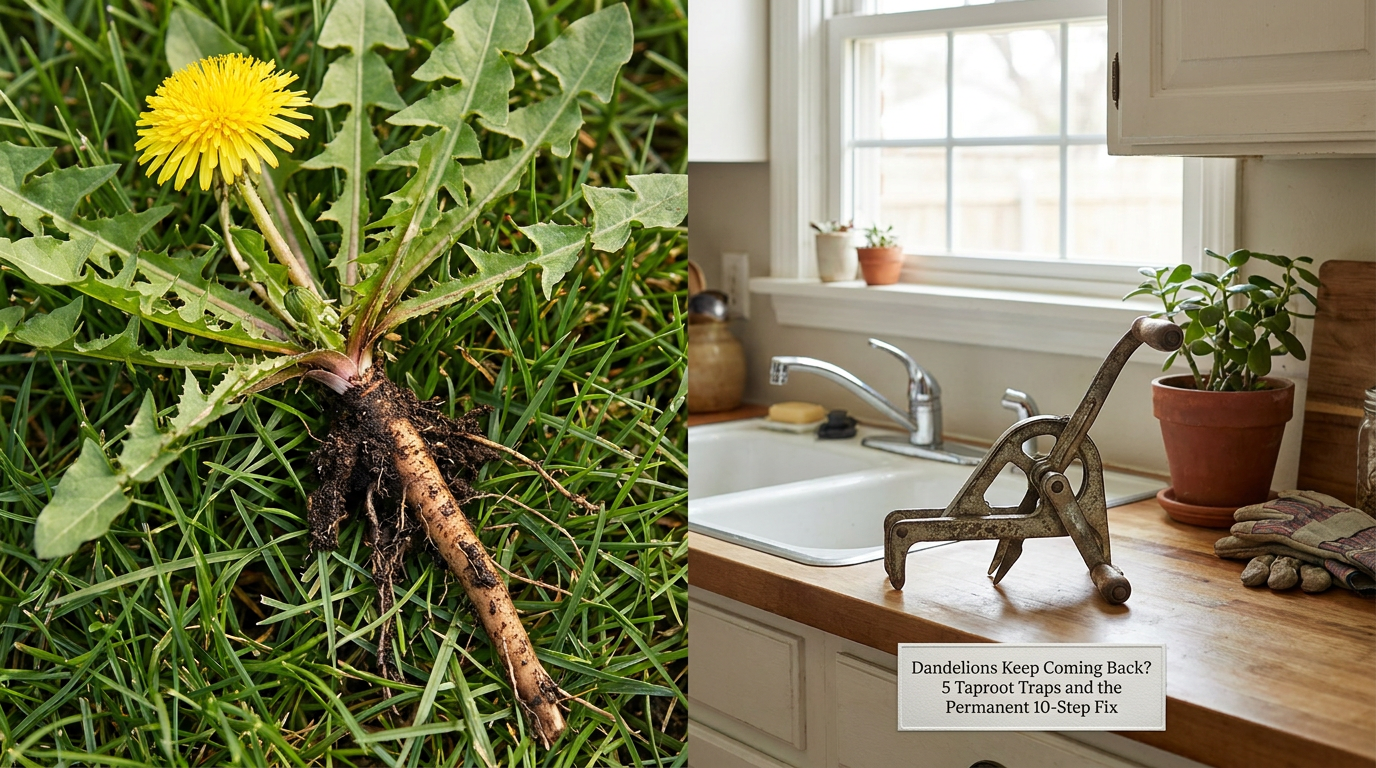
- Step on the footplate or push the handle down until the tines are fully in the soil.
- Ease back on the lever slowly. A steady pull gives you that clean little “pop” instead of a snap.
- If it breaks near the top, run a hand-weeder blade straight down beside the root wall, pry gently toward the hole, and grab the stub with your fingers to work it free.
Landscaping · Deck or fence project
| Project category | Landscaping |
|---|---|
| Problem type | Deck or fence project |
| Trade required | Landscaping |
| Urgency | Planned project |
| Safety risk | Moderate safety risk |
| DIY suitability | DIY for experienced homeowners |
| Cost category | High cost |
| Typical timeline | Most builds 3–10 days depending on size |
| Contractor type | Landscaping contractor |
Repair option
Replace failed boards, posts, and hardware; reseal the surface.
Replacement option
Rebuild when framing or the ledger connection is unsafe.
Common causes
- Rot at posts and ledger
- Storm damage
- Adding outdoor living space
Relevant tools:home improvement material pricesproject cost estimator
Published November 18, 2026Last updated November 18, 2026
Tools & materials you'll need
Affiliate links- AmazonThree-way broadleaf herbicide concentrate16 oz bottle · Active ingredients: 2,4-D, dicamba, and mecoprop-p (MCPP)
- AmazonNon-ionic surfactant8 oz bottle · Improves herbicide adhesion to waxy dandelion leaves
- AmazonClean topsoil and coarse sand mix1 bag · For backfilling extraction voids
- AmazonMatching turfgrass seed3 lb bag · To overseed bare spots
As an Amazon Associate FixlyGuide earns from qualifying purchases — at no extra cost to you. Prices and availability are accurate as of publication and subject to change.
Quick Answer
To get rid of dandelions for good, you’ve got to kill or pull out their 6- to 18-inch taproots without breaking them off. I go after actively growing rosettes in early spring or fall with a selective broadleaf herbicide that contains 2,4-D, dicamba, and triclopyr, or I core the taproot by hand with a notched weed puller when the soil’s good and wet. Mowing just makes the plant hug the ground tighter, and if you snap the taproot, those stubborn adventitious buds kick back in and start the whole mess over again.
The Problem
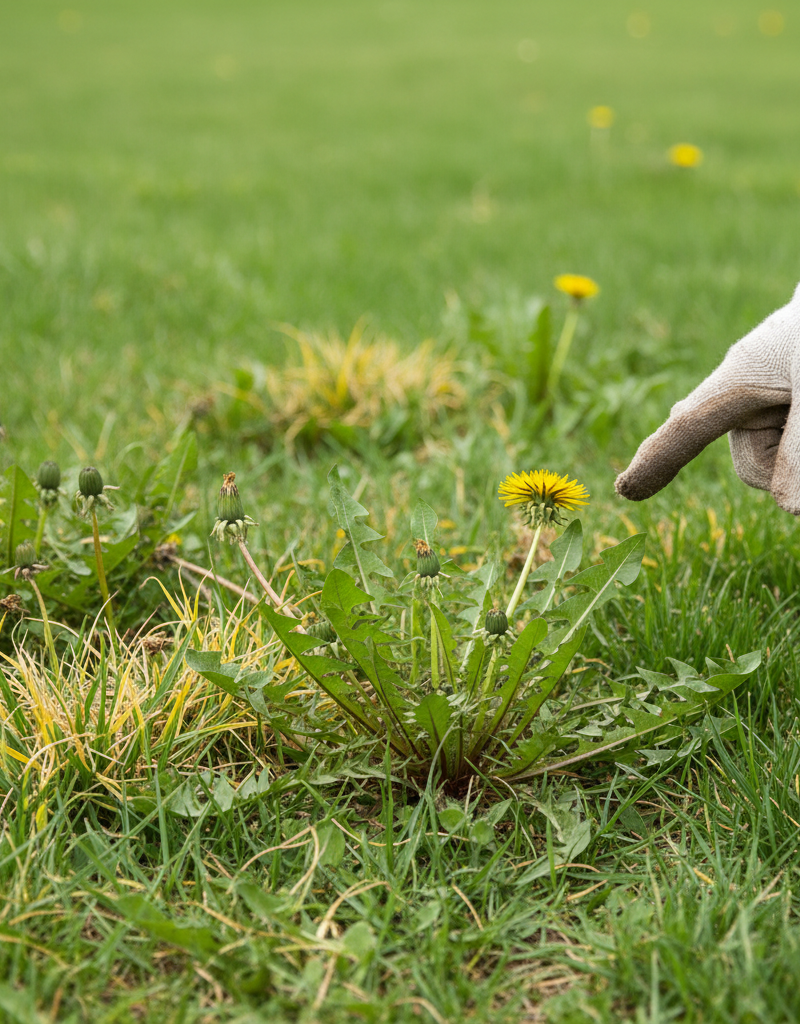
Every spring, clean green turf gets ambushed by those yellow little freeloaders. You yank them by hand, feel pretty good about yourself, and then—ten days later—you’ve got two or three fresh rosettes coming right back out of that same patch of dirt. By late summer, the lawn feels thin, spongy, and loaded with ugly dandelions (Taraxacum officinale).
Dandelions are tough perennials, not throwaway annual weeds that quit at the first freeze. If you leave them alone, those fleshy taproots store up carbohydrates and let the plant outmuscle cool-season and warm-season grasses alike. Then the seed heads—the puffball “clocks” everybody hates—can spit out up to 15,000 airborne seeds per plant, and the wind’ll carry them all over your place and then some.
How It Works
Dandelions make a living off a pretty efficient setup: one hollow-centered taproot that punches anywhere from 6 to 18 inches straight down into the soil.
That root is basically a fuel tank. The low, flat rosette grabs sunlight and sends starches down into the root tissue through spring and early summer. If you mow off the top or rip the plant out sloppy by hand, the taproot just taps those stored reserves and wakes up dormant adventitious buds along the crown. I pulled a water heater in Frisco last month that had exactly this same kind of “it looked dead, then it wasn’t” problem—different equipment, same story. A root fragment just 1 inch long, sitting 2 inches below the surface, can turn into a whole new multi-crowned dandelion in about two weeks.
       [ Seed Head / Yellow Flower ]
                  |
     [ Low-Lying Basal Rosette ]  <-- Survives low mowing
================== SOIL LINE ==================
                  |
         [ Fragile Root Crown ]   <-- Snaps if pulled dry
                  |
                  |
         [ Vertical Taproot ]     <-- Extends 6" to 18" deep
         (Stores Starches)        <-- Regrows from any 1" fragment
Chemical control works through the plant’s vascular system—the xylem and phloem. Post-emergent selective herbicides use synthetic auxins, like 2,4-D, MCPP, and dicamba, to imitate natural growth hormones. Spray it on that broad, porous dandelion leaf and the plant pulls the chemical in through the cuticle, then shuttles it down the phloem straight into the taproot tips. The synthetic auxins throw cellular division into chaos, the vascular channels break down, and the plant folds. In cool fall weather, dandelions naturally move starches downward to get ready for dormancy, which is why late autumn is the sweet spot where systemic herbicides do the most damage to the taproot.
Step-by-Step Fix
Here’s how I’d handle established dandelions and shut down taproot regeneration.
1. Evaluate the Soil Moisture Level
Don’t even try manual removal or selective herbicide work in dry, rock-hard ground. Tight soil clamps onto that fleshy taproot like a vice, and the crown will snap off at the neck when you pull it, leaving the root system sitting there ready to laugh at you.
- Check the soil with a long screwdriver; it ought to slide in smooth past 4 inches.
- If the yard’s bone-dry, water the target area with roughly 0.5 inches about 12 to 24 hours before you pull, or wait until the morning after a good soaking rain.
2. Choose the Proper Weed Puller
Skip the standard hand trowel. It lifts too much turf and doesn’t grab deep roots worth a darn. Grab a dedicated serrated taproot weeder (dandelion digger) or a stand-up claw-style extractor with a foot lever instead.
- Look for a tool with at least 3- to 4-inch tempered steel tines.
- Stay away from plastic extractors—they flex when you put real torque on them in heavy clay.
3. Core the Taproot Manually
Set the tool right over the center of the rosette, lined up with the main root crown. Drive the tines straight down, keeping them tight to the root instead of stabbing out wide.
- Step on the footplate or push the handle down until the tines are fully in the soil.
- Ease back on the lever slowly. A steady pull gives you that clean little “pop” instead of a snap.
- If it breaks near the top, run a hand-weeder blade straight down beside the root wall, pry gently toward the hole, and grab the stub with your fingers to work it free.
4. Patch and Compact the Soil Core
Stand-up weed pullers leave a cone-shaped hole about 1.5 inches wide and 3 to 4 inches deep. Leave those open and you’ve basically rolled out a welcome mat for windblown dandelion seed.
- Fill each hole with a 50/50 mix of clean topsoil and coarse sand, or screened compost.
- Press it down with your boot heel so the patch sits flush with the surrounding grade.
5. Time Your Post-Emergent Chemical Application
If the infestation’s spread all over—enough that hand pulling would make the lawn look like a war zone—switch to a selective post-emergent liquid herbicide. I like mid-to-late autumn as the main window, with mid-spring as backup cleanup.
- Check the forecast first: you need 24 to 48 hours with no rain after you spray.
- Keep outdoor temperatures between 55°F and 80°F; above 85°F, synthetic auxins can volatilize and drift into shrubs, and below 50°F, the plant just doesn’t move the chemical down to the taproot well enough.
6. Calibrate and Mix the Herbicide Solution
Use a pump-action tank sprayer with a brass fan-tip nozzle. A hose-end sprayer usually throws uneven droplet sizes, and that’s no good if you want even coverage.
- Fill the clean tank half-full with tap water, then measure in your three-way selective broadleaf herbicide with 2,4-D, dicamba, and mecoprop-p/MCPP.
- Add standard lawn herbicide at the manufacturer rate—typically 1.5 to 2.0 fluid ounces per 1 gallon of water to cover 1,000 square feet.
- Add 1 to 2 teaspoons of a non-ionic surfactant per gallon. That stuff breaks surface tension so the droplets don’t bead up and roll off the waxy dandelion leaf.
- Cap the tank and shake hard for 15 seconds to mix it before you pressurize it to roughly 30 to 40 PSI.
7. Spot-Spray the Rosettes
Set the wand for medium-coarse droplets, not a fine mist. Fine mist drifts right into your flower beds and fries stuff you didn’t mean to touch.
- Hold the wand tip 8 to 12 inches over the center of the rosette.
- Squeeze the trigger for 1 to 2 seconds and coat the foliage lightly until it’s wet but not dripping into the dirt.
- If the surrounding grass is dormant, like brown winter Bermuda, make sure the label says your turf can handle that ingredient in that seasonal phase.
8. Mark and Restrict Turf Traffic
Keep that sprayed area alone so the chemical can move through the plant without being stomped on or cut short.
- Keep pets and kids off the treated lawn until the spray dries, which usually takes 2 to 4 hours in direct sun.
- Don’t mow for 48 to 72 hours after application; cutting too soon strips away the herbicide before it reaches the root system.
9. Rake Away Desiccated Debris
In 5 to 7 days, the stems and leaves will curl, twist, and turn deep purple or brown—that’s the classic auxin overload response called epinasty.
- At day 10 to 14, rake up the dead, dry foliage with a flexible leaf rake.
- Check the center of the dead plant: if you still see a firm, white, fleshy taproot stub at the surface, dab a single drop of concentrated herbicide right on the raw stub with an applicator sponge.
10. Overseed the Bare Spots
Dandelions love weak turf and open canopy gaps. Leave bare patches alone and you’re inviting fresh weed seed to move in fast.
- Loosen the top 0.5 inches of soil in the bare spots with a hand cultivator.
- Spread a high-quality turfgrass seed matched to your lawn type, like Turf-Type Tall Fescue or Kentucky Bluegrass in the North, or perennial ryegrass for winter cover in transitional zones.
- Rake the seed lightly into the dirt for good seed-to-soil contact, topdress with 1/8-inch of peat moss, and mist it daily for 14 days until it’s established.
Common Causes
Dandelion problems don’t just show up out of nowhere. If you keep seeing them, the lawn’s usually giving you a clue about what’s going wrong:
- Compacted Soil Profiles: Dandelions have that thick taproot for a reason. It punches through compacted soil where fibrous turf roots choke. Heavy clay that hasn’t been aerated gives dandelions a leg up while turf hangs on by a thread.
- Mowing Turf Too Short: Scalping the lawn below 2.5 inches strips off the leaf canopy and lets sunlight hit bare dirt. Dandelion seed needs direct ultraviolet exposure to break dormancy; dense 3.5- to 4-inch turf shades the surface and stops germination cold.
- Improper Soil pH: Dandelions like slightly acidic to neutral soil with low calcium and high potassium availability. A lawn sitting below 6.0 on the pH scale loses turf vigor, and that opens the door wide.
- Under-Fertilization and Low Nitrogen: Weak, underfed grass grows thin blades with too much space between crowns. Dandelions love low-nitrogen conditions and crowd out hungry turfgrass fast.
- Surface-Level Pulling: Folks yank them when the soil’s dry and just shear the foliage off the root crown. That triggers a regeneration response and turns one weed into a clustered, multi-crown headache.
Common Mistakes
Here’s where DIYers usually go sideways on dandelions, and how to straighten it out:
- Mowing Over Puffy White Seed Heads: Run a rotary mower through a seed head and you’ve just built a weed distribution system. It throws thousands of viable parachuted achenes all over the place. If they’ve already popped, clip them by hand and bag them in a bucket before you mow.
- Spraying in Mid-Summer Heat: Broadleaf killers applied above 85°F can volatilize and drift into your garden and hedges. Heat also shuts down dandelion vascular movement, so the weed won’t pull the chemical down to the root anyway. You end up with burnt grass and a living weed. No thanks.
- Snapping the Taproot: Pulling straight up without moistening the soil or prying first breaks the root about an inch down. Always drive the tool down next to the root, pry gently, and get the whole taproot out intact.
- Using Non-Selective Herbicides on Turf: Hit a dandelion in the yard with glyphosate (Roundup) and you’ll leave a dead-brown ring of grass about 6 inches wide that sticks around for months. Use selective broadleaf killers with 2,4-D, MCPA, or triclopyr instead.
- Failing to Apply Pre-Emergents in Spring: If you only kill what you can see, the seed bank keeps rolling. An isoxaben- or prodiamine-based pre-emergent in early spring stops windblown dandelion seeds before they ever get established.
Cost & Time Breakdown
| Task | DIY Cost | Pro Cost | Time |
|---|---|---|---|
| Hand Extraction (Stand-Up Weeder Tool) | $35–$50 (Tool purchase) | $75–$125 | 1–2 hours per 1,000 sq ft |
| Spot Spray Application (Herbicide + Surfactant) | $25–$45 (Supplies treat 5,000+ sq ft) | $60–$110 | 30–45 minutes |
| Lawn Core Aeration (Reduces root compaction) | $70–$90 (Machine rental) | $130–$220 | 2–3 hours |
| Patch Seeding Bare Removal Spots | $15–$30 (Seed & topsoil) | $50–$90 | 45 minutes |
| Soil Test & pH Adjustment (Lime/Sulfur) | $15–$25 | $65–$100 | 30 minutes |
Tips & Prevention
- Raise Your Mower Deck to 3.5–4 Inches: Taller grass throws more shade across the soil, and that blocks the sunlight dandelion seeds need to pop.
- Aerate Heavily Every Autumn: Run a core aerator across the yard once a year and pull 2- to 3-inch plugs out of the soil profile. That breaks up compaction and lets turf roots drive deep instead of fighting for air.
- Apply Isoxaben Pre-Emergent Early: Broadleaf weed seeds germinate in slightly cooler soil than crabgrass. Put down a granular broadleaf pre-emergent when soil temps hit 50°F in late winter or early spring.
- Bag Clippings During Blooming Peaks: If yellow flowers are up and you haven’t sprayed yet, use the mower bag to catch the flower heads before they turn into airborne seed plumes, then dump them in municipal yard waste, not the compost pile.
- Keep Soil pH Between 6.2 and 7.0: Send a soil sample to your local extension office every two years. Keep the turf in its sweet spot, and it’ll take up nutrients better, leaving less room for broadleaf weeds to move in.
When to Call a Professional
If dandelions cover more than 40% of your total lawn area, hand pulling just isn’t practical anymore, and those little ready-to-use spray bottles won’t get it done. Big infestations call for commercial-grade, multi-way systemic herbicides applied with high-capacity tow-behind sprayers calibrated to exact gallon-per-acre ratios.
You should also bring in a licensed lawn care pro if you’ve got warm-season grasses like St. Augustine or Centipede. Those turf types are touchy around common broadleaf herbicides like 2,4-D, and the wrong mix will smoke your grass along with the dandelions. A certified tech has the licensing, uses turf-safe specialty compounds like metsulfuron-methyl or atrazine, and can balance weed control with a fertilization plan that builds back a thick, weed-choking lawn.
Frequently Asked Questions
Why do dandelions grow back after being pulled out?
Dandelions come back from tiny root fragments. If you pull one and that fleshy taproot snaps even two inches below the soil surface, the leftover root uses stored carbohydrates to push out new adventitious shoots. Within two weeks, you can get multiple new rosettes from the same broken stub.
What is the best month to spray dandelions with weed killer?
October and early November are the best months to treat dandelions. In the fall, they prep for winter dormancy by reversing their nutrient flow and pulling sugars and starches down from the leaves into the taproot. Systemic broadleaf herbicides ride that downward movement and hit the root at its weakest point.
Will vinegar kill dandelions permanently?
Household vinegar (5% acetic acid) will scorch the leaves, sure, but it won’t kill that deep taproot, and the weed’ll come back in days. Horticultural vinegar (20% to 30% acetic acid) can wipe out the root crown if you apply it heavy, but it’s non-selective and turns nearby turf brown while messing with the soil pH.
Can I just cut off the yellow flower heads to stop them?
Cutting off the yellow heads stops that one bloom from turning into a white seed head and spreading around the yard. But it doesn’t kill the plant. The taproot stays alive underground and keeps sending up new flower stalks every few days through the growing season.
How deep do dandelion roots actually go?
Most residential dandelion taproots run 6 to 12 inches deep into the soil profile. In loose, sandy, or deeply cultivated soil, mature roots have been measured past 18 inches. That depth lets the plant find moisture and nutrients during hot summer droughts long after the grass has checked out.
Does boiling water kill dandelion taproots?
Pouring boiling water into the center of the rosette can cook the crown and damage several inches of root tissue. But it’s non-selective, so it’ll scald and kill any desirable lawn grass within a 6-inch radius. And in compacted clay, it still struggles to get much past the top 3 inches.
Why are dandelions worse in compacted soil?
Dandelions have a strong vertical taproot built to punch through dense, compacted layers that choke fine grass roots. When the yard gets compacted from foot traffic or heavy mowing equipment, turf thins out from lack of oxygen, and dandelions move right in on the open ground.
Do pre-emergent herbicides stop dandelions from coming back?
Pre-emergent herbicides only stop new dandelion seeds from sprouting; they don’t touch established plants from last year. If you want them to stay gone, you’ve got to pair a systemic post-emergent or physical extraction for the old taproots with a broadleaf-specific pre-emergent like isoxaben to stop fresh seed drift.
Related Articles
Keep troubleshooting with these hand-picked guides from FixlyGuide:
- Nutsedge Taking Over Your Lawn? 10 Steps to Kill It at the Root — Stop pulling nutsedge by hand. Learn how to identify yellow and purple sedge, select the right selective herbicide, and destroy tubers with…
- Grass Turning Yellow After Mowing? 5 Causes and How to Fix It — Grass turning pale or yellow after mowing? Discover the causes of mower scalping and torn blades, and learn the step-by-step fix to restore…
- The #1 Mistake Killing Your Lawn's Crabgrass Defense (And the Easy Fix) — Discover why common crabgrass removal methods fail and how to naturally eliminate this stubborn weed for a healthier lawn.
- The #1 Mistake Killing Your Lawn's Grass (and How to Fix Patchy Spots) — Discover the most common reason for patchy grass and learn how to revive your lawn with targeted, easy-to-follow steps.
- The #1 Mistake Homeowners Make When Fighting Dandelions (And The Weeds Still Win) — Learn the surprising reason dandelions continue to plague your lawn and the effective, long-term strategies to reclaim your turf without en…
- Is Your Gutter Sagging After Every Storm? The Hidden Flaw Most Homeowners Miss — Discover the overlooked reason your gutters sag after every storm and learn the lasting fix that most homeowners miss.
Should you do this yourself?
Answer five quick questions before you start. Safety outranks savings every time.
Your experience with work like this
How high do you have to work?
Does the job involve any of these?
Will it need a permit?
Specialty tools
Free and instant. Educational guidance only — not a quote, inspection, or professional diagnosis.
What should this project cost?
Enter your project details for a realistic cost range before you call anyone.
Cost depends heavily on which system turns out to be the source.
- Regional adjustment
- National average
- Labor share (typical)
- ~$1,620
- Quotes to collect
- 3 written estimates
Educational estimate based on national averages — not a binding quote. Always confirm with written local estimates.
Frequently asked questions
Why do dandelions grow back after being pulled out?+
Dandelions regenerate from tiny root fragments. If you pull a dandelion and the fleshy taproot snaps even two inches beneath the soil surface, the remaining root uses stored carbohydrates to push out new adventitious shoots. Within two weeks, multiple new rosettes will sprout from the same broken taproot stub.
What is the best month to spray dandelions with weed killer?+
October and early November are the ideal months to treat dandelions. In the fall, dandelions prepare for winter dormancy by reversing their vascular nutrient flow, actively pulling sugars and starches down from the leaves deep into the taproot. Systemic broadleaf herbicides hitch a ride on this downward cycle, killing the taproot at its lowest point.
Will vinegar kill dandelions permanently?+
Household vinegar (5% acetic acid) will only scorch the visible leaves; it will not kill the deep taproot, and the weed will regrow in days. Horticultural vinegar (20% to 30% acetic acid) can destroy the root crown if applied heavily, but it acts non-selectively, turning the surrounding turfgrass brown and dangerously altering the local soil pH.
Can I just cut off the yellow flower heads to stop them?+
Clipping the yellow flower heads prevents that specific bloom from turning into a white seed head and spreading across the yard. However, it does nothing to kill the existing plant. The underground taproot remains fully alive and will continue pushing out new flower stalks every few days throughout the growing season.
How deep do dandelion roots actually go?+
Most residential dandelion taproots reach 6 to 12 inches deep into the soil profile. In loose, sandy, or deeply cultivated soils, mature dandelion taproots have been measured past 18 inches. This extreme depth allows the plant to locate moisture and nutrients during severe summer droughts long after lawn grasses have gone dormant.
Does boiling water kill dandelion taproots?+
Pouring boiling water directly into the center of the rosette can cook the dandelion crown and destroy several inches of root tissue. However, boiling water is non-selective and will scald and kill all desirable lawn grasses within a 6-inch radius. It also struggles to penetrate past the top 3 inches in compacted clay soils.
Why are dandelions worse in compacted soil?+
Dandelions have a strong, vertical taproot engineered to break through dense, compacted soil layers that choke out fine, fibrous grass roots. When a lawn becomes compacted from foot traffic or heavy mowing equipment, turfgrass thins out from lack of root oxygen, leaving dandelions to dominate the unshaded, compacted ground.
Do pre-emergent herbicides stop dandelions from coming back?+
Pre-emergent herbicides only stop new dandelion seeds from germinating; they have zero effect on established dandelions that survived from the previous year. To keep dandelions away permanently, you must combine a systemic post-emergent or physical extraction for existing taproots with a broadleaf-specific pre-emergent (such as isoxaben) to stop new seed drift.
Discussion
Loading comments…