- The 1 Mowing Mistake That Invites Weeds (And How to Fix It in 10 Minutes) — Discover the most common mowing mistake homeowners make that inadvertently encourages weeds, and learn easy steps to achieve a healthier, m…
- The 1 Mowing Mistake That Invites Weeds (And How to Fix It in 5 Minutes) — Discover the most common mowing error homeowners make that inadvertently encourages weed growth, and learn a simple fix for a healthier law…
- The 1 Mowing Mistake That Leaves Your Lawn Brown and Patchy — Discover the most common mowing mistake homeowners make that leads to unhealthy, patchy grass and how to fix it for a vibrant lawn.
- The 1 Watering Mistake Homeowners Make (And How to Fix It in Minutes) — Discover the most common lawn watering mistake homeowners make and how adjusting your technique can lead to a healthier, greener lawn.
- The 1 Pruning Mistake That Chokes Your Shrubs (And How to Fix It Right Now) — Discover the most common pruning error homeowners make and how to correct it for healthier, more vigorous shrub growth.
Landscaping · Deck or fence project
| Project category | Landscaping |
|---|---|
| Problem type | Deck or fence project |
| Trade required | Landscaping |
| Urgency | Planned project |
| Safety risk | Moderate safety risk |
| DIY suitability | DIY for experienced homeowners |
| Cost category | High cost |
| Typical timeline | Most builds 3–10 days depending on size |
| Contractor type | Landscaping contractor |
Repair option
Replace failed boards, posts, and hardware; reseal the surface.
Replacement option
Rebuild when framing or the ledger connection is unsafe.
Common causes
- Rot at posts and ledger
- Storm damage
- Adding outdoor living space
Relevant tools:home improvement material pricesproject cost estimator
Published May 26, 2026Last updated August 17, 2026
Tools & materials you'll need
Affiliate links- AmazonLawn Mower (with height adjustment)Ensure your mower can adjust to at least 3.5 inches.
- AmazonMower Blade Sharpener Kit (or File)For DIY sharpening
- AmazonWork GlovesFor safety during blade inspection/sharpening
- AmazonSocket Wrench (appropriate size for blade nut)If removing blade for sharpening
- AmazonBlock of Wood or Blade Holding ToolTo secure blade during sharpening/removal
No materials required.
As an Amazon Associate FixlyGuide earns from qualifying purchases — at no extra cost to you. Prices and availability are accurate as of publication and subject to change.
Quick Answer
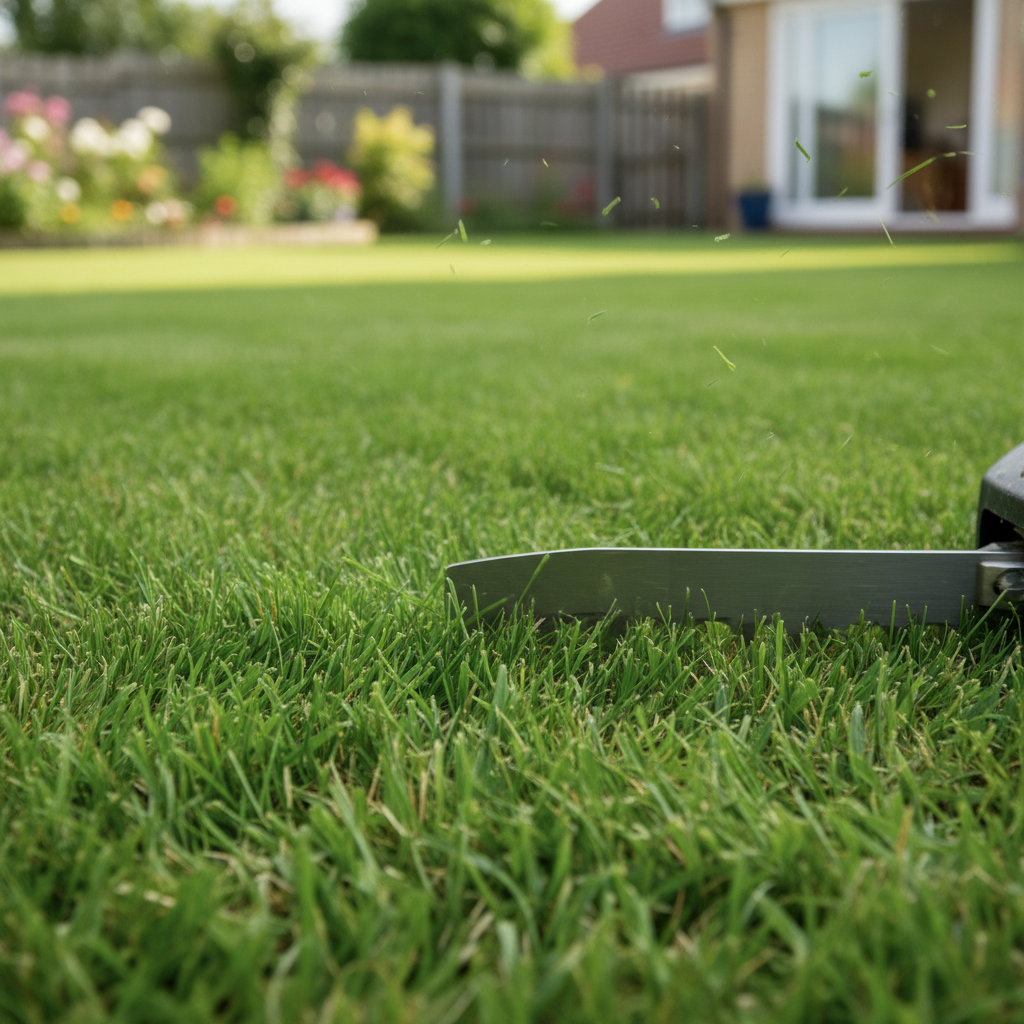
Many homeowners believe a shorter cut means less frequent mowing, but this common misconception often leads to a 'scalped' lawn. Cutting your grass too short — removing more than one-third of the blade at once — severely stresses the plant, reducing its ability to photosynthesize and develop strong roots. This practice leaves your lawn vulnerable to weeds, diseases, and drought, often resulting in thin, brown, or patchy areas. The fix is straightforward: consistently maintain a higher mowing height, typically between 2.5 to 3.5 inches for most cool-season grasses and 2-3 inches for warm-season varieties, and mow more frequently to avoid taking off too much at once. This encourages a dense, healthy turf that naturally resists problems.
The Problem
The allure of a perfectly manicured, golf-course-like lawn often leads homeowners down a path of well-intentioned but ultimately damaging mowing practices. The primary culprit? Cutting the grass too short. This isn't just about aesthetics; it's a fundamental misunderstanding of grass physiology. When you mow too much off the top, often referred to as 'scalping,' you're not just trimming the blades; you're inflicting trauma. Grass blades are like solar panels for the plant. They capture sunlight and convert it into energy through photosynthesis, which is vital for root growth, nutrient uptake, and overall health. Removing too much blade surface drastically reduces this energy production. The grass plant then goes into survival mode, diverting energy from root development to regrow its leaves, making it weaker and more susceptible to environmental stressors like heat, drought, pests, and diseases. This weakened state also creates an ideal environment for weeds to germinate and thrive, as they face less competition from a thin, stressed lawn.
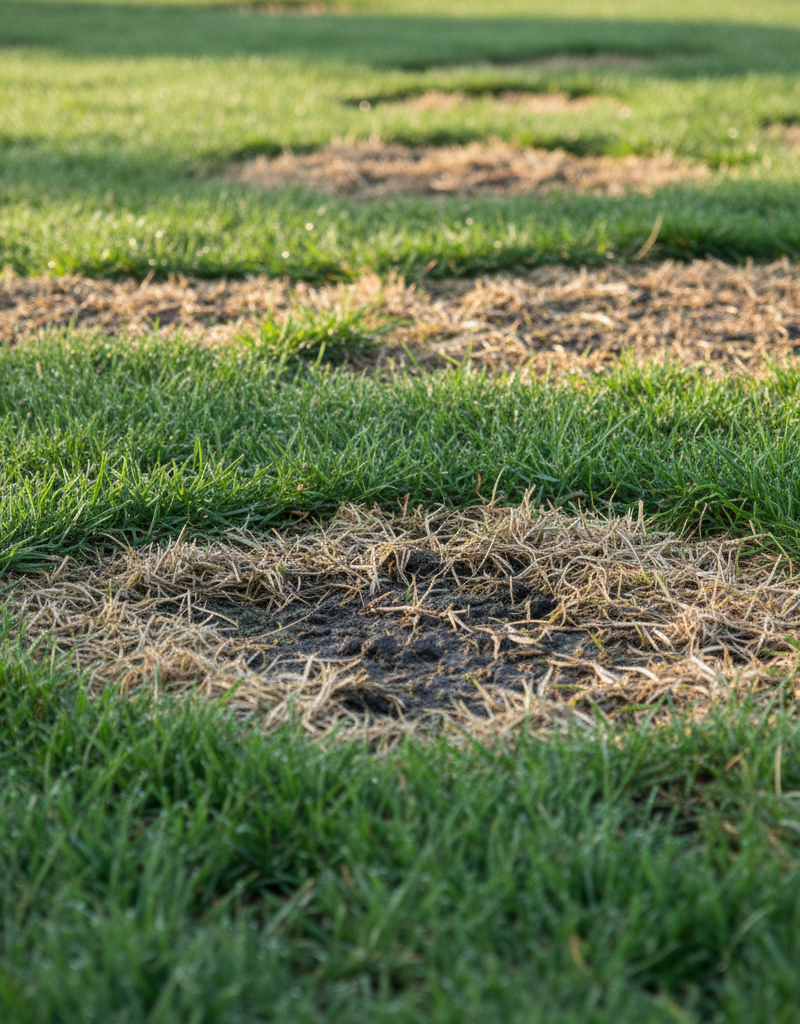
Furthermore, cutting too short exposes the delicate crown of the grass plant, where new growth originates, to direct sunlight and damage. It can also dry out the soil surface more quickly, increasing water evaporation and the need for more frequent irrigation. Over time, a consistently scalped lawn becomes thinner, develops bare spots, and takes on a sickly, yellowish or brownish hue, losing the vibrant green color homeowners strive for. Understanding this biological impact is the first step toward transforming your lawn from struggling to thriving.
How It Works
To truly understand why proper mowing height is crucial, it helps to know a little about how grass grows. Every blade of grass is a living plant with a specialized structure designed for survival and reproduction. The green blade you see above ground is responsible for photosynthesis, capturing sunlight to create sugars (energy) that fuel the plant. Below the soil line, a complex root system anchors the plant, absorbs water and nutrients, and stores energy reserves. There's a direct, proportional relationship between the length of the grass blade and the depth and vigor of its root system. A general rule of thumb is that the deeper the root system, the taller the blade can be, and vice versa.
When you cut grass, you're removing the photosynthetic factory. If you remove too much (more than one-third of the blade), the plant immediately perceives this as a severe threat. Its top priority shifts from developing a robust root system to rapidly regrowing the lost leaf tissue. This process consumes stored energy, depleting valuable reserves that would otherwise be used for deep root penetration, disease resistance, and overall resilience. Consequently, the root system shrinks, becoming shallower and less able to access water and nutrients deep within the soil. A shallow root system makes the grass incredibly vulnerable to drought, as the topsoil dries out quickly, and to nutrient deficiencies, as it can't reach deeper nutrient stores.
The ideal mowing height varies slightly depending on your grass type. Cool-season grasses (like fescue, rye, bluegrass) generally perform best when maintained between 2.5 and 3.5 inches, promoting deeper roots and shading out weeds. Warm-season grasses (like Bermuda, zoysia, St. Augustine) often tolerate slightly shorter cuts, typically 2 to 3 inches, but still benefit from not being scalped. The taller blade length not only supports deeper roots but also creates a denser canopy that shades the soil, reducing weed seed germination by blocking sunlight and conserving soil moisture. This natural shading also helps keep the soil temperature cooler, which is beneficial for beneficial soil microbes and root health, especially during hot summer months. By understanding this delicate balance, you can work with your lawn's natural biology rather than against it.
Step-by-Step Fix
Fixing the common mowing mistake of cutting too short involves a few simple adjustments to your routine and equipment. The goal is to gradually raise your mowing height and mow more frequently, ensuring you never remove more than one-third of the grass blade in a single cut.
-
Assess Your Current Mower Blade Height – Identify your current setting.
- Before you do anything, check your mower's current blade height setting. Most walk-behind mowers have a lever or individual wheel adjusters near each wheel. Ride-on mowers typically have a single lever. Understand the range of your mower's settings. Some mowers indicate height in inches, while others use arbitrary numbers (e.g., 1-5). Consult your owner's manual if unsure. Measure the actual blade height from a flat surface to the bottom edge of the blade for accuracy. If your mower uses numbers, find out what each number corresponds to in inches.
-
Raise Your Mowing Height Gradually – Avoid sudden changes.
- For most cool-season grasses (fescue, rye, bluegrass), aim for a final height of 2.5 to 3.5 inches. For warm-season grasses (Bermuda, zoysia, St. Augustine), target 2 to 3 inches. If your current setting is significantly shorter, don't jump to the maximum height all at once. Raise the deck by one setting (typically about 1/2 to 3/4 inch) for your first new mow. For example, if you were cutting at 1.5 inches, raise it to 2.25 inches. Let the grass adapt for a week or two, then raise it another notch if needed, until you reach your desired height. This prevents a shock to the grass and allows it to gradually develop a taller canopy. Remember, taller grass equals deeper roots.
-
Implement the One-Third Rule – The golden rule of mowing.
- This is the most critical principle: never remove more than one-third of the grass blade's total height in any single mowing session. If your desired height is 3 inches, for example, your grass should be no more than 4.5 inches tall before you mow (3 inches + 1/3 of 3 inches = 4.5 inches). This means you might need to mow more frequently, especially during peak growing seasons. If your grass has grown significantly taller (e.g., after a vacation or a rainy period), you'll need multiple passes over several days, raising the deck each time, until it reaches the desired height. Resist the urge to cut it all down at once.
-
Sharpen Your Mower Blade – Ensure a clean cut.
- A dull blade tears the grass rather than cleanly cutting it. This creates ragged, open wounds on the leaf blades, making them more susceptible to disease and giving the lawn a whitish or brownish cast on the tips after mowing. Sharpen your blade at least once per season, or more frequently if you mow a large area or hit obstacles. A clean cut allows the grass to heal quickly, minimizing stress. Always disconnect the spark plug before inspecting or working on the blade for safety.
-
Mow When Grass is Dry – Reduce stress and disease.
- Mowing wet grass can lead to uneven cuts, clumping of clippings, and can spread certain fungal diseases. Wait until the morning dew has evaporated and there hasn't been significant rainfall for several hours. Dry grass stands up straighter, allowing for a cleaner, more even cut.
-
Vary Your Mowing Pattern – Prevent ruts and compaction.
- Mowing in the same direction every time can compact the soil in specific paths, creating ruts and uneven growth. It also trains the grass blades to lean in one direction. Change your mowing pattern—diagonal, perpendicular, or alternating—each time you mow. This encourages upright growth, reduces soil compaction, and creates a more aesthetically pleasing, even lawn.
-
Leave Grass Clippings on the Lawn (Mulch Mowing) – Natural fertilizer.
- Unless clippings are excessively long (which violates the one-third rule), leave them on the lawn. Modern mulching mowers are designed to finely chop clippings, returning valuable nutrients (nitrogen, phosphorus, potassium) and organic matter to the soil. This can reduce your need for synthetic fertilizers by 15-20%. Ensure clippings are spread evenly and not clumping, as large clumps can smother the grass beneath. If you've violated the one-third rule and have heavy clippings, rake them up to avoid smothering.
-
Regularly Inspect Your Lawn – Catch issues early.
- After each mow, take a few minutes to walk your lawn. Look for any signs of disease, pests, or areas that seem to be struggling. Early detection can prevent small problems from becoming major ones. Pay attention to how the grass responds to your new mowing height and adjust as needed.
Common Causes
- **Misconception of
Related Articles
Keep troubleshooting with these hand-picked guides from FixlyGuide:
- The #1 Mowing Mistake That Invites Weeds (And How to Fix It in 10 Minutes) — Discover the most common mowing mistake homeowners make that inadvertently encourages weeds, and learn easy steps to achieve a healthier, m…
- The #1 Mowing Mistake That Invites Weeds (And How to Fix It in 5 Minutes) — Discover the most common mowing error homeowners make that inadvertently encourages weed growth, and learn a simple fix for a healthier law…
- The #1 Mowing Mistake That Leaves Your Lawn Brown and Patchy — Discover the most common mowing mistake homeowners make that leads to unhealthy, patchy grass and how to fix it for a vibrant lawn.
- The #1 Watering Mistake Homeowners Make (And How to Fix It in Minutes) — Discover the most common lawn watering mistake homeowners make and how adjusting your technique can lead to a healthier, greener lawn.
- The #1 Pruning Mistake That Chokes Your Shrubs (And How to Fix It Right Now) — Discover the most common pruning error homeowners make and how to correct it for healthier, more vigorous shrub growth.
- The #1 Mistake Homeowners Make When Their Ice Maker Stops (And the Easy Fix) — Before you call for service, learn the most common and easily fixable reason your refrigerator's ice maker isn't producing ice.
Should you do this yourself?
Answer five quick questions before you start. Safety outranks savings every time.
Your experience with work like this
How high do you have to work?
Does the job involve any of these?
Will it need a permit?
Specialty tools
Free and instant. Educational guidance only — not a quote, inspection, or professional diagnosis.
Estimate your own project cost
National averages are a starting point. Enter your details for a range that fits your house.
Mulch & topsoil calculator
- Material cost (delivery extra)$45 – $90
Bulk delivery typically adds $50–$150 per trip but is cheaper than bagged for jobs over ~2 cu yd.
Educational estimate only — always confirm with written local bids.
What should this project cost?
Enter your project details for a realistic cost range before you call anyone.
Cost depends heavily on which system turns out to be the source.
- Regional adjustment
- National average
- Labor share (typical)
- ~$1,620
- Quotes to collect
- 3 written estimates
Educational estimate based on national averages — not a binding quote. Always confirm with written local estimates.
Before you start
Check the difficulty, permits, and safety risk — then decide whether to call a pro.
Free, no signup required. Estimates are educational guidance, not a quote or an inspection.
Get the print-ready PDF of this guide
A clean, ad-free, printable version you can keep on your phone or pin to the workshop wall. Free with a FixlyGuide account.
- Print-optimized layout
- Tools, materials & every step included
- Saved to your account
Frequently asked questions
Why is cutting grass too short bad?+
Cutting grass too short (often called scalping) removes too much of the grass blade, which is essential for photosynthesis. This stresses the plant, weakens its root system, makes it more susceptible to drought, disease, and weeds, and often results in a thin, patchy, or discolored lawn.
What is the "one-third rule" for mowing?+
The one-third rule states that you should never remove more than one-third of the grass blade's total height in a single mowing session. For example, if your grass is 4.5 inches tall, you should cut no more than 1.5 inches off, leaving it at 3 inches. This ensures the grass isn't overly stressed and maintains adequate green blade for photosynthesis.
What is the ideal mowing height for a healthy lawn?+
The ideal mowing height depends on your grass type. For most cool-season grasses (fescue, rye, bluegrass), 2.5 to 3.5 inches is recommended. For warm-season grasses (Bermuda, zoysia, St. Augustine), 2 to 3 inches is generally best. Taller grass promotes deeper roots, shades out weeds, and conserves soil moisture.
Should I leave grass clippings on the lawn?+
Yes, in most cases, you should leave grass clippings on the lawn. Finely chopped clippings (from a mulching mower) return valuable nutrients and organic matter to the soil, acting as a natural fertilizer. Only remove clippings if they are excessively long and clumped, which can smother the grass.
How often should I sharpen my mower blade?+
You should sharpen your mower blade at least once per mowing season, or more frequently if you mow a large area, have sandy soil, or notice your grass tips looking ragged and torn after mowing. A sharp blade ensures a clean cut, minimizing stress on the grass.

Discussion
Loading comments…