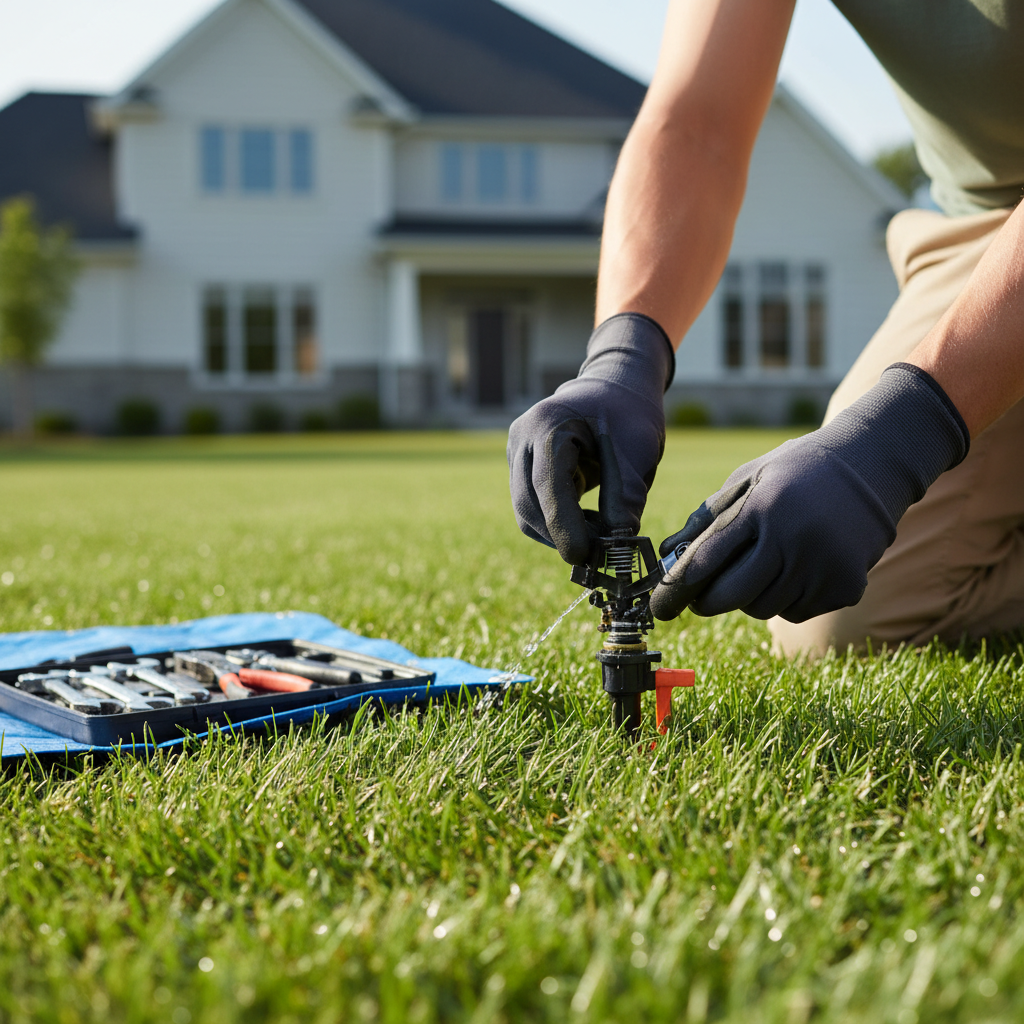
- Listen at the Valve Box — Manually activate a non-working zone at the controller, then locate the corresponding valve box in your yard (a rectangular green or black lid flush with the ground). Lift the lid and listen closely to the valve.
- If you hear a "click" then a soft hum: The solenoid is receiving power and activating. If you also hear the sound of flowing water but see no sprinklers, you likely have a significant pipe break between the valve and the heads.
- If you hear no sound: The solenoid is not receiving the electrical signal. This points to a bad solenoid, a cut wire, or a poor connection.
Landscaping · Deck or fence project
| Project category | Landscaping |
|---|---|
| Problem type | Deck or fence project |
| Trade required | Landscaping |
| Urgency | Planned project |
| Safety risk | Moderate safety risk |
| DIY suitability | DIY for experienced homeowners |
| Cost category | High cost |
| Typical timeline | Most builds 3–10 days depending on size |
| Contractor type | Landscaping contractor |
Repair option
Replace failed boards, posts, and hardware; reseal the surface.
Replacement option
Rebuild when framing or the ledger connection is unsafe.
Common causes
- Rot at posts and ledger
- Storm damage
- Adding outdoor living space
Relevant tools:home improvement material pricesproject cost estimator
Published April 18, 2026Last updated August 17, 2026
How it works
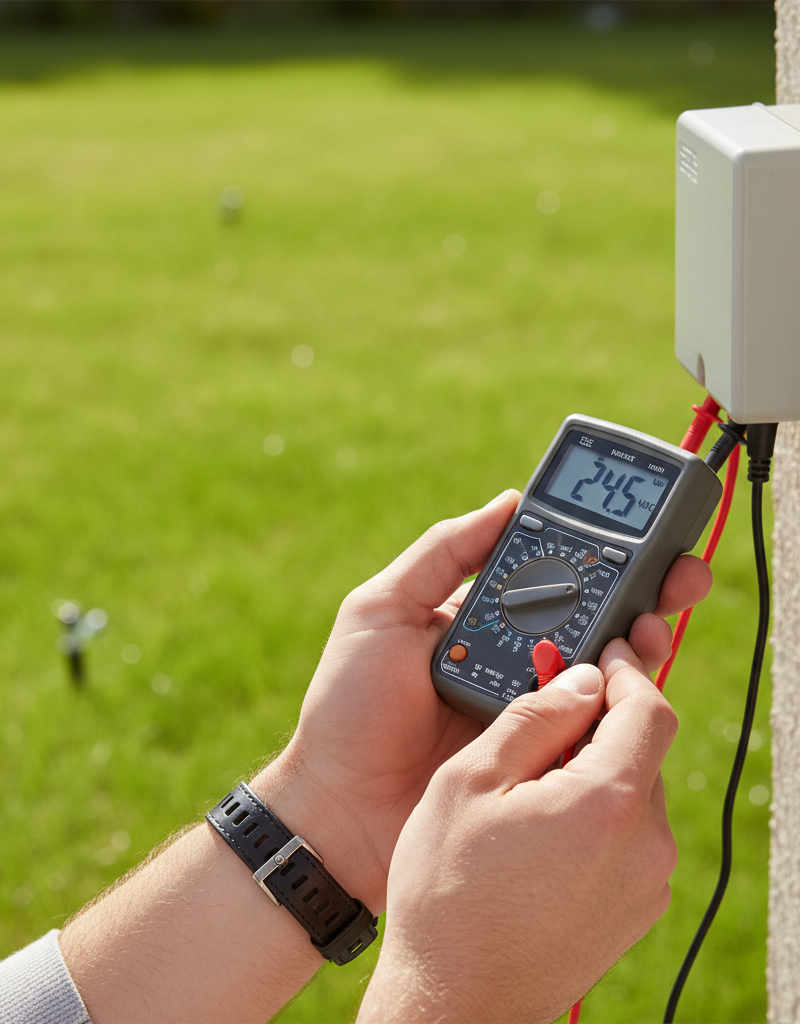
An automatic sprinkler system is a network of plumbing and low-voltage electrical components designed to deliver water to your landscape on a schedule. The system’s brain is the controller, a sophisticated timer typically mounted in a garage or on an exterior wall. The controller is powered by standard 120-volt household electricity but uses an internal transformer to send a 24-volt AC signal to operate the system. This low voltage is safe for homeowners to work with around the valves.
When a scheduled watering time begins, the controller sends this 24-volt signal through two wires: a "common" wire connected to all valves and a specific "zone" wire for the area to be watered. This electrical signal energizes a solenoid on the corresponding zone valve. The solenoid is a small electromagnet that, when activated, lifts a tiny plunger. This action opens a small passage, relieving water pressure on top of a flexible rubber diaphragm inside the valve. The higher mainline water pressure from below then pushes the diaphragm up, opening the main port of the valve. Water rushes from the pressurized mainline, through the open valve, and into the lateral pipes serving that zone. The pressure in the lateral lines forces the sprinkler heads to pop up and distribute water.
Step-by-Step Fix
This guide proceeds from the most common and simple fixes to more complex diagnostics. Before beginning any work on electrical components, unplug the controller or turn off its circuit breaker.
-
Assess the Controller's Status — First, confirm the system has power and is programmed to run. Look at the controller’s display; if it's blank, the unit has no power. If it is on, check that the dial or setting is on "Run" or "Auto" and not "Off" or "System Off."
- Tools: None needed for initial check. A non-contact voltage tester can verify power at the outlet.
- If no power: Check that the controller is plugged into a working GFCI outlet (press the "Test" then "Reset" button). Verify the circuit breaker in your home's main electrical panel has not tripped. Some controllers have a small user-replaceable fuse (e.g., a 1A or 2A slow-blow fuse) inside the wiring compartment; check for a broken filament.
-
Bypass any Active Rain or Soil Sensors — A rain sensor is designed to interrupt the watering cycle when it detects recent precipitation. A faulty or debris-clogged sensor can hold the system in an indefinite "off" state. Look for a small device, often mounted on a roof eave or fence, with a wire running back to the controller.
- Action: Most controllers have a switch or setting to bypass the sensor. Flip this switch to "Bypass" or "Active." If the system now runs manually, your sensor is either faulty, needs cleaning (remove leaves/debris), or is simply still wet.
-
Run a Manual Test from the Controller — Use the controller’s "Manual" or "Test" function to attempt to run a single zone for a few minutes. This bypasses all programming schedules and directly tests the core function of the controller and wiring.
- If one zone runs but others don't: The issue is isolated to the non-working zones (likely a bad solenoid, valve, or wiring for that specific zone).
- If no zones run: The problem is system-wide. This points to a water supply issue, a failed common wire, or a malfunctioning controller.
-
Confirm the Main Water Supply is Open — Every sprinkler system has a dedicated shut-off valve. Its location varies but is typically near the main water meter, where the water supply branches off to the irrigation system.
- Action: Locate this valve. If it's a ball valve, the handle should be parallel to the pipe to be open. If it's a gate valve (a round, spigot-like handle), ensure it is turned fully counter-clockwise. These valves can be accidentally closed during other plumbing work.
-
Inspect the Backflow Preventer Valves — The backflow preventer (often a Pressure Vacuum Breaker or Double Check Assembly) is a critical safety device located above ground, shortly after the main shut-off. It has its own set of ball valves that must be open for water to pass.
- Action: This is a very common point of failure after winterization. Both the inlet and outlet valves on the backflow device must be in the open position (handles parallel to the pipe). If they were left closed over winter, your system will have no water.
-
Listen at the Valve Box — Manually activate a non-working zone at the controller, then locate the corresponding valve box in your yard (a rectangular green or black lid flush with the ground). Lift the lid and listen closely to the valve.
- If you hear a "click" then a soft hum: The solenoid is receiving power and activating. If you also hear the sound of flowing water but see no sprinklers, you likely have a significant pipe break between the valve and the heads.
- If you hear no sound: The solenoid is not receiving the electrical signal. This points to a bad solenoid, a cut wire, or a poor connection.
-
Manually Open the Valve — Test the valve’s mechanical function. On top of the valve, you will find either a small bleed screw or a manual activation lever integrated into the solenoid.
- Action: Slowly turn the bleed screw counter-clockwise one-half to one full turn, or turn the solenoid itself a quarter turn. This manually releases pressure and should force the valve to open. If the sprinklers for that zone now turn on, the valve itself is mechanically functional, and the problem is electrical (solenoid, wiring, or controller). Tighten the screw/solenoid to close the valve.
-
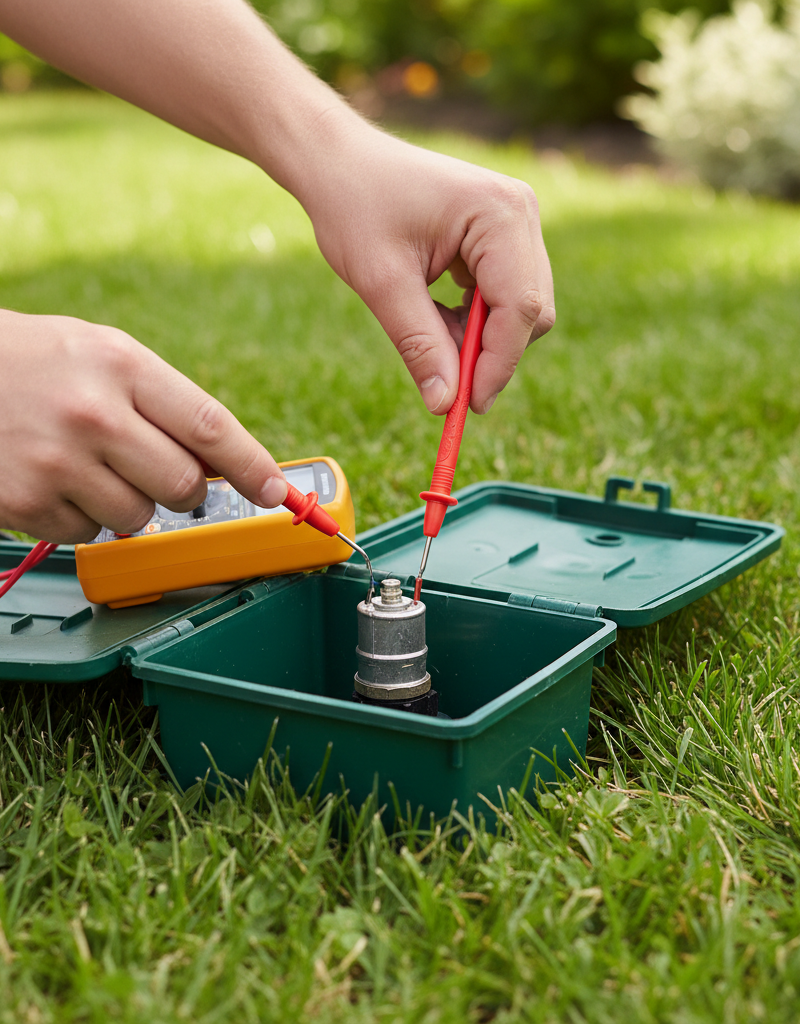
Test the Solenoid with a Multimeter — If the manual bleed test works but the electronic activation does not, the solenoid itself is the primary suspect.
- Tools: Multimeter.
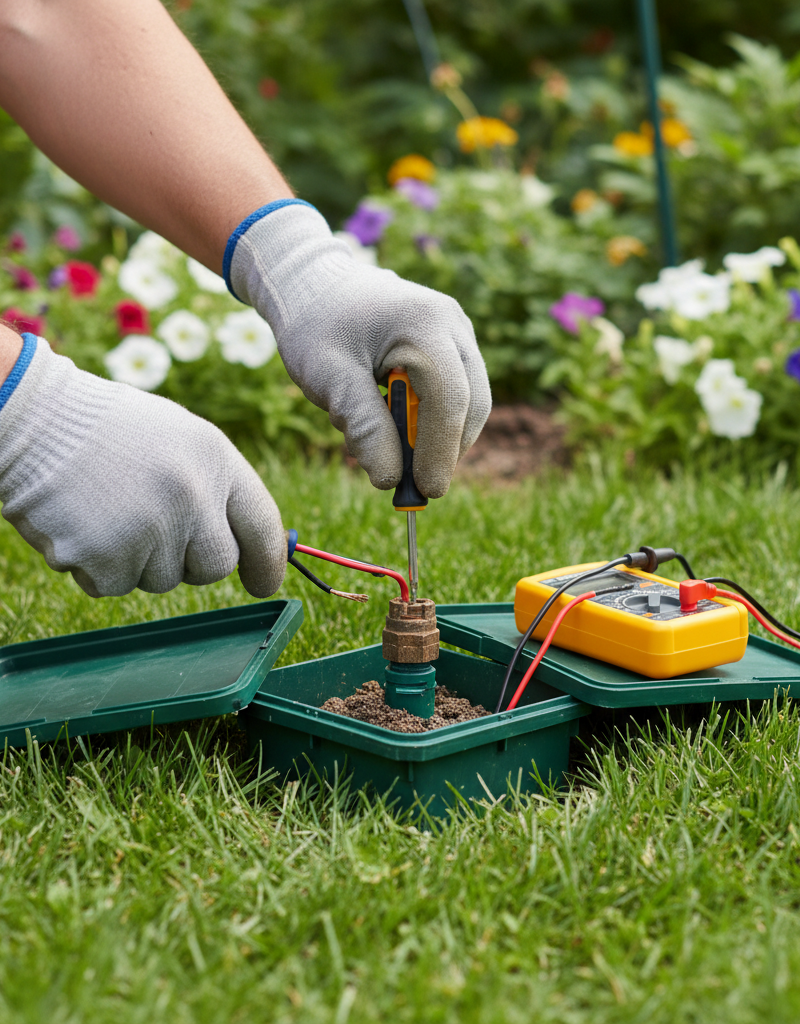
- Process: Disconnect power to the controller. At the valve box, disconnect the two wires leading to the suspect solenoid. Set your multimeter to measure resistance (Ω, Ohms). Touch the probes to the two solenoid wires. A functional solenoid will typically show a reading between 20 and 60 Ohms. A reading of "OL" (Open Loop) or infinity indicates a broken coil, and the solenoid must be replaced. A reading of 0 or very near 0 indicates a dead short, requiring replacement.
-
Inspect the Valve Diaphragm — If a valve sticks open, won't open fully, or leaks, the problem is often debris or a tear in the internal rubber diaphragm.
- Process: Turn off the main water supply to the irrigation system. Unscrew the bolts or threaded cap (bonnet) on the top of the valve body. Carefully lift the bonnet and the attached diaphragm. Inspect the diaphragm for any tears, warping, or punctures. Check the valve body for rocks, sand, or other debris that could prevent a proper seal.
-
Check and Clean Sprinkler Head Filters — If you have water but pressure is low or heads won't pop up, individual filters may be clogged. This is common after a pipe repair or in systems with hard water.
- Action: For pop-up spray heads, pull up the riser and unscrew the nozzle. The filter screen is located directly underneath it. For rotor heads, the filter is at the bottom of the main pop-up assembly, requiring you to unscrew the entire internal mechanism from the canister in the ground. Rinse the filters clean and reinstall.
Common mistakes
- Forgetting the Backflow Preventer Valves: Homeowners often remember the main shut-off but forget the two valves on the backflow assembly itself. After a blowout for winterization, these are always left closed. Forgetting to open them in the spring is the most common reason for a system-wide "no water" issue.
- Using Indoor Wire Nuts for Buried Connections: In the valve box, standard orange or grey wire nuts will corrode within a single season due to moisture. This creates failed connections that are difficult to diagnose. Always use waterproof, silicone-filled wire connectors specifically designed for irrigation or direct burial applications.
- Overtightening Plastic Fittings: When replacing a valve or fitting, it's easy to overtighten threaded PVC components. This can create hairline cracks that lead to persistent, hard-to-find leaks. Hand-tighten, then use a wrench for an additional one-half turn at most. Use PTFE tape or paste on male threads.
- Replacing a Controller Prematurely: A blank controller screen does not automatically mean the controller is broken. Always test the electrical outlet with a lamp or phone charger first, then check the home’s circuit breaker panel before spending money on a new controller.
- Not Flushing Lines After a Repair: After repairing a broken pipe or replacing a valve, small amounts of dirt and gravel inevitably enter the line. If you immediately install new sprinkler heads, that debris will be flushed directly into their delicate filter screens and nozzles, clogging them instantly. Always flush the zone for a minute by running it with one head or fitting removed before closing up the system.
Cost & time breakdown
Costs are estimates and can vary by region and the specific model of components used. Professional costs include labor and standard truck charges.
| Task | DIY Cost | Pro Cost | Time Commitment |
|---|---|---|---|
| Replace Controller | $80 - $350 | $250 - $550 | 1 Hour |
| Replace Valve Solenoid | $15 - $30 | $125 - $200 | 30 Minutes |
| Rebuild Valve (Diaphragm Kit) | $10 - $25 | $115 - $190 | 45 Minutes |
| Replace Pop-up Sprinkler Head | $5 - $25 | $90 - $160 | 20 Minutes per head |
| Repair Small PVC Pipe Leak | $15 - $30 | $150 - $350 | 1-2 Hours (includes digging) |
| Professional System Diagnostic | N/A | $85 - $150 | 1 Hour |
When to call a pro
While many sprinkler issues are simple fixes, certain problems are best left to a professional irrigation contractor to avoid causing more significant damage or wasting time.
Call a professional if you encounter:
- Multiple, Randomly Failing Zones: If various zones stop working without a clear pattern, and you've confirmed the controller is good, you likely have a damaged common wire or other complex wiring fault. Professionals use specialized tools like time-domain reflectometers (TDRs) and wire tracers to locate a buried break without excavating your entire lawn.
- System-Wide Low Water Pressure: If all zones exhibit low pressure and you've confirmed all valves are fully open, you may have a crushed or leaking mainline pipe (the pipe before the zone valves) or an issue at the point of connection to the city water supply. This often requires extensive digging and plumbing expertise.
- Any Leak or Malfunction of the Backflow Preventer: This device protects your home's clean drinking water from contamination. Repairing or replacing it is often regulated and requires certification. If it’s damaged or continuously leaking, call a licensed plumber or certified backflow technician immediately.
- Significant Redesign Needs: If troubleshooting reveals that your core problem is poor design—such as mismatched heads, improper spacing, or too many heads on one zone—simple repairs won’t solve recurring dry spots and poor coverage. An irrigation professional can assess the hydraulics and redesign the system for efficiency.
Prevention & maintenance
Proactive maintenance is the best way to ensure reliable operation and prevent costly emergency repairs.
- Perform Seasonal Walk-Throughs: At the beginning and end of each watering season, and at least once mid-summer, manually run each zone one by one. Walk the entire area, looking for leaks, damaged heads, misaligned spray patterns, and heads that fail to pop up or retract.
- Properly Winterize in Cold Climates: Before the first hard freeze, the system must be winterized by blowing all water out of the pipes with a high-volume air compressor. This is the single most important step to prevent freeze damage that can crack pipes, valve bodies, and the expensive backflow preventer.
- Clean Filters and Nozzles Annually: At least once per year, remove and clean the small filter screens located under each sprinkler nozzle. Soaking them in a bucket of water can help dislodge stubborn mineral deposits or algae buildup that restricts flow and disrupts spray patterns.
- Protect Components During Yard Work: Before aerating or dethatching your lawn, mark the location of every sprinkler head with irrigation flags. This small step can prevent catastrophic damage to the heads from heavy equipment.
- Check the Controller Battery Backup: Most modern controllers use a coin-cell or 9V battery to retain the date, time, and program settings during a power outage. Replace this battery annually to avoid having to reprogram the entire system after every brief power flicker.
Related Articles
Keep troubleshooting with these hand-picked guides from FixlyGuide:
- The #1 Mistake Homeowners Make When Sprinklers Won't Turn On — Discover the most common oversight when your sprinkler system fails to activate and learn simple troubleshooting steps to restore your irri…
- Fix Your Sprinkler System: Troubleshooting Common Issues — Troubleshoot and fix common sprinkler system problems like no water, low pressure, or zones not activating with these DIY steps.
- The 3 Hidden Reasons Your Sprinkler Head Won't Pop Up (And How to Fix Them) — Frustrated by a sprinkler head that won't rise? Discover the top three culprits behind this common irrigation issue and how to resolve them…
- Why Are My Tree Leaves Turning Brown in Summer? Fixes for Common Issues — Discover the common reasons your tree leaves are browning in summer and learn actionable steps to revive your trees and prevent future dama…
- The #1 Mistake Killing Your Lawn's Clover—and the Easy fix That Spares Your Grass — Discover the most common mistake homeowners make when trying to eliminate clover, and learn how to remove it effectively without harming yo…
- AC Blowing Warm Air? Easy Fixes for Common AC Problems — Discover the most common reasons your AC is blowing warm air and learn simple, actionable steps to troubleshoot and fix the issue yourself,…
What should this project cost?
Enter your project details for a realistic cost range before you call anyone.
Cost depends heavily on which system turns out to be the source.
- Regional adjustment
- National average
- Labor share (typical)
- ~$1,620
- Quotes to collect
- 3 written estimates
Educational estimate based on national averages — not a binding quote. Always confirm with written local estimates.
Frequently asked questions
Why is my sprinkler system getting no water at all?+
The most common reasons for no water flow are a closed main shut-off valve, a faulty backflow preventer, or a problem with the controller's power supply or programming. Start by checking these components.
How do I know if my sprinkler controller is bad?+
Signs of a bad controller include a blank display, unresponsive buttons, erratic zone operation, or failure to turn on at all after checking the power source. You can also try unplugging it for a few minutes to reset it.
Can I fix a broken sprinkler head myself?+
Yes, often. Most sprinkler heads can be unscrewed and replaced with a new one of the same type and brand. You'll need a shovel to dig around the head and a wrench or pliers to remove it. Always flush the line before installing the new head to prevent debris clogs.
Discussion
Loading comments…