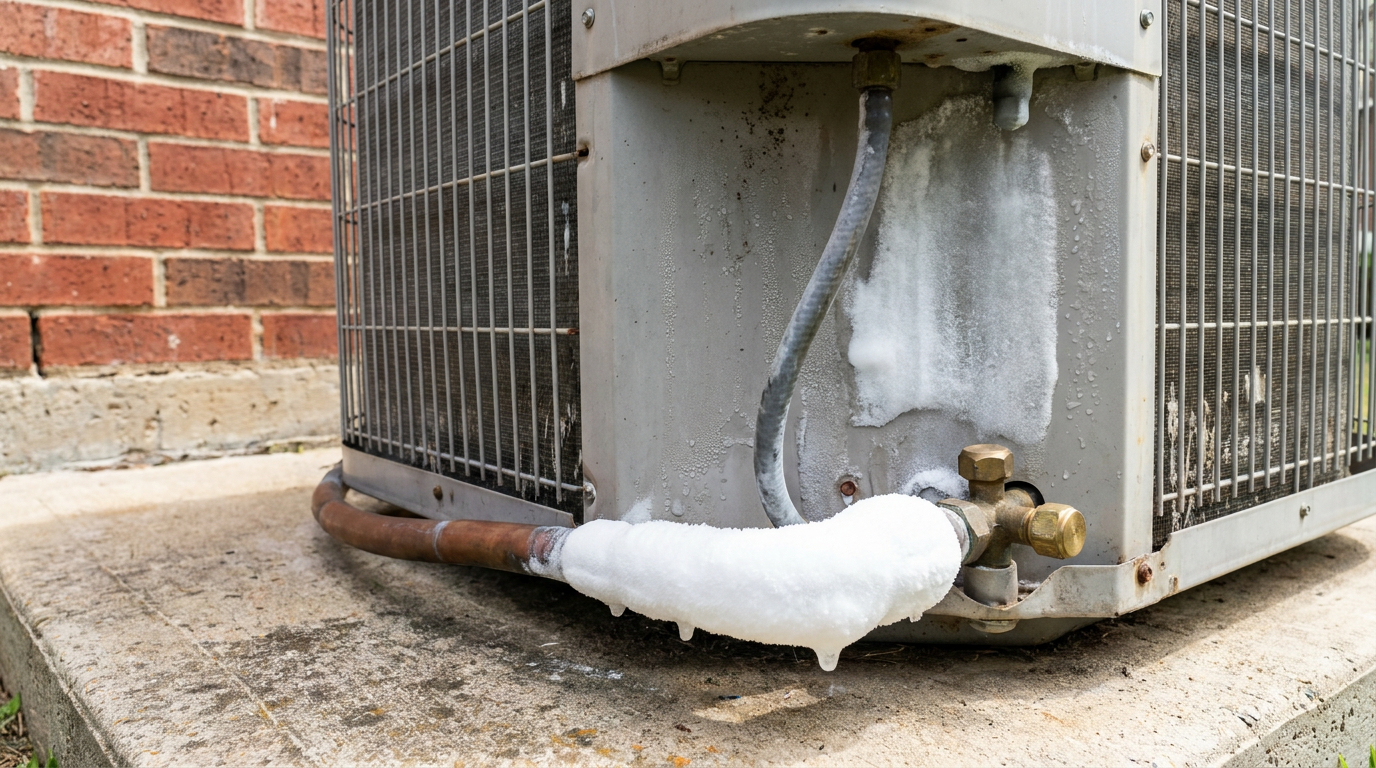
- Clear away outdoor condenser debris — Check the metal fins around the outdoor unit and look for junk within a 24-inch perimeter. Cut back shrubs, rake out leaves, and make sure mower clippings haven’t caked onto the coil face.
- Tools needed: Garden hose with a standard multi-pattern spray nozzle.
- Action: Spray the outdoor aluminum fins gently from the outside downward at a 45-degree angle to rinse off dirt; never use a high-pressure pressure washer, which instantly flattens aluminum coil fins.
HVAC · High energy usage
| Project category | HVAC |
|---|---|
| Problem type | High energy usage |
| Trade required | HVAC |
| Urgency | Planned project |
| Safety risk | Low safety risk |
| DIY suitability | DIY for experienced homeowners |
| Cost category | High cost |
| Typical timeline | Assessment within weeks; replacement planned off-season |
| Contractor type | Licensed HVAC technician |
Repair option
Duct sealing, insulation, and a tune-up before touching the equipment.
Replacement option
High-efficiency replacement sized by a load calculation, not a rule of thumb.
Common causes
- Aging, low-efficiency equipment
- Leaking ducts losing conditioned air
- Insufficient attic insulation
- Oversized system short-cycling
Relevant tools:project cost estimatorrepair or replace
Published November 6, 2026Last updated November 6, 2026
Tools & materials you'll need
Affiliate linksAs an Amazon Associate FixlyGuide earns from qualifying purchases — at no extra cost to you. Prices and availability are accurate as of publication and subject to change.
Quick Answer
If your outside air conditioner’s freezing up, turn the thermostat to OFF and flip the fan setting to ON right away. That starts thawing the ice without beating up the compressor. Nine times out of ten, the trouble’s one of two things: starved airflow — usually a clogged 1-inch pleated air filter or crushed return ducts — or low refrigerant from a pinhole line leak. Let the system thaw all the way out for 2 to 4 hours before you start poking around the filter and outdoor coils. Run an iced-up unit too long and you can wipe out a $1,800 to $3,200 compressor in a hurry. I’ve seen that movie. Don’t need to see it again.
The Problem
You walk outside on a brutal 95°F afternoon and find the outdoor condenser wrapped in solid white frost. That’ll make you stop and blink. You might see a thick sheet of ice on the copper line set, frost climbing the service valves, or the whole bottom of the outdoor unit turned into a little glacier. Inside, the vents are usually wheezing out weak, lukewarm air, and the system just keeps grinding away without ever catching up.
And no, the outdoor unit usually isn’t the real problem. Not by itself. What you’re looking at is almost always a breakdown that started at the indoor air handler or evaporator coil and worked its way down the line. When heat can’t transfer into the refrigerant, that refrigerant stays too cold, drops below 32°F, and freezes the moisture right out of the summer air around it. Leave it alone, and liquid refrigerant can slug back into the compressor, wipe out the oil, and snap internal valves. That thing’s toast.
How It Works
Your air conditioner doesn’t make cold air. It pulls heat out of the house. I like to think of refrigerant as a heat sponge, cycling back and forth between the indoor coil and the outdoor condenser. Inside the home, warm room air blows across the aluminum evaporator coil. The cold, low-pressure refrigerant inside that coil grabs heat from the air and boils into a vapor at roughly 40°F to 45°F.
That vapor heads outside through the big insulated copper pipe — the suction line — and into the compressor. The compressor squeezes the gas, drives the pressure and temperature way up, often past 120°F, then sends it through the outdoor condenser coil. The outdoor fan pushes outside air across those coils, dumps the indoor heat into the Texas air, and turns the refrigerant back into a high-pressure liquid. Then it passes through a metering device, like a TXV or piston, which drops the pressure fast and chills it right before it goes back inside.
If airflow inside drops, or if refrigerant leaks out, the whole thing gets sideways. Without warm indoor air moving across the evaporator coil, the refrigerant never picks up enough heat. Pressure falls. At lower pressures, the boiling point of R-410A drops below 32°F. Moisture on the coil freezes on contact. That frost turns into an insulating blanket, which chokes the airflow even more. Then the freeze creeps along the copper suction line, through the wall, and right out to the outdoor service valve and compressor shell. I pulled a water heater in Frisco last month that had exactly this kind of slow-burn failure nearby in the same attic chase — ugly stuff, and it usually starts small.
Step-by-Step Fix
Follow these steps to thaw the system safely, find the real issue, and get the cool air back without cooking expensive parts.
-
Shut down the cooling mode immediately — Go straight to the thermostat, switch the system from "COOL" to "OFF," and change the fan from "AUTO" to "ON." Letting the blower run pushes room-temperature air across the frozen indoor coil, which helps the ice melt faster and keeps the house from feeling like a sauna.
- Safety check: Don’t chip at ice on the outdoor copper pipes or brass valves with a screwdriver, knife, or hammer; copper tubing walls are paper-thin (around 0.030 inches) and will puncture instantly.
- If indoor water begins backing up: Check your indoor air handler closet right away, because a thawing coil can dump gallons into the primary drain pan.
-
Inspect the indoor condensate drain pan — Find the indoor evaporator unit in the closet, attic, or basement and make sure the drain line isn’t plugged. Melting ice can produce 3 to 5 gallons of water in under two hours, and if your 3/4-inch PVC condensate line’s clogged with algae, that water’s gonna spill over and wreck the ceiling drywall.
- Tools needed: Wet/dry shop vacuum and a small towel.
- Pro branch: If you see water pooling near electrical parts on the furnace or air handler, shut off the indoor unit breaker at the main panel immediately.
-
Pull and inspect your air filter — Slide the furnace or return-grille filter out and hold it up to a light. If you can’t clearly see light shining through the media, that clogged filter starved the system and dropped suction pressure until the pipes froze.
- Quick rule: Cheap fiberglass filters need monthly replacement; high-efficiency 1-inch MERV 11 or 13 pleated filters often choke standard blowers for air in high-demand southern climates.
- Immediate fix: If it’s dirty, toss it now and don’t run the system until a fresh, clean filter is seated in the rack.
-
Give the system 2 to 4 hours to thaw completely — Don’t start diagnostics or try to restart the unit while frost is still visible on the outdoor brass service valves. It can take several hours for the indoor block of ice — sometimes three inches thick — to liquefy and drain away.
- Tip: You can gently spray the outdoor condenser coils with a garden hose on a low-pressure shower setting to help the melt along, but keep water away from the electrical disconnect box.
-
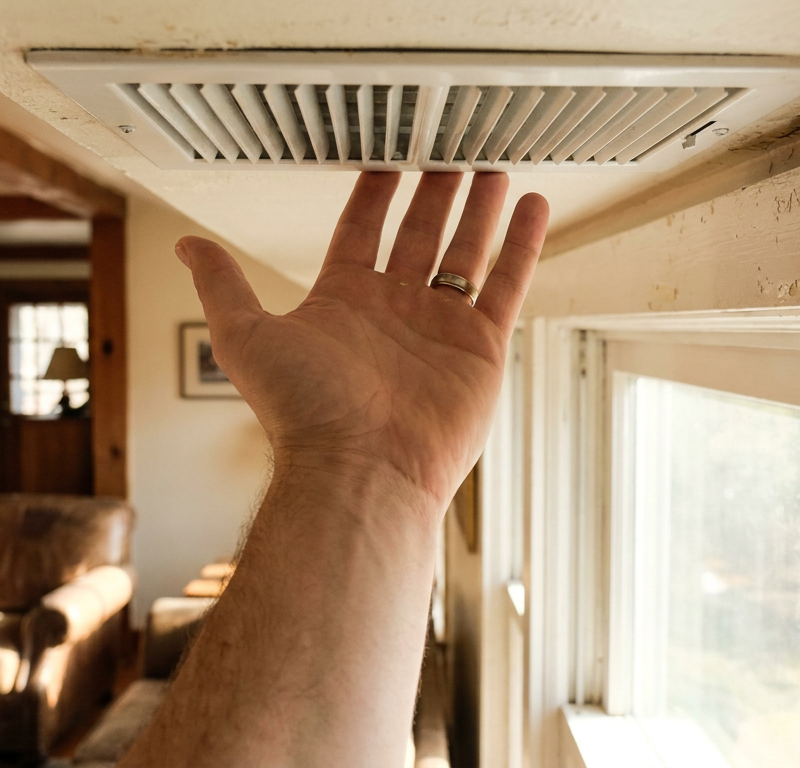
Examine supply registers and return air grilles — Walk the house and check every vent to make sure curtains, rugs, or dressers aren’t blocking airflow. At least 80% of your home’s supply vents need to stay fully open to keep the static pressure where the blower motor was designed to work.
- Common culprit: Closing supply vents in unused guest bedrooms to "save power" actually cuts airflow across the evaporator coil and causes this exact freeze-up.
-
Clear away outdoor condenser debris — Check the metal fins around the outdoor unit and look for junk within a 24-inch perimeter. Cut back shrubs, rake out leaves, and make sure mower clippings haven’t caked onto the coil face.
- Tools needed: Garden hose with a standard multi-pattern spray nozzle.
- Action: Spray the outdoor aluminum fins gently from the outside downward at a 45-degree angle to rinse off dirt; never use a high-pressure pressure washer, which instantly flattens aluminum coil fins.
-
Power the cooling cycle back up and observe the outdoor fan — Once all the ice has melted inside and out, replace the filter, set the thermostat back to "COOL" with the setpoint 3 degrees below room temperature, and head outside. The outdoor condenser fan ought to spin up quick and throw strong, warm exhaust air straight out the top grate.
- Failure check: If the compressor hums loudly but the top fan doesn’t spin, the dual-run capacitor’s dead or the fan motor’s seized.
- The stick test: Carefully nudge the fan blade with a thin wooden stick through the top grille; if it starts spinning under momentum, your run capacitor (a $15 part) is blown.
-
Test the temperature drop across the coil — Let the unit run for 15 minutes, then stick a digital probe thermometer into the return air duct and then into the supply plenum roughly 12 inches past the indoor coil. The difference between the two numbers — known as the temperature split or Delta-T — should sit squarely between 16°F and 20°F.
- Low reading (<14°F): If airflow checks out but the temperature drop is only 8°F to 10°F and the suction line starts frosting again, you’ve got a refrigerant leak.
- Shut down: If the line starts frosting over within 20 minutes of a clean restart, cut power immediately to save your compressor.
Common Causes
- Suffocated indoor airflow: When a dust-choked filter, collapsed return duct, or closed dampers block warm house air from brushing past the evaporator coil, the cold refrigerant doesn’t get warmed up. The coil dips below 32°F, moisture freezes on the metal, and the ice slowly crawls back to the outdoor unit.
- Low refrigerant charge from a pinhole leak: AC units don’t "use up" freon. If the refrigerant’s low, there’s a hole somewhere — usually from vibration rub-outs or formicary corrosion in copper hairpin bends. Less refrigerant means lower pressure, and that drops the saturation temperature below freezing.
- Failing indoor blower motor or blown capacitor: If the blower fan inside your furnace or air handler spins too slowly, maybe from a weak run capacitor or worn motor bearings, it can’t move the required 350 to 400 cubic feet per minute (CFM) of air per ton of cooling.
- Defective Thermal Expansion Valve (TXV): The TXV meters refrigerant into the indoor coil. If its sensing bulb loses charge or the internal pin sticks shut, it starves the evaporator, drops internal pressure, and kicks off a freeze.
- Running the AC when outdoor temps are below 62°F: Running cooling on crisp spring or fall nights messes with the pressure balance. Standard residential systems don’t have low-ambient controls; cold-weather operation can drop head pressures and freeze the indoor coil and suction line solid.
Common Mistakes
- Chipping at the ice with metal tools. Folks get impatient and grab a screwdriver or putty knife to scrape ice off the brass valves or copper lines. Copper’s soft; one slip punches a hole, dumps the refrigerant charge, and turns a $0 filter fix into an $1,800 sealed-system repair.
- Leaving the AC running in "COOL" mode hoping it will power through. Ice acts like an insulator, not a coolant. The longer you let an iced-up machine run, the worse it gets. Liquid refrigerant that can’t evaporate may enter the compressor cylinders — that’s liquid slugging, and it’ll break valves and scorch the motor windings.
- Buying dense, ultra-high MERV filters for older systems. Dropping a thick MERV 13 filter into a system built for a basic fiberglass pad can cut CFM output by up to 30%. Unless your ductwork’s oversized, stick with MERV 8 filters and change them every 30 to 60 days during peak summer.
- Adding refrigerant without finding and fixing the leak. "Topping off" an AC without an electronic sniffer or nitrogen pressure test is just burning money. If the system was low enough to freeze the outdoor unit, that refrigerant’ll leak right back out within weeks or months, and you’re still stuck with the problem.
- Forgetting about the condensate drain. When that solid block of ice melts, all that water has to go somewhere fast. If you don’t keep an eye on the primary drain line and clear it with a wet/dry vac, you’ll swap an AC problem for an emergency ceiling repair.
Cost & Time Breakdown
| Task | DIY Cost | Pro Cost | Time |
|---|---|---|---|
| Air Filter Replacement | $12–$25 | $75–$120 | 5–10 mins |
| System Thaw & Drain Line Clear | $0–$15 | $150–$250 | 2–4 hours |
| Dual-Run Capacitor Replacement | $15–$35 | $180–$320 | 30–45 mins |
| Condenser Coil Deep Chemical Clean | $20–$35 | $150–$300 | 45–60 mins |
| Refrigerant Leak Detection & Repair | N/A (EPA cert required) | $450–$1,200 | 2–4 hours |
| Indoor Blower Motor Replacement | $120–$250 | $550–$950 | 1.5–3 hours |
| Thermostatic Expansion Valve (TXV) | N/A (EPA cert required) | $400–$850 | 2–3 hours |
Tips & Prevention
- Set a recurring calendar alert for filter inspections. In dusty areas or homes with pets, check your air filter every 30 days during peak summer. Hold it up to a light bulb; if you can’t see the filament clearly, replace it.
- Flush the primary condensate drain with vinegar every spring. Pour 1 cup of regular distilled white 5% vinegar down the condensate T-pipe every month from May to September to kill algae before it turns into a nasty plug.
- Maintain a 2-foot vegetation clearance zone. Don’t let ivy, shrubs, or ornamental grass crowd the condenser cabinet. Your outdoor coil needs room to dump thousands of BTUs per hour; block the perimeter and you raise head pressures and strain the system.
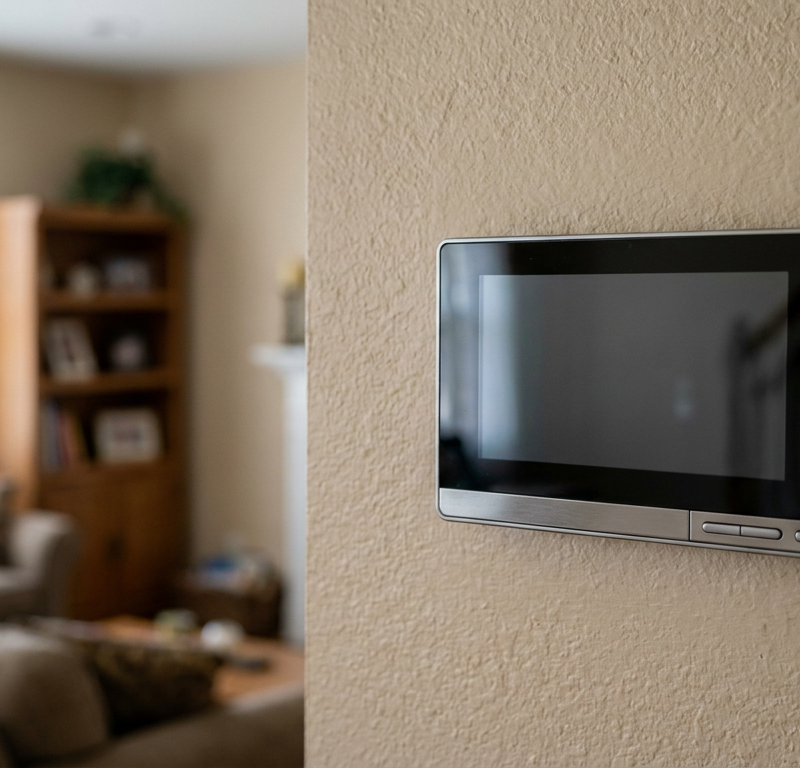
- Upgrade to a smart thermostat with freeze warnings. A lot of modern thermostats track long runtimes and temperature drops; if your system runs for three straight hours without moving the house temperature down 1 degree, the thermostat sends an alert so you can shut it down before ice coats the outdoor unit.
- Schedule an annual spring tune-up. Have a licensed tech hook up digital manifold gauges once a year to check subcooling and superheat. Catching a fractional 4-ounce refrigerant deficit in April saves you from a big freeze in the heat of July.
When to Call a Professional
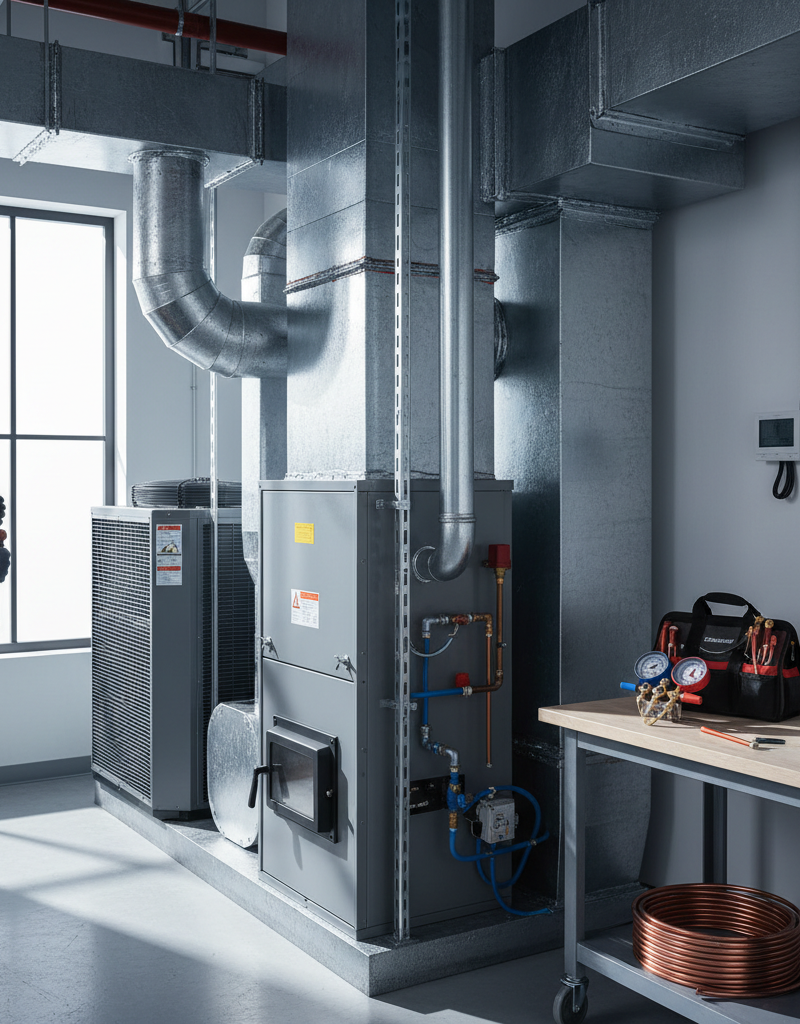
If you put in a clean filter, let the system thaw completely, and the copper suction line starts icing up again within 30 to 45 minutes of restarting, the problem’s inside the sealed refrigerant circuit. Tracking down low refrigerant, finding pinhole evaporator leaks, or swapping a stuck TXV takes an EPA Universal Certification, recovery machines, and digital manifold gauges. Messing with R-410A or R-22 without training can cause severe frostbite burns, dump ozone-depleting gases, and break federal law. And if you hear grinding, buzzing, or metallic clicking from the outdoor unit, or the system keeps tripping the 30-amp double-pole breaker in your electrical panel, stop there. That points to an electrical short or internal compressor failure, and you need a pro on it before the whole unit burns up.
Related Articles
Keep troubleshooting with these hand-picked guides from FixlyGuide:
- The Shocking Truth: Your AC Freezing Outside Isn't What You Think — When your outdoor AC unit turns into an ice sculpture, it's a sure sign of air circulation problems, often caused by easily overlooked issu…
- The Hidden Reason Your AC Freezes — And Why Most Homeowners Get It Wrong — Discover the surprising truth behind why your outdoor AC unit is freezing and learn the most common mistake homeowners make when trying to…
- Sweating AC Vents? 6 Causes and the Step-by-Step Fix for Dripping Grilles — Stop sweating HVAC vents and dripping ceiling registers by sealing boot air leaks with mastic, controlling indoor humidity, and restoring p…
- Musty Smell from AC Vents? 5 Causes and the Step-by-Step Fix — Musty, sour air coming from your HVAC vents? Learn how to clean coils, clear clogged drain lines, and identify when deep mold requires a li…
- AC Smells Like Dirty Socks? 5 Causes and the Step-by-Step Fix — Stop the sour, musty locker-room stench coming from your AC vents. Here is how to clean your evaporator coil, flush the pan, and end season…
- Freezer Cold but Fridge Warm? 5 Causes and the Step-by-Step Fix — Freezer freezing but fridge warm? Learn how to diagnose a bad fan, stuck damper, or frosted coils with real multimeter tests and simple ste…
Should you do this yourself?
Answer five quick questions before you start. Safety outranks savings every time.
Your experience with work like this
How high do you have to work?
Does the job involve any of these?
Will it need a permit?
Specialty tools
Free and instant. Educational guidance only — not a quote, inspection, or professional diagnosis.
Estimate your own project cost
National averages are a starting point. Enter your details for a range that fits your house.
HVAC replacement cost
- Equipment$2,200 – $3,800
- Installation labor$1,200 – $2,500
Always insist on a Manual J load calculation — sq-ft sizing is only a rough check. Federal heat-pump rebates may reduce cost significantly.
Educational estimate only — always confirm with written local bids.
What should this project cost?
Enter your project details for a realistic cost range before you call anyone.
Service calls and common repairs run $150–$900; full system replacement typically $6,000–$12,000.
- Regional adjustment
- National average
- Labor share (typical)
- ~$1,935
- Quotes to collect
- 3 written estimates
Educational estimate based on national averages — not a binding quote. Always confirm with written local estimates.
Fixly Project Decision Box
- DIY difficulty
- Advanced
- Estimated time
- Homeowner checks 20–30 minutes
- Cost level
- Moderate
Main tools / materials
- Clean air filter
- Garden hose for condenser coils
- Shop vac for the condensate line
When to stop and call a pro
- Burning smell, smoke, or a tripping breaker
- Refrigerant lines iced over or hissing
- Any work inside the sealed refrigerant circuit (EPA-licensed only)
- Gas smell near a furnace — leave and call the utility
Need professional help?
Find an HVAC Pro Near YouGet the print-ready PDF of this guide
A clean, ad-free, printable version you can keep on your phone or pin to the workshop wall. Free with a FixlyGuide account.
- Print-optimized layout
- Tools, materials & every step included
- Saved to your account
Frequently asked questions
What is the very first thing I should do if my AC is freezing up outside?+
Turn the system from "COOL" to "OFF" immediately, but switch the fan setting to "ON." This forces warm indoor air across the iced-up evaporator coil to melt it naturally without risking compressor burnout. Never leave the system running in cool mode hoping it will clear itself.
How long does it take for an iced-up air conditioner to thaw?+
It typically takes between 2 to 4 hours for the system to melt completely. You can speed up the process by keeping the indoor blower fan running, but never use open flames, heat guns, or sharp tools to scrape ice off the copper refrigerant tubing.
Can I just run my air conditioner while it is frozen?+
No. Running an AC with frozen lines forces the compressor to operate under dangerously low suction pressure and risks liquid refrigerant slugging back into the pump cylinders. This can destroy the compressor's internal valves and permanently ruin a $2,000+ component.
Can a dirty air filter really cause the outdoor unit to freeze?+
A dirty air filter chokes off airflow over the indoor evaporator coil. Without warm air flowing over the coil to transfer heat into the refrigerant, the coil's internal temperature drops below 32°F, freezing ambient moisture and sending that ice creep down the line to the outdoor unit.
Does a dirty outdoor condenser coil cause the unit to freeze up?+
While severe dirt build-up on the outdoor coils can cause high head pressures and system failure, the outdoor coil itself rarely freezes from outdoor dirt. The ice almost always originates inside on the evaporator coil due to low airflow or low refrigerant, then migrates along the suction line to the outside unit.
Do I just need to add more freon if my AC is frozen?+
No. Air conditioners are closed-loop systems that circulate the same charge of refrigerant constantly. If your unit is low on refrigerant, you have a physical hole or leak somewhere in the copper tubing, coil joints, or service valves that must be repaired.
Why does my AC freeze up at night when it cools down outside?+
If outdoor temperatures drop below 60°F to 62°F at night and your AC is running, the pressure inside the system plummets. Standard residential AC units require high ambient temperatures to maintain proper operating head pressures; low temperatures cause the indoor and outdoor coils to frost over.
How do I know if the freeze-up is caused by a refrigerant leak versus airflow?+
If you installed a fresh filter, verified all supply vents are wide open, fully melted the ice, and the copper line freezes over again within an hour of running, you have a sealed-system issue like a refrigerant leak or stuck TXV that requires a licensed HVAC technician.
Discussion
Loading comments…