- Verify thermostat modes and fan switches — Look right at the thermostat, don't guess. Set the cooling target at least 5°F below the room temperature, make sure the mode says "COOL" and not "HEAT" or "OFF," and set the fan to "AUTO."
- If the fan's on "ON," the blower runs all day long even when the compressor isn't cooling, so you'll get stale air between cycles.
- Blank screen? Usually just dead batteries. Pop in two AA alkaline batteries behind the faceplate.
HVAC · High energy usage
| Project category | HVAC |
|---|---|
| Problem type | High energy usage |
| Trade required | HVAC |
| Urgency | Planned project |
| Safety risk | Low safety risk |
| DIY suitability | DIY for experienced homeowners |
| Cost category | High cost |
| Typical timeline | Assessment within weeks; replacement planned off-season |
| Contractor type | Licensed HVAC technician |
Repair option
Duct sealing, insulation, and a tune-up before touching the equipment.
Replacement option
High-efficiency replacement sized by a load calculation, not a rule of thumb.
Common causes
- Aging, low-efficiency equipment
- Leaking ducts losing conditioned air
- Insufficient attic insulation
- Oversized system short-cycling
Relevant tools:project cost estimatorrepair or replace
Published November 18, 2026Last updated November 18, 2026
Tools & materials you'll need
Affiliate linksAs an Amazon Associate FixlyGuide earns from qualifying purchases — at no extra cost to you. Prices and availability are accurate as of publication and subject to change.
Quick Answer
When an air conditioner starts blowing warm air, nine times out of ten I'm looking at one of three things: the thermostat's set wrong — usually the fan's on "ON" instead of "AUTO" — a clogged 1-inch pleated air filter choking the evaporator coil, or a tripped dual-pole breaker killing power to the outdoor condenser. Check the thermostat first. Make sure it's on "COOL" with the fan on "AUTO," verify both the indoor and outdoor breakers haven't popped, and swap in a fresh filter. If the outside compressor's running but the bigger insulated copper suction line isn't cold and sweating, you're probably dealing with a refrigerant leak or a failed run capacitor.
The Problem
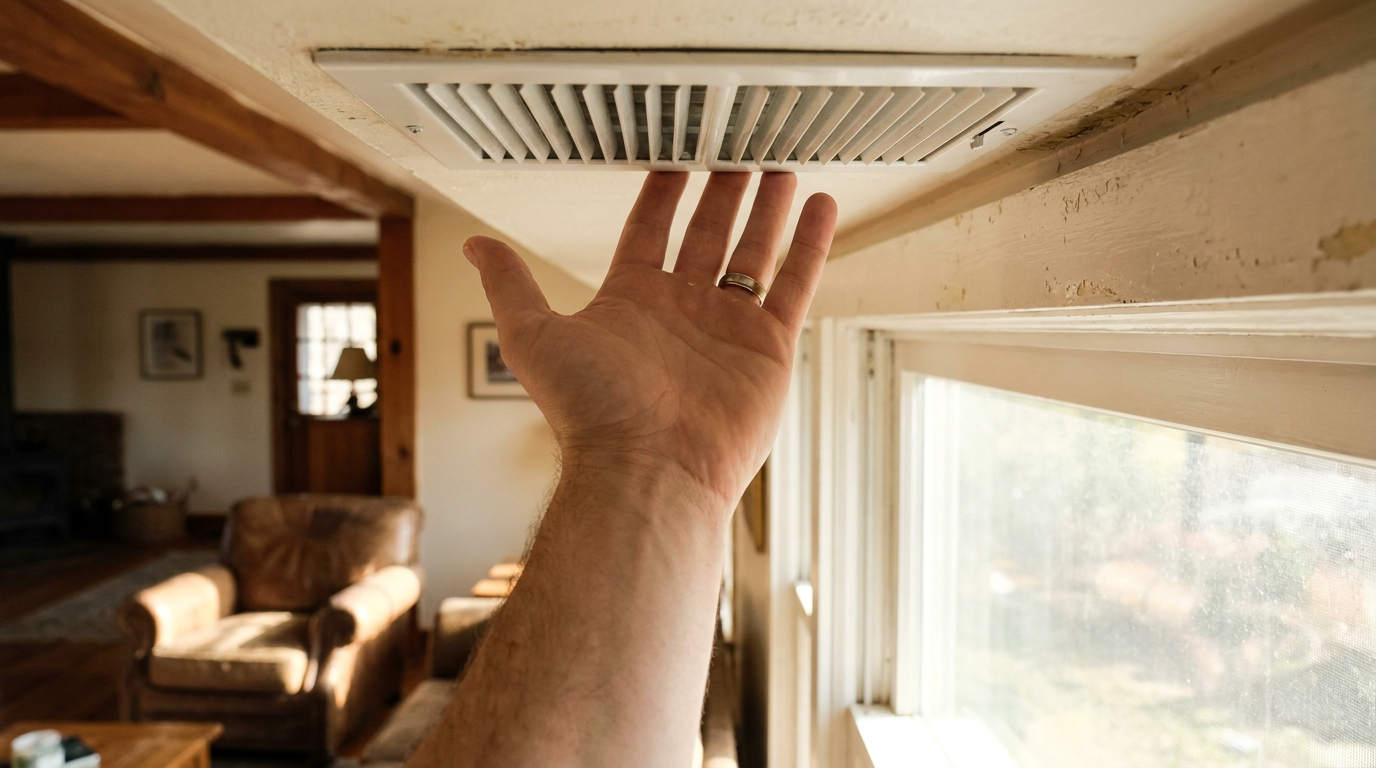
Nothing gets a homeowner's attention faster than walking past a supply register on a 98°F summer afternoon and feeling warm, sticky air pushing out. The indoor fan's humming through the ducts. Power's there. But the wall stat keeps climbing — 74°F, 77°F, 81°F — no matter how low you set it.
People jump straight to worst-case: fried compressor, dead system, big-dollar replacement. And sure, that stuff happens. But warm air usually comes from something simpler. Bad thermostat settings. A power break between the indoor air handler and the outdoor condensing unit. Or airflow so restricted the coil can't do its job. The indoor blower runs on its own; it doesn't care whether the outdoor unit is actually cooling. So if the condenser quits and the blower keeps going, you're just moving attic or room air around. Feels like a hair dryer, doesn't it?
How It Works
To figure out why the air goes warm, you've gotta have the refrigeration cycle in your head. An air conditioner doesn't make cold. It pulls heat out of the house and dumps it outside. Inside, warm room air blows across an evaporator coil filled with cold, low-pressure liquid refrigerant — usually R-410A or newer R-32. That refrigerant boils around 40°F to 45°F, soaking up heat from the air before heading out through the thick foam-insulated copper line, the suction line.
Outside, the compressor squeezes that low-pressure gas into a high-pressure, super-hot vapor, something like 150°F to 175°F. The condenser fan moves outdoor air across the aluminum fins and knocks the heat back out of the refrigerant. Then an expansion valve or metering device drops the pressure hard, the refrigerant chills down again, and the whole loop starts over.
Break any part of that chain and the blower still pushes air through your vents, but no real heat transfer happens. A $20 dual-run capacitor can fail and leave the fan spinning while the compressor sits there dead quiet. A filthy filter can choke the return air, freeze the indoor coil solid, and turn it into an ice block that insulates itself from the airflow. Same end result every time: warm, unconditioned air in the living room.
Step-by-Step Fix
Before you call someone out and hand over a $120 to $180 diagnostic fee, work through this in order. Start at the thermostat and move out to the condenser pad.
-
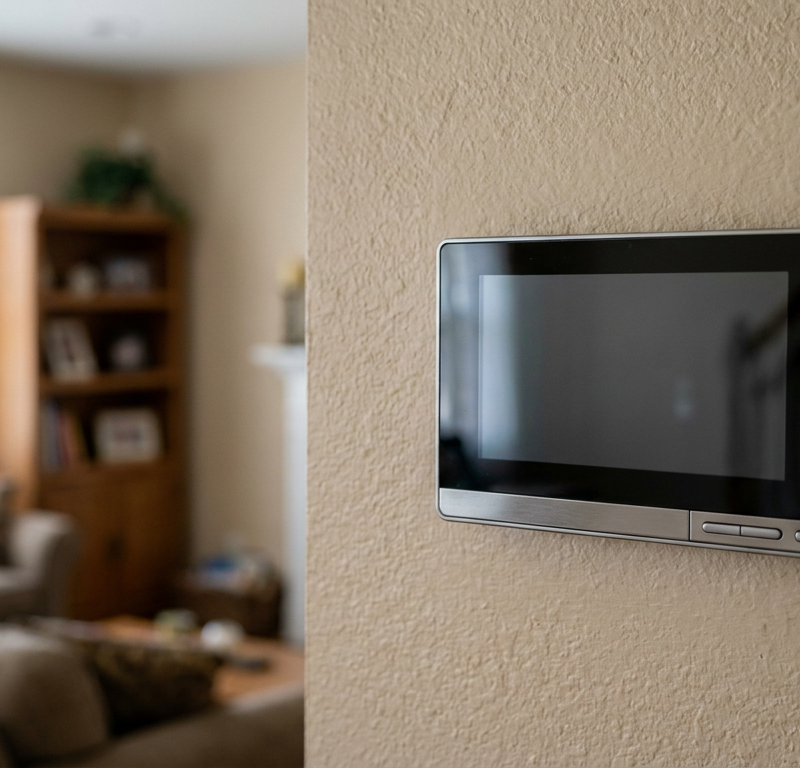
Verify thermostat modes and fan switches — Look right at the thermostat, don't guess. Set the cooling target at least 5°F below the room temperature, make sure the mode says "COOL" and not "HEAT" or "OFF," and set the fan to "AUTO."
- If the fan's on "ON," the blower runs all day long even when the compressor isn't cooling, so you'll get stale air between cycles.
- Blank screen? Usually just dead batteries. Pop in two AA alkaline batteries behind the faceplate.
-
Inspect the indoor air filter — Pull the filter from the return grille or the slot on the furnace or air handler. Hold it up to a light. If you can't see light through it, that thing's loaded with dust, pet hair, and all the junk floating around your house.
- Tool required: New pleated filter that matches the exact size, like 16x25x1 or 20x20x4.
- If it's really packed tight, shut the system off at the thermostat for 2 to 3 hours so any ice on the coil can melt before you put the new one in.
-
Check the electrical service panels — Head to the main breaker panel and find the two HVAC circuits: a single-pole 15–20 amp breaker for the indoor blower/furnace and a double-pole 30–50 amp breaker marked "A/C" or "Compressor."
- Watch for a handle sitting in the middle "tripped" spot with a little red or orange showing.
- Push the breaker all the way to "OFF" until it snaps, then flip it back to "ON." If it trips again right away with a spark, stop and call an electrician; you've got a short.
-
Inspect the outdoor disconnect switch — Go outside to the condenser on the concrete or composite pad. On the siding nearby, you'll usually find a metal disconnect box with high-voltage 240V wiring in the whip.
- Flip open the cover and make sure the pullout handle's seated in the "ON" position.
- If it's got cartridge fuses — usually 30-amp or 40-amp time-delay fuses — a blown fuse will kill the outdoor unit while the indoor blower keeps right on trucking.
-
Examine the outdoor condenser fan and listen for compressor hum — With the thermostat calling for cooling, stand about 4 feet back from the outdoor unit. The top fan should be spinning fast, pushing warm air up and out, with a steady low hum from the compressor.
- If the fan won't start and the unit just buzzes or clicks every 60 seconds, the dual-run capacitor is probably toast.
- If the fan spins but the air coming out the top feels cold instead of warm, the compressor isn't running.
-
Check the insulated copper suction line — Look where the two copper lines enter the outdoor cabinet. The bigger one, usually 3/4-inch to 7/8-inch, should have black foam insulation around it.
- Peel back a tiny bit of the insulation and touch the bare copper.
- In a healthy system, that pipe feels beer-can cold, around 45°F to 52°F, and it'll sweat. If it's warm or room temp, you're low on refrigerant or the compressor isn't moving gas.
-
Clear debris from the exterior condenser coil — Check the outside of the condenser cabinet. Over time, the fan pulls in grass clippings, dryer lint, leaves, and cottonwood fuzz, and that junk gums up the fins.
- Safety first: shut off the outdoor disconnect pullout so the unit's dead before you touch anything.
- Hook a spray nozzle to a garden hose, use a gentle shower or flat spray pattern, and rinse from top to bottom at an outward 45-degree angle. No pressure washer — that'll crush the fins in a heartbeat.
-
Inspect the condensate drain safety float switch — Go to the indoor air handler, usually in the attic, basement, or utility closet, and find the white 3/4-inch PVC drain pipe coming off the primary pan. Look for the vertical T-fitting with a secondary float switch wired in with two low-voltage wires.
- If algae and sludge clog the drain, water backs up, the float rises, and it breaks the 24V "R" or "Y" wire to shut the outdoor compressor down and keep water off your ceiling.
- Lift the float sensor out of the PVC tee. If the pipe's full of standing water, clear it with a wet/dry shop vac hooked to the drain exit outside.
-
Reset the entire system control board — If everything looks clean but warm air still comes out, the control board or smart thermostat may have locked out after a sensor fault.
- Turn the thermostat to "OFF."
- Flip both the indoor furnace breaker and the outdoor AC breaker to "OFF."
- Wait a full 15 minutes so the internal capacitors bleed down and the lockout clears, then restore power, wait 3 minutes, and set the thermostat back to "COOL."
Common Causes
- Thermostat Fan Set to "ON": When the fan's on "ON," the blower keeps pushing air whether the outdoor compressor is running or not. You'll get 15 minutes of cold air and then 20 minutes of room-temp air. That's just how it acts.
- Failed Dual-Run Capacitor: This silver can is basically the starting boost for the compressor and outdoor fan motor. In brutal heat — those long 100°F+ days — the internal oil breaks down, the top bulges, or it vents. Then the compressor won't start.
- Severely Clogged Air Filter: Let a filter go past 90 days and the return airflow drops hard. With not enough heat to absorb, the evaporator coil dives below 32°F, freezes over, and blocks airflow completely.
- Tripped High-Pressure Safety Switch: If the outdoor coil's packed with grass clippings, heat can't get out. Refrigerant pressure can spike over 550 to 600 PSI on an R-410A system, and the high-pressure switch shuts the compressor down before something bursts.
- Refrigerant Line Leaks: These systems are sealed tight; refrigerant isn't something you "top off" forever like gas in a lawn mower. Tiny corrosion holes at the indoor copper U-bends or leaky Schrader valves bleed off charge over time. Low charge means warm air, plain and simple.
- Dirty Evaporator Coil: If the filter's sloppy or the return air bypasses it, dust coats the damp indoor coil fins with a greasy layer. Then the refrigerant inside can't really grab heat from the air passing over it.
Common Mistakes
- Setting the thermostat to 55°F when it's blowing warm. Dropping the setpoint to the floor doesn't make colder air come out. The system cools at a fixed rate, usually with a 16°F to 20°F temperature drop across the coil. All you'll do is make the blower run forever and ice the coil up worse.
- Blasting condenser fins with a high-pressure washer. Folks grab a 3,000-PSI washer and think they're cleaning the outdoor unit. All they're really doing is folding those thin aluminum fins flat and choking the coil. Then you've got a repair headache or a whole coil swap.
- Buying cans of automotive refrigerant sealant at an auto parts store. Don't dump automotive R-134a or DIY leak-stop junk into a home AC system. Residential equipment uses different refrigerants, different oils, and different pressures. That goop can gum up the thermostatic expansion valve (TXV) and turn a small repair into a $2,500 mess.
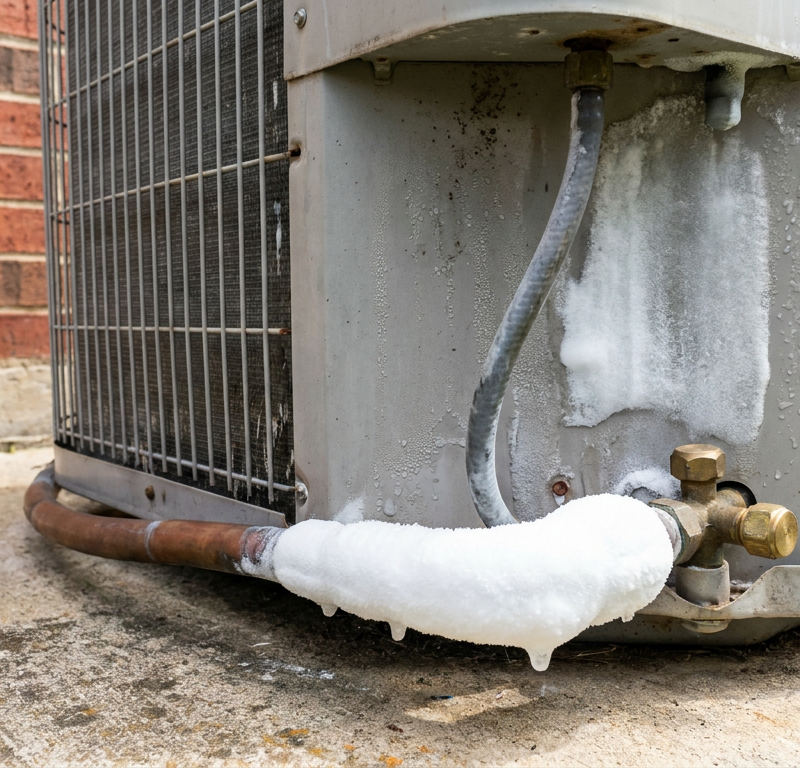
- Ignoring a frozen indoor line set. If you see white frost crawling along the insulated copper line into the furnace, don't just let it ride. Liquid refrigerant in the compressor is bad news — liquid slugging can wreck the pump. Shut cooling off and let the fan run to thaw it.
- Routinely resetting a repeatedly tripping HVAC breaker. A breaker isn't there for decoration. It's a fire-safety device. If your 40-amp condenser breaker trips twice in a row, don't keep resetting it. You've probably got shorted compressor windings or locked-rotor amps (LRA).
Cost & Time Breakdown
| Task | DIY Cost | Pro Cost | Time |
|---|---|---|---|
| Thermostat Battery & Setting Correction | $5 | $85–$150 (Service Call) | 5–10 mins |
| Replacing 1-in Pleated Air Filter | $15–$25 | $50–$90 | 5 mins |
| Clearing Clogged Condensate P-Trap / Float | $10 (Vinegar/Shop-Vac) | $150–$250 | 30–45 mins |
| Exterior Condenser Fin Cleaning | $10 (Coil Cleaner) | $120–$200 | 45–60 mins |
| Dual-Run Capacitor Replacement | $20–$45 | $180–$350 | 30–45 mins |
| Refrigerant Leak Search & R-410A Recharge | Not DIY Legal (EPA 608) | $350–$1,200+ | 1.5–3 hours |
Tips & Prevention
- Swap 1-inch filters every 30 to 60 days in peak seasons. If the system's running hard through a brutal summer or you've got a couple pets shedding like crazy, check the filter on the 1st of every month. For 4-inch or 5-inch media filters, every 6 months is the better bet.
- Flush the primary condensate drain with distilled white vinegar every 60 days. Pour 1 to 2 cups of white vinegar down the indoor drain pipe access tee during cooling season. It helps keep algae, scum, and slime from turning into a nasty plug that'll trip the float switch.
- Maintain a 24-inch clearing perimeter around your outdoor unit. Keep shrubs, ornamental grass, holly bushes, and ground cover trimmed back. That condenser needs open 360-degree airflow to dump heat like it's supposed to.
- Keep an ear out for the "death hum." If the outdoor unit buzzes hard for 5 to 8 seconds every minute and the fan never starts, the capacitor's probably gone or the fan motor bearings are seized. Shut it off before you cook the compressor windings.
- Schedule a professional tune-up every spring. A tech can check static duct pressure, test capacitor microfarad ratings against the nameplate tolerances, and measure subcooling and superheat to catch slow refrigerant leaks before you're stuck with warm air.
When to Call a Professional
If you've done the whole checklist — clean filter, breakers holding, drain line clear, outdoor coil washed off — and the register still blows lukewarm air, stop there.
Once the problem's inside the sealed refrigeration circuit or electrical cabinet, you're out of the easy stuff. If the outdoor unit hums hard and trips the main breaker instantly, the compressor probably has a locked-rotor problem or an internal ground fault. If the outdoor fan spins fine, the compressor seems to run, but the uninsulated copper discharge line is scorching hot while the suction line stays room temp, you're probably looking at a bad TXV metering device or a serious refrigerant loss.
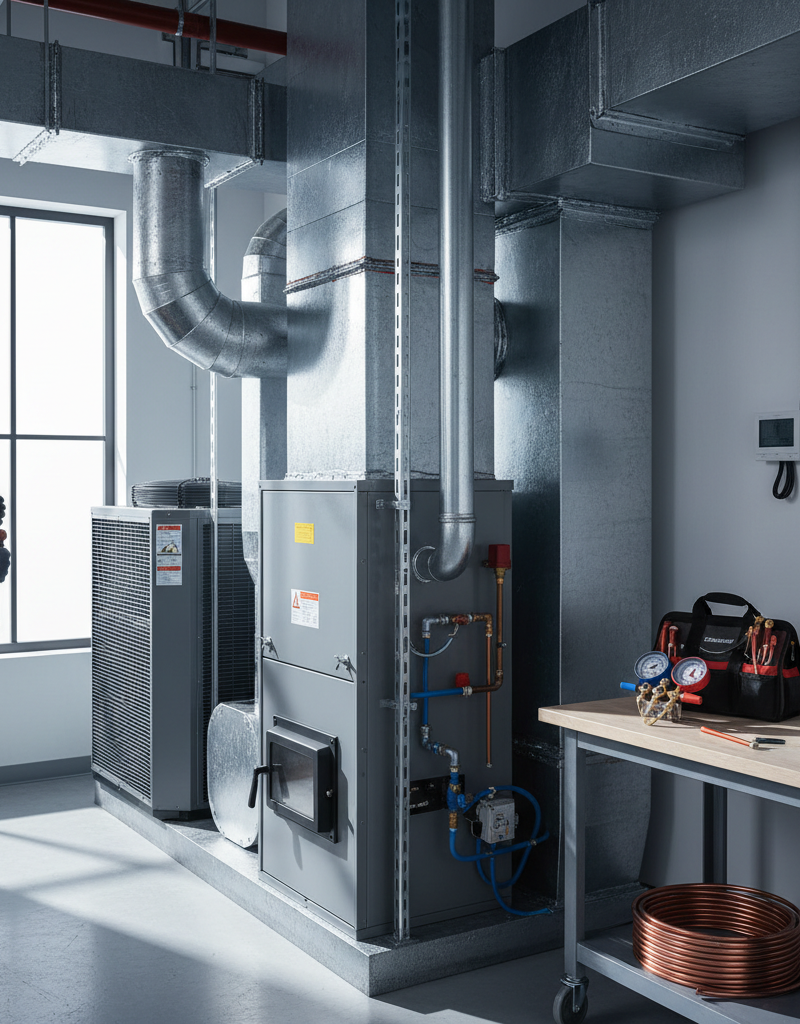
Working with R-410A means EPA Section 608 universal certification, digital manifold gauges, a nitrogen tank for pressure testing, and an electronic leak sniffer. And poking around inside the electrical service cabinet to test live 240V contactors or compressor terminals? That's where people get hurt. Call a licensed HVAC contractor if the trouble's behind an electrical panel cover or inside the sealed copper lines.
Frequently Asked Questions
Why is my AC blowing air, but it's not cold?
Your indoor air handler's blower is separate from the outdoor cooling unit. So if the compressor loses power, trips a breaker, blows a capacitor, or loses refrigerant charge, the indoor fan will still pull room-temperature air through the ducts and blow it out the registers.
How do I know if my AC is low on refrigerant?
Low refrigerant usually shows up in three ways: the air from the vents feels lukewarm or just a little cool instead of cold, the thick insulated copper pipe outside feels warm instead of cold and sweaty, and you may see frost or ice building on the indoor evaporator coil fittings or the outdoor service valves.
Can a dirty air filter really make my AC blow warm air?
Yes, it sure can. A clogged filter won't let enough air pass over the evaporator coil, so the coil temperature drops below 32°F and freezes moisture into a solid sheet of ice on the fins. Once that happens, air can't move through the coil right, and the vents start pushing weak, warm air.
What should I set my thermostat to if the AC is blowing warm?
Turn the system completely to "OFF" at the thermostat right away. Leaving it on "COOL" while it's acting up can overheat the compressor, starve it of proper cooling, or pull liquid refrigerant into the valves — and that's how a small repair turns ugly.
Why does my AC blow cold for a little while, then turn warm?
That's usually an overheating compressor tripping its thermal overload, an evaporator coil freezing over after an hour or so, or a clogged condensate drain where the float switch keeps cutting 24V power to the outdoor unit as water backs up and drains down.
How do I know if my AC capacitor is bad?
A bad capacitor often looks swollen at the top seam, kind of like an open soda can, or it may leak brown oily fluid and smell burnt. In operation, the outdoor unit might just hum or click every minute because the compressor can't get the electrical boost it needs to start, so the fan sits dead or crawls.
How long does an AC take to cool down the house after blowing warm?
Once the real problem's fixed, a properly sized home system usually drops the indoor temp at about 1°F to 1.5°F per hour. On a blistering 100°F day with a lot of sun load, it may take 3 to 5 hours to get the house back to 72°F.
Is it safe to run my AC if the copper line is covered in ice?
No, don't run it in cooling mode if you see ice on the copper lines. Ice means you've got bad airflow or low refrigerant. Running it that way can shove liquid refrigerant into the compressor pump, which can destroy the scroll plates or pistons. Turn the thermostat to "OFF" and set the fan switch to "ON" to thaw the coil safely.
Related Articles
Keep troubleshooting with these hand-picked guides from FixlyGuide:
- The #1 Reason Your AC Blows Warm Air (And It's Not What You Think) — A dirty air filter is often the overlooked culprit behind an air conditioner blowing warm air, hindering its ability to cool your home effi…
- Thermostat Won't Turn Off? 5 Causes and How to Shut It Down — Thermostat won't turn off your heat or AC? Follow this trade-tested isolation guide to diagnose stuck contactors, shorted low-voltage wires…
- HRV or ERV Not Working? 11 Steps to Fix Stale Air and Poor Ventilation — Is your HRV or ERV blowing stale, dusty air or leaving windows fogged up? Here is how to clean the core, unblock intake hoods, and balance…
- The #1 Mistake Homeowners Make When Heat Pumps Stop Heating in Winter — Discover the crucial mistake most homeowners make when their heat pump struggles in cold weather and how to fix it, potentially saving hund…
- AC Smells Like Dirty Socks? 5 Causes and the Step-by-Step Fix — Stop the sour, musty locker-room stench coming from your AC vents. Here is how to clean your evaporator coil, flush the pan, and end season…
- Freezer Cold but Fridge Warm? 5 Causes and the Step-by-Step Fix — Freezer freezing but fridge warm? Learn how to diagnose a bad fan, stuck damper, or frosted coils with real multimeter tests and simple ste…
Should you do this yourself?
Answer five quick questions before you start. Safety outranks savings every time.
Your experience with work like this
How high do you have to work?
Does the job involve any of these?
Will it need a permit?
Specialty tools
Free and instant. Educational guidance only — not a quote, inspection, or professional diagnosis.
Estimate your own project cost
National averages are a starting point. Enter your details for a range that fits your house.
HVAC replacement cost
- Equipment$2,200 – $3,800
- Installation labor$1,200 – $2,500
Always insist on a Manual J load calculation — sq-ft sizing is only a rough check. Federal heat-pump rebates may reduce cost significantly.
Educational estimate only — always confirm with written local bids.
What should this project cost?
Enter your project details for a realistic cost range before you call anyone.
Service calls and common repairs run $150–$900; full system replacement typically $6,000–$12,000.
- Regional adjustment
- National average
- Labor share (typical)
- ~$1,935
- Quotes to collect
- 3 written estimates
Educational estimate based on national averages — not a binding quote. Always confirm with written local estimates.
Fixly Project Decision Box
- DIY difficulty
- Advanced
- Estimated time
- Homeowner checks 20–30 minutes
- Cost level
- Moderate
Main tools / materials
- Clean air filter
- Garden hose for condenser coils
- Shop vac for the condensate line
When to stop and call a pro
- Burning smell, smoke, or a tripping breaker
- Refrigerant lines iced over or hissing
- Any work inside the sealed refrigerant circuit (EPA-licensed only)
- Gas smell near a furnace — leave and call the utility
Need professional help?
Find an HVAC Pro Near YouGet the print-ready PDF of this guide
A clean, ad-free, printable version you can keep on your phone or pin to the workshop wall. Free with a FixlyGuide account.
- Print-optimized layout
- Tools, materials & every step included
- Saved to your account
Frequently asked questions
Why is my AC blowing air, but it's not cold?+
Your indoor air handler contains a blower fan that operates independently from the outdoor cooling unit. If the outdoor condenser loses power, trips a breaker, blows a capacitor, or loses its refrigerant charge, the indoor fan continues to circulate ambient, uncooled room air throughout your duct system.
How do I know if my AC is low on refrigerant?+
A low refrigerant charge usually presents three telltale symptoms: the air blowing from the vents feels lukewarm or room temperature, the thick insulated copper suction pipe outside feels warm instead of cold and sweaty, and ice begins to accumulate on the indoor evaporator coil fittings or the outdoor service valves.
Can a dirty air filter really make my AC blow warm air?+
Yes. When a filter is choked with dust, airflow drops drastically across the indoor evaporator coil. Without warm air flowing across it, the coil drops below 32°F and freezes into a solid block of ice, blocking all thermal transfer and leaving your vents blowing weak, warm air.
What should I set my thermostat to if the AC is blowing warm?+
Turn the system completely to "OFF" at the thermostat right away. Leaving the thermostat set to "COOL" while the unit is malfunctioning can force the compressor to overheat, cycle on its internal thermal overload, or suffer catastrophic mechanical failure.
Why does my AC blow cold for a little while, then turn warm?+
This typically points to an evaporator coil that slowly freezes solid over 45 to 60 minutes of operation, an outdoor compressor tripping its internal thermal overload switch due to dirty condenser coils, or a condensate drain line that intermittently trips a float switch as water backs up.
How do I know if my AC capacitor is bad?+
A failing run capacitor often swells or bulges at the top terminal plate, leaks brown dielectric fluid, or measures outside its microfarad rating on a multimeter. Mechanically, you will often hear the outdoor unit buzz or hum loudly every 60 seconds while the fan or compressor fails to start.
How long does an AC take to cool down the house after blowing warm?+
Under normal conditions, a properly functioning central AC system cools an average home down at a rate of 1°F to 1.5°F per hour. If your home heated up to 82°F during the breakdown, expect 3 to 6 hours of continuous operation before reaching a comfortable 72°F.
Is it safe to run my AC if the copper line is covered in ice?+
No. Running your air conditioner with frozen line sets can push liquid refrigerant back into the compressor, causing catastrophic mechanical damage known as liquid slugging. Shut cooling off immediately and set the fan switch to "ON" to thaw the ice without damaging your equipment.
Discussion
Loading comments…