- That Mystery Haze on Your Dishware? Your Dishwasher's the Culprit — If your 'clean' dishes come out looking cloudy, streaky, or gritty, it's not you – it's your dishwasher, and I'll show you how to fix it.
- The Mystery Smell: Why Your Fridge Stinks (Even After Cleaning It) — That persistent, foul odor in your refrigerator isn't just gross; it's often a sign of hidden issues. Learn the real culprits behind linger…
- The Caulk Stain That Won't Quit: Why Your Shower Stays Grimy — Is that stubborn, discolored caulk making your clean shower look perpetually dirty? It's not just surface grime; it's often mold or mildew,…
- The Grimy Secret Under Your Oven: Why Your Kitchen Never Feels Truly Clean — Your oven and range hood are silent culprits in your kitchen's battle against persistent grease and grime. This guide tackles how to deep c…
- The Grimy Secret Behind Your Dull Bathroom Faucet — And How to Make It Shine — Discover the real culprit behind your bathroom faucet's dull, grimy appearance and how to quickly restore its shine with a few common house…
Published August 27, 2026Last updated August 27, 2026
Tools & materials you'll need
Affiliate linksAs an Amazon Associate FixlyGuide earns from qualifying purchases — at no extra cost to you. Prices and availability are accurate as of publication and subject to change.
Quick Answer
Your dishwasher is supposed to be the quiet little mule in the kitchen. Most of the time, though, it turns into the stinky one. Then your "clean" dishes come out with that weird sour smell nobody asked for. Usually, the problem’s food debris stuck in the filter, stagnant water sitting in the sump, or mold and mildew hanging out in the seals and little crevices. A solid deep clean, regular filter upkeep, and an occasional vinegar or baking soda rinse can knock that odor down and keep it gone.
The Problem
You know the routine: load the dishwasher, hit start, and expect fresh, clean dishes at the end. Then you open the door and get hit with rotten eggs, old food, or just plain ick. Maddening, isn’t it? You just ran a cleaning cycle, but the machine smells worse than the plates you put in. I’ve seen that one plenty of times, and homeowners always look at me like the thing’s possessed.
And it’s not just a bad surprise. That smell can transfer right back onto your "clean" dishes, so they don’t feel clean at all. Most of the time, it points to grime you can’t see from the outside — trapped food bits, grease, hard water scale, and the mold or mildew that grows right on top of all that. That’s your dishwasher asking for attention, not another empty rinse and a prayer.
How It Works
To figure out why your dishwasher smells, you’ve gotta know what’s going on inside that box. It sprays hot water and detergent onto the dishes. That water gets circulated, usually through spray arms, to blast off the food. Then the dirty water, along with loosened debris, drops through a filter and into the sump at the bottom of the tub. From there, a pump sends it out through the drain line and into your garbage disposal or straight into the plumbing.
Here’s where the stink sneaks in. First, the filter. A lot of newer dishwashers have a removable filter that catches bigger chunks of food. If you don’t clean it, those bits start breaking down. And yeah, they’ll smell awful. It’s like a tiny trash can in there — not exactly a winner.
Second, the sump area. Even if the filter’s decent, grease, detergent residue, and tiny food particles can settle in that lowest part of the tub. That stagnant mess gives bacteria and mildew a nice place to grow. When the machine sits unused, that gunk just hangs out and cooks in its own funk.
Third, seals and crevices. The rubber gasket around the door, the spray arm holes, all those little corners inside the tub — they trap moisture and food bits. Dark, damp spots are where mold loves to set up shop. Hot steam during a cycle can stir those odors around, too, which is just lovely. You’d think the heat would wipe everything out, but stubborn mold spores can survive in protected spots all day long.
Hard water can make the whole thing worse. If your area has hard water, mineral deposits can build up inside the dishwasher, especially on the heating element and spray arms. That scale traps food residue and gives bacteria something else to cling to. I pulled a dishwasher in Frisco last month that smelled like a swamp drain — the heating element was so crusted up it looked like it had been dipped in concrete. Underneath that scale? Pure nastiness. Took me a solid hour to chip it clean before I could even get to the actual slime.
Step-by-Step Fix
Alright, let’s get that dishwasher smelling decent again. It’s not complicated, but you do have to put in a little elbow grease and not cut corners.
-
Empty and Inspect – Clear it out and look for the ugly stuff. Start by emptying the dishwasher completely. Pull the racks out if you can. Grab a flashlight and check the bottom, especially the filter area, the spray arms, and the rubber door gasket. You’re looking for food bits, slime, mold, and mineral crust. That first look tells you real quick what you’re dealing with.
-
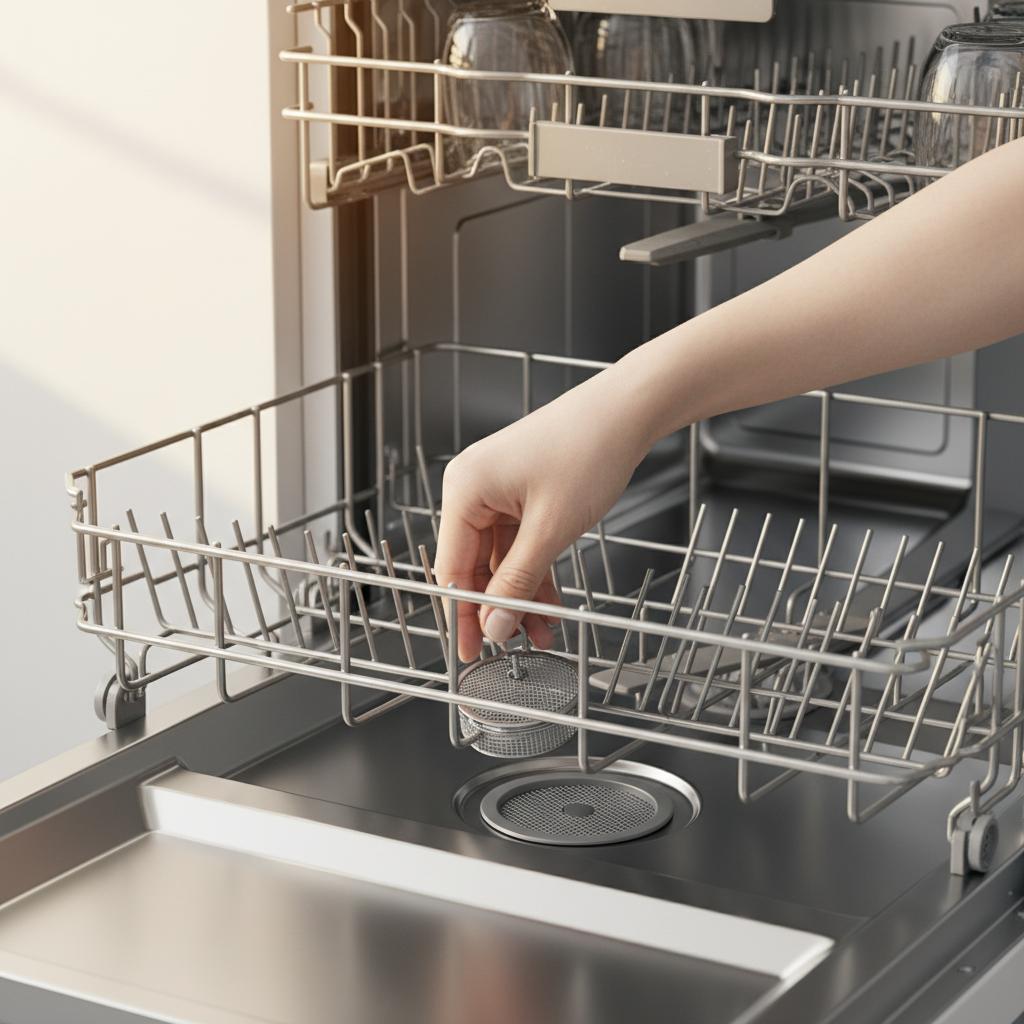
Clean the Filter – This is usually the main offender. Most modern dishwashers have a removable cylindrical filter down at the bottom of the tub under the lower spray arm. Twist it counter-clockwise, lift it out, and rinse it under hot running water until it’s clean. If it’s greasy or slimy, hit it with an old toothbrush and a little dish soap. Don’t skip the fine mesh screen underneath — that’s where the real crud likes to hide. If your model has a self-cleaning filter, you may not have one to pull, but you should still check for junk down there.
-
Scrub the Door Gasket – Mold loves that strip of rubber. This one matters. The rubber seal around the door is prime real estate for mold and mildew. Wipe it with a damp cloth soaked in equal parts white vinegar and water. Use a toothbrush or cotton swab to get into the corners, especially along the bottom edge where water sits. You’ll probably pull off black slime — yep, that’s mold. Some pros use a little bleach solution (1 part bleach to 10 parts water) for heavy mildew, but you’ve gotta rinse it out well afterward.
-
Clear the Spray Arms – Keep the water moving right. Check the tiny holes in the upper and lower spray arms. Hard water scale or little food particles can clog them up. Use a toothpick, a small wire, or a paperclip to poke through blocked holes. Spin the arms by hand and make sure they move freely. If they’re stiff or jammed, pull them off and soak them in vinegar to loosen the mineral buildup.
-
Vinegar Deep Clean – A cheap shot at the odor. Put a dishwasher-safe bowl or cup with 2 cups of white vinegar on the top rack of the empty dishwasher. Run a hot water cycle — the hottest one you’ve got, like "Sanitize" or "Heavy Duty." The vinegar helps break down grease, soap scum, and mineral deposits, and it cuts down on odor-causing bacteria too. It’s a solid deodorizer. Do this monthly if you want to stay ahead of the smell.
-
Baking Soda Boost – Knock out what’s left. After the vinegar cycle finishes, sprinkle about 1 cup of baking soda across the bottom of the tub. Run another short, hot rinse cycle. Baking soda does a good job absorbing and neutralizing leftover odors. Don’t use vinegar and baking soda in the same cycle — they’ll just cancel each other out and you’ll get no real bite from either one. Use them one after the other.
-
Check the Drain Hose – The sneaky one. If the smell still won’t quit, the drain hose might be your culprit. Food debris can get trapped in the corrugations or in a low spot, and that turns into a sewage-type smell fast. This one’s a little more advanced. You’ll need to pull the dishwasher out, disconnect the hose (usually from under the sink), and flush it. Make sure there’s a proper high loop under the sink so dirty water can’t backflow into the dishwasher. If it’s missing, sink water can get siphoned right back in — gross is right.
-
Run a Commercial Cleaner – A little extra muscle never hurts. If none of that does the trick, use a commercial dishwasher cleaner made for hard water, grease, and odors. Products like Finish Dishwasher Cleaner or Affresh usually come in small bottles you set upside down in the bottom rack or tabs you drop in the detergent dispenser. Follow the manufacturer
Related Articles
Keep troubleshooting with these hand-picked guides from FixlyGuide:
- That Mystery Haze on Your Dishware? Your Dishwasher's the Culprit — If your 'clean' dishes come out looking cloudy, streaky, or gritty, it's not you – it's your dishwasher, and I'll show you how to fix it.
- The Mystery Smell: Why Your Fridge Stinks (Even After Cleaning It) — That persistent, foul odor in your refrigerator isn't just gross; it's often a sign of hidden issues. Learn the real culprits behind linger…
- The Caulk Stain That Won't Quit: Why Your Shower Stays Grimy — Is that stubborn, discolored caulk making your clean shower look perpetually dirty? It's not just surface grime; it's often mold or mildew,…
- The Grimy Secret Under Your Oven: Why Your Kitchen Never Feels Truly Clean — Your oven and range hood are silent culprits in your kitchen's battle against persistent grease and grime. This guide tackles how to deep c…
- The Grimy Secret Behind Your Dull Bathroom Faucet — And How to Make It Shine — Discover the real culprit behind your bathroom faucet's dull, grimy appearance and how to quickly restore its shine with a few common house…
- Your Dishwasher Smells? The Filter You Forgot Exists — Frustrated by a dishwasher that still stinks after a cleaning cycle? The culprit is likely a hidden, secondary filter trapping rotten food…
What should this project cost?
Enter your project details for a realistic cost range before you call anyone.
Cost depends heavily on which system turns out to be the source.
- Regional adjustment
- National average
- Labor share (typical)
- ~$1,620
- Quotes to collect
- 3 written estimates
Educational estimate based on national averages — not a binding quote. Always confirm with written local estimates.
Get the print-ready PDF of this guide
A clean, ad-free, printable version you can keep on your phone or pin to the workshop wall. Free with a FixlyGuide account.
- Print-optimized layout
- Tools, materials & every step included
- Saved to your account
Frequently asked questions
Why does my dishwasher smell like rotten eggs?+
A rotten egg smell usually points to sulfur-reducing bacteria, often thriving on trapped food particles or stagnant water in the drain hose or sump. Cleaning the filter and checking your drain line for obstructions are critical first steps.
How often should I clean my dishwasher filter?+
For optimal performance and to prevent odors, I recommend cleaning your dishwasher filter monthly, or more frequently if you wash a lot of dishes with heavy food debris. It only takes a couple of minutes.
Can I use bleach to clean my dishwasher?+
While bleach can kill mold and bacteria, I generally advise against using it in combination with other cleaners, especially vinegar, as it can create dangerous fumes. If you do use bleach (1 part bleach to 10 parts water solution for wiping), make sure it's the only cleaner in the cycle and rinse thoroughly afterward to protect stainless steel parts and rubber seals.
Why does my dishwasher sometimes smell musty?+
A musty smell often indicates mildew or mold growth, typically in the rubber door gasket or other crevices where moisture can linger. Regular wiping and a vinegar rinse cycle can help prevent this buildup.
Does leaving the dishwasher door ajar help prevent odors?+
Absolutely! Leaving the dishwasher door slightly ajar after a cycle allows air to circulate and the interior to dry completely, preventing moisture buildup that leads to mold and mildew growth.
Can hard water cause my dishwasher to smell?+
Yes, hard water deposits (limescale) can trap food particles and detergent residue, creating surfaces for bacteria to grow and contributing to foul odors. Regular vinegar rinses help break down these mineral buildups.
My dishwasher is new, but it still smells. What gives?+
Even new dishwashers can develop odors if filters aren't cleaned or if a high loop isn't installed correctly in the drain hose, causing dirty sink water to backflow. Double-check those common culprits first.
Is it safe to run dishes with a stinky dishwasher?+
While it might not be a health hazard, a stinky dishwasher can transfer odors back to your 'clean' dishes, making them less appealing. It's best to address the smell proactively to ensure truly fresh dishes.
Discussion
Loading comments…