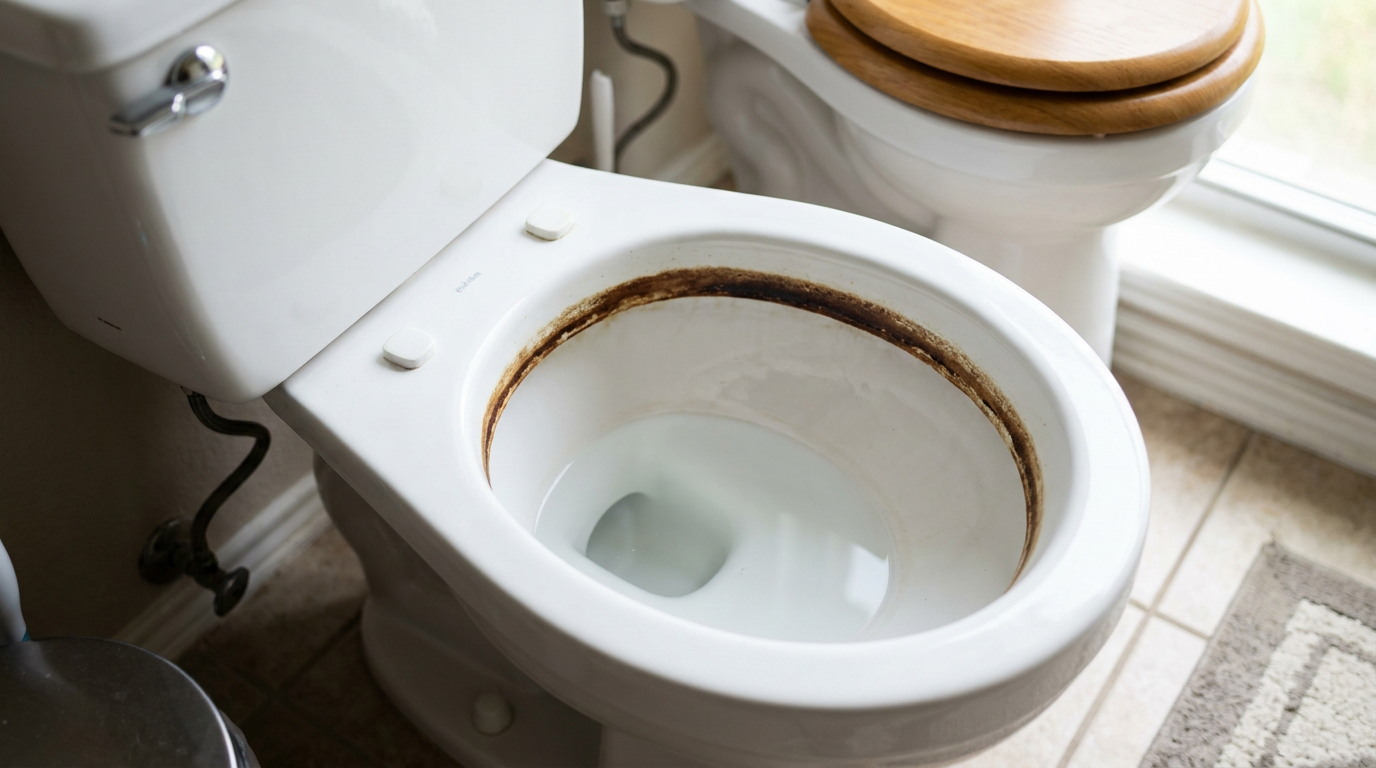
- Hard Water: This is the 1 cause. High concentrations of calcium and magnesium carbonate leave behind a scaly white or off-white deposit called limescale at the waterline. It creates a rough surface perfect for trapping other gunk.
- Iron or Rust: An orange or reddish-brown ring is usually rust. It can come from old, corroded galvanized iron pipes in your house or even high iron content in the municipal or well water supply.
- Manganese: Common in lots of water supplies, manganese leaves a dark brown or black ring. People mistake it for mold all the time, but it’s a mineral deposit and standard cleaners usually don’t touch it.
- Leaky Flapper: A worn-out, warped, or dirty flapper lets a tiny, constant trickle of water run from the tank into the bowl. That keeps feeding fresh minerals to the waterline, and the ring builds fast.
- Low-Flush Toilets: Older low-flow toilets from the 1990s and early 2000s often don’t have enough flushing power to clean the bowl properly, so buildup happens easier.
Published October 8, 2026Last updated October 8, 2026
Tools & materials you'll need
Affiliate linksAs an Amazon Associate FixlyGuide earns from qualifying purchases — at no extra cost to you. Prices and availability are accurate as of publication and subject to change.
Quick Answer
That stubborn ring in your toilet bowl is usually hard water mineral deposits — calcium, magnesium, manganese — or rust from old pipes, not because you’ve been slacking on cleaning. I’ve seen plenty of folks go after it with bleach and elbow grease and still wind up right back where they started. First thing I’d try is a pumice stone or a non-scratch scouring stick. If that doesn’t touch it, you’re probably dealing with buildup that needs an acid-based cleaner to break it down. And sometimes the real culprit is hiding in the tank: a tired flapper or a slow leak keeps feeding fresh minerals into the bowl all day long.
The Problem
You scrub the toilet bowl, and it looks clean—for a day. Then, like clockwork, that faint brown, black, or reddish ring shows back up right at the waterline. You try stronger bleach, you scrub harder, but the stain keeps coming back and makes an otherwise decent bathroom look lousy. That’ll make anybody crazy. But it’s almost never about not scrubbing enough. That ring is a clue. It’s telling you something about your water, your plumbing, or the toilet itself. Most of the time, it’s a mix of hard-water minerals, rust from older pipes, or even a tiny leak in the tank that’s creating the perfect spot for buildup.
How It Works
Your toilet bowl is a weird little science lab. Every time you flush, water from the tank rushes down and then settles back to a set level based on the trapway height. That standing water is where the trouble starts. In places with hard water, like a lot of North Texas, that water’s carrying dissolved minerals such as calcium carbonate and magnesium. Once the water sits there and evaporates a bit, those minerals get left behind on the porcelain right at the waterline. That’s your ring.
Once that rough little band forms, it acts like sandpaper for grime. Rust from older galvanized pipes sticks to it. Biofilm grabs hold too — that thin bacterial slime nobody wants to think about. Organic waste settles in as well. Even if your house has newer PEX or PVC, manganese in the water can leave behind dark, almost black staining. And yeah, new toilet glaze is slick as glass, but years of use and aggressive cleaning can put tiny scratches in it. I pulled a water heater in Frisco last month that had exactly this kind of mineral crud everywhere — same story, different fixture. A slow leak from the tank’s flapper just feeds the problem nonstop, keeping that mineral-rich water rolling through the same spot again and again.
Step-by-Step Fix
This gets rid of the ring you can see and helps stop the stuff that’s causing it from coming back so fast. We’ll start easy and work up.
1. Shut Off the Water and Drain the Bowl
- Tools: Rubber gloves
- Safety: Ensure good ventilation by opening a window or turning on the bathroom fan.
Before you can treat the ring, you’ve got to get the water out of the way. Reach behind the toilet and turn the small oval shutoff valve clockwise until it stops. Flush the toilet to empty the tank and most of the bowl. If there’s still water sitting in there, scoop it out with a cup or soak it up with a sponge. You want that porcelain as dry as you can get it so the cleaner hits the stain directly.
2. The Gentle Scrub: Pumice Stone
- Tools: Pumice scouring stick
This is where I start. A pumice stick made for toilet cleaning is harder than mineral deposits but softer than porcelain, so it won’t hurt the bowl if you keep it wet. Dip the pumice in the leftover toilet water and rub it gently back and forth across the ring. It works like an eraser. You’ll see the stain start to lift. Keep wetting the stone so it stays slick. If the ring disappears after a minute or so of light scrubbing, call it a day. Turn the water back on and flush.
3. The Chemical Attack: Acidic Cleaner
- Tools: Acidic toilet bowl cleaner (containing hydrochloric or phosphoric acid)
If the pumice doesn’t get you there, you’ve got heavier mineral buildup. Now you need a cleaner that’ll dissolve it instead of just pushing it around. Grab something labeled for rust or hard water. Put it right on the dry porcelain and focus on the ring. Let it sit for at least 15–20 minutes, or whatever the label tells you. The acid needs time to chew through the calcium and manganese. Don’t start scrubbing yet — let the product do its thing.
4. The Agitation Step
- Tools: Stiff-bristled toilet brush
Once the cleaner’s had time to work, scrub the ring area hard with a toilet brush. The chemical reaction loosens the stain, and the brush knocks it loose. If it’s improving but not gone, hit it again with another round of cleaner. When the ring’s finally gone, turn the water supply valve back on (counter-clockwise) and let the tank refill. Flush it two or three times to rinse everything out.
5. Test the Flapper for a Silent Leak
- Tools: Food coloring (dark color like red or blue)
Now we check the real cause. A leaking flapper is a big reason toilet bowl rings keep coming back. Pull the tank lid off. Drop 5-6 drops of food coloring into the tank water. Do not flush the toilet. Wait for 30 minutes. Then look in the bowl. If you see colored water down there, your flapper’s leaking. That tiny trickle is basically a mineral delivery line. If it’s leaking, move on to the next step.
6. Replace the Flapper
- Tools: New toilet flapper (check your model for size/type)
Replacing a flapper is one of those five-minute fixes that saves people a ton of grief. You already shut off the water and emptied the tank in Step 1, so you’re ahead of the game. The flapper is the rubber or plastic stopper in the middle of the tank. It’s usually clipped to the overflow pipe with two little ears and hooked to the flush handle arm with a chain. Unclip the old one and disconnect the chain. Take that old flapper to the hardware store so you get the right match. Clip in the new one, hook up the chain with only 1-2 links of slack, and turn the water back on. That one little fix can keep the ring from coming back for months.
7. Check the Fill Valve and Overflow Tube
- Tools: None
Take a look inside the tank again as it fills. You should see a small rubber tube running from the top of the fill valve (the big column on the left) to the top of the overflow pipe (the large open pipe in the middle). That tube is supposed to send a little stream of water down the overflow pipe so the bowl refills after a flush. If the tube has slipped down inside the overflow pipe, it can siphon water from the tank all the time and act just like a leak. That feeds the ring too. The tube ought to be clipped to the top of the pipe, pointing down but not hanging below the tank's water level.
8. The Maintenance Clean
- Tools: White vinegar
To keep the ring from getting a foothold, pour about 2 cups of white vinegar into the toilet bowl once a month and let it sit overnight. That mild acid is usually enough to slow mineral buildup way down. You can also pour it into the overflow tube in the tank, which sends it straight to the bowl without flushing.
Common Causes
- Hard Water: This is the #1 cause. High concentrations of calcium and magnesium carbonate leave behind a scaly white or off-white deposit called limescale at the waterline. It creates a rough surface perfect for trapping other gunk.
- Iron or Rust: An orange or reddish-brown ring is usually rust. It can come from old, corroded galvanized iron pipes in your house or even high iron content in the municipal or well water supply.
- Manganese: Common in lots of water supplies, manganese leaves a dark brown or black ring. People mistake it for mold all the time, but it’s a mineral deposit and standard cleaners usually don’t touch it.
- Leaky Flapper: A worn-out, warped, or dirty flapper lets a tiny, constant trickle of water run from the tank into the bowl. That keeps feeding fresh minerals to the waterline, and the ring builds fast.
- Low-Flush Toilets: Older low-flow toilets from the 1990s and early 2000s often don’t have enough flushing power to clean the bowl properly, so buildup happens easier.
- Lack of Use: A guest bathroom toilet that barely gets used is prime territory for a ring. Standing water evaporates, minerals concentrate, and they settle right onto the porcelain.
Common Mistakes
- Using Chlorine Bleach on Rust Stains: Bleach is an oxidizer. Put it on rust (iron oxide), and it can actually set the stain, making that reddish-brown color more permanent and harder to remove.
- Scrubbing with Metal Tools: Don’t use a wire brush, steel wool, or a screwdriver to chip away at the ring. You’ll scratch the porcelain glaze for good, and then that groove just traps new stains.
- Ignoring the Tank: Folks will scrub the bowl over and over and never crack the tank open. A $5 flapper replacement is often the fix they needed all along.
- Using Drop-in Bleach Tablets: Those blue tablets sitting in the tank might look handy, but they release harsh chemicals that can wear out the rubber flapper and other plastic parts, and then you’ve got leaks within a year or two.
- Mixing Cleaners: Never, ever mix an acid-based cleaner with a bleach-based cleaner. That combo can kick off toxic chlorine gas, and that’s dangerous in a small bathroom.
- Giving Up Too Soon: Some stains, especially manganese, can take two or three rounds of acidic cleaner to fully break loose. If you’re seeing improvement, keep at it and repeat the process.
Cost & Time Breakdown
| Task | DIY Cost | Pro Cost | Time |
|---|---|---|---|
| Basic Scrub (Pumice) | $3–$5 | Not applicable | 5-10 minutes |
| Chemical Clean | $5–$12 | Not applicable | 30-40 minutes |
| Flapper Replacement | $5–$15 | $125–$200 (trip fee) | 10-15 minutes |
| Full Toilet Rebuild Kit | $20–$35 | $200–$350 | 45-60 minutes |
| Install Water Softener | $800–$3,000+ | $1,500–$5,000+ | 4-8 hours |
Tips & Prevention
- Monthly Vinegar Soak: Pour two cups of white vinegar into the bowl and let it sit overnight once a month. It’ll help dissolve light mineral buildup before it turns into a full-on ring.
- Check the Flapper Annually: Do the food coloring test once a year. It only takes a few drops, and it can save you a lot of scrubbing — and a higher water bill.
- Install a Water Softener: If you’ve got hard water all over the house — spots on dishes, soap scum in the shower, the whole deal — a whole-house water softener is the long-term fix. It’ll help with toilet rings and give your appliances a longer life too.
- Use the Guest Bathroom: Flush the guest toilet at least once a week so the water doesn’t sit there and go stagnant.
- Choose Cleaners Wisely: Stick with pH-neutral cleaners for regular weekly cleaning. Save the stronger acidic stuff for targeted stain removal, because overusing it can etch the porcelain over time.
When to Call a Professional
Cleaning a toilet ring is classic DIY territory, but there are a few times I’d tell you to bring in a licensed plumber. If you go through all the steps, replace the tank parts, and the bowl still loses water or the ring comes back in a week, you may have a cracked overflow tube or a bad fill valve that’s overfilling the tank. If the ring looks rusty and you’re in an older home, that could point to pipe corrosion in the system, and that’s something a plumber should look at. And if you want a real fix for hard water, a plumber’s the right person to size and install a whole-house water softening system properly.
Related Articles
Keep troubleshooting with these hand-picked guides from FixlyGuide:
- The Rusty Ring In Your Toilet? It's Not Just Ugly, It's a Symptom. — Stubborn rust rings in your toilet bowl are an eyesore and a sign of hard water or corroded pipes, but you can remove them with the right a…
- The Caulk Stain That Won't Quit: Why Your Shower Stays Grimy — Is that stubborn, discolored caulk making your clean shower look perpetually dirty? It's not just surface grime; it's often mold or mildew,…
- The Ugly Orange Stain in Your Bathroom Toilet: What Bleach Won't Tell You — Discover the real cause of stubborn orange rust stains in your toilet bowl and learn how to banish them for good, even when bleach fails.
- That Gray, Greasy Stain on Your Pillowcase? Here's What It Is—and How to Get Rid of It — Tired of those stubborn, greasy gray stains on your pillowcases? We'll show you what causes them and a simple, effective method to make the…
- Why Your Kitchen Sink Drain Stinks (Even After You've Cleaned It) — Don't just mask that foul odor from your kitchen sink; get rid of the gunk causing it with this pro-level cleaning method.
- The Grimy Secret: Why Your Toilet Bowl Stains Keep Coming Back — Fed up with scrubbing stubborn toilet bowl stains only for them to reappear days later? The real culprit is likely hiding in your tank, not…
Should you do this yourself?
Answer five quick questions before you start. Safety outranks savings every time.
Your experience with work like this
How high do you have to work?
Does the job involve any of these?
Will it need a permit?
Specialty tools
Free and instant. Educational guidance only — not a quote, inspection, or professional diagnosis.
What should this project cost?
Enter your project details for a realistic cost range before you call anyone.
Common repairs run $150–$650; repipes and water-heater replacements reach $1,500–$4,500.
- Regional adjustment
- National average
- Labor share (typical)
- ~$754
- Quotes to collect
- 3 written estimates
Educational estimate based on national averages — not a binding quote. Always confirm with written local estimates.
Before you start
Check the difficulty, permits, and safety risk — then decide whether to call a pro.
- Estimate this projectGet a cost range for your scope and ZIP before you call anyone.Open
- Get local estimatesSend one request and compare written estimates from vetted pros.Open
Free, no signup required. Estimates are educational guidance, not a quote or an inspection.
Frequently asked questions
Why does the toilet ring come back so fast after cleaning?+
It comes back quickly because you're only cleaning the symptom, not the cause. The most likely culprit is a slow, silent leak from your tank's flapper, which constantly deposits new minerals at the waterline. Hard water is the other major factor.
Is it okay to use bleach to clean the toilet ring?+
While bleach disinfects, it's not effective against mineral stains and can actually make rust stains worse by oxidizing them. For hard water rings, you need an acid-based cleaner to dissolve the minerals. Bleach is fine for general sanitation, but not for this specific problem.
What's the difference between a brown ring and a black ring in the toilet?+
A brown or reddish-orange ring is almost always caused by iron or rust particles. A black or dark brown ring is typically from high concentrations of the mineral manganese in your water supply. Both are mineral deposits, not mold.
Are in-tank toilet cleaners a good way to prevent rings?+
No, most plumbers advise against them. The drop-in tablets that contain bleach can corrode the rubber and plastic parts inside your tank, like the flapper and seals. This leads to leaks, which ironically makes toilet rings form even faster.
I scrubbed with a brush and cleaner, but the ring won't budge. What's next?+
If a powerful acid cleaner and a brush didn't work, the next step is mechanical removal. Use a pumice scouring stick designed for porcelain. When kept wet, it will safely scrub away the deposit without scratching the toilet bowl.
My house is new, so why do I have a toilet ring?+
Even with new pipes, your municipal or well water supply itself can be very hard or have high mineral content. New homes in areas with hard water will develop toilet rings just as older homes do. The cause is the water, not the age of the plumbing.
Can a toilet ring be a sign of a bigger plumbing problem?+
Usually, it's a simple issue like a flapper or hard water. However, if the ring is dark reddish-brown and you have an older home, it could indicate widespread corrosion in your galvanized steel pipes, which is a more serious problem a plumber should assess.
How do I clean the toilet ring if I have a septic system?+
You should be cautious with harsh chemicals. Using an acid-based cleaner once or twice won't harm your system, but frequent use can. A pumice stone is your best and safest option. Also, using vinegar as a regular preventative is perfectly safe for septic systems.
Discussion
Loading comments…