- Mix and apply the wetting agent evenly — Set your sprayer so it puts down between 2 and 4 fluid ounces of liquid surfactant per 1,000 square feet, mixed into 2 to 3 gallons of water for solid surface coverage.
- Spray in the early morning or evening when temps are below 85°F so you don’t scorch the leaves.
- If you’re using granular pellets, broadcast at a rate of 2.5 to 3 pounds per 1,000 square feet with a standard spreader.
Landscaping · Deck or fence project
| Project category | Landscaping |
|---|---|
| Problem type | Deck or fence project |
| Trade required | Landscaping |
| Urgency | Planned project |
| Safety risk | Moderate safety risk |
| DIY suitability | DIY for experienced homeowners |
| Cost category | High cost |
| Typical timeline | Most builds 3–10 days depending on size |
| Contractor type | Landscaping contractor |
Repair option
Replace failed boards, posts, and hardware; reseal the surface.
Replacement option
Rebuild when framing or the ledger connection is unsafe.
Common causes
- Rot at posts and ledger
- Storm damage
- Adding outdoor living space
Relevant tools:home improvement material pricesproject cost estimator
Published November 23, 2026Last updated November 23, 2026
Tools & materials you'll need
Affiliate linksAs an Amazon Associate FixlyGuide earns from qualifying purchases — at no extra cost to you. Prices and availability are accurate as of publication and subject to change.
Quick Answer
If you've got hydrophobic soil that spits water back at you, the fix is pretty straightforward: aerate it mechanically and put down a horticultural soil wetting agent or liquid aerator surfactant at 2 to 4 ounces per 1,000 square feet. Then water it right away with a soaker hose or a cycle-and-soak routine for 20 minutes at a time so the moisture can punch through those dry, waxy coatings. After that, topdress with 1/4 inch of mature compost to help the ground hold water long term. Simple enough. Not easy, but simple.
The Problem
You kick on the sprinkler, let it run for thirty minutes, head back out, and the turf’s still dust an inch down. The water didn’t soak in. It sheeted off the slope, puddled on the sidewalk, or beaded up like water on a freshly waxed truck hood.
That’s soil hydrophobicity, or water-repellent soil. I see it a lot in lawns with heavy thatch, sandy ground that’s been baked through a long summer drought, and planting beds topped with old, bone-dry wood bark. Folks think they just didn’t water enough, so they open the spigot all the way and burn through hundreds of gallons while the roots keep drying out. Been there, watched that happen. I pulled a water heater in Frisco last month that had exactly this kind of “just add more water” logic around it—wrong fix, wrong result.
Pouring more water on untreated hydrophobic ground doesn’t solve the problem. It just makes runoff worse, strips away pricey nutrients, and leaves the grass starved for moisture.
How It Works
Every soil particle—sand, silt, or clay—is wrapped in microscopic organic matter. During heavy heat, drought, or fungal decay, like the basidiomycete fungi behind fairy rings, plant bits and microbial leftovers break down into long-chain dicarboxylic acids and non-polar hydrocarbon waxes.
Once the soil dries below a critical moisture level—usually under 5% to 10% volumetric moisture—those waxy molecules flip around. Their polar, water-loving ends stick to the soil grains, and their non-polar, hydrophobic tails face out into the pores.
Water’s got a lot of surface tension. So when it hits those waxy tails, the contact angle between the droplet and the pore goes over 90 degrees. Instead of capillary action drawing water down through the soil, the droplet beads up, sits there, or runs downhill. No dice.
To fix it, you’ve got to break that surface tension and bridge the gap between the water and the hydrophobic wax with a surfactant, while also punching channels through the crust so gravity can do its job.
Step-by-Step Fix
Here’s the process I use to break that hydrophobic barrier and get water moving again in lawns and garden beds.
-
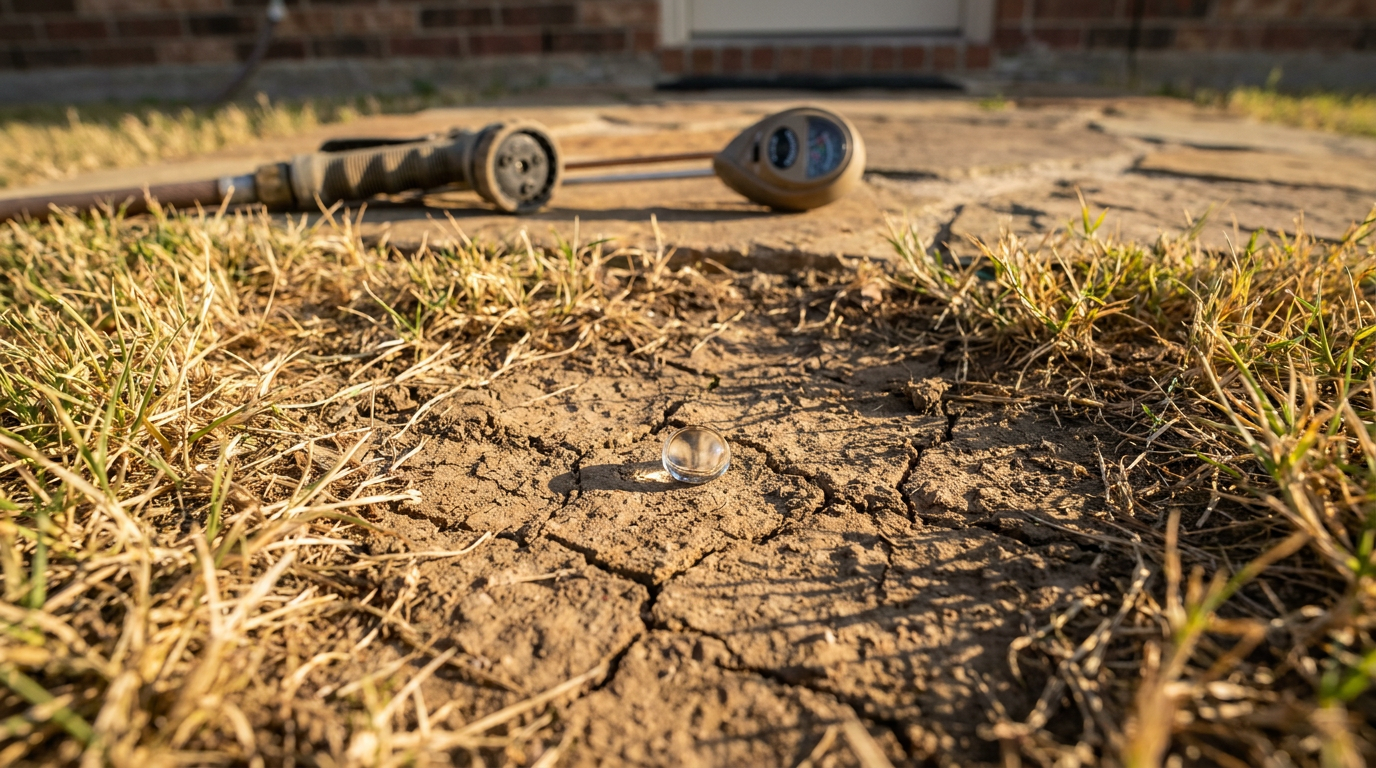
Perform the Water Drop Penetration Time (WDPT) test — Scrape off the top 1/2 inch of grass or mulch until you’re down to bare mineral soil. Use an eye dropper or wet fingertip to place 3 separate drops of water on the dry soil surface, and time how long they take to soak in.
- If the drops sit for longer than 60 seconds without absorbing, your soil is officially hydrophobic.
- Drops sitting longer than 5 minutes mean you’re dealing with serious water repellency, and you’ll need a high-potency surfactant, not just core aeration.
-
Dethatch if your thatch layer exceeds 1/2 inch — Run a dethatching rake or mechanical power rake over the lawn set to cut 1/4 inch into the soil line. Thick, dry thatch works like a roof. It traps the waxy residues right above the root zone.
- Tools: Power dethatcher or manual thatch rake.
- Bag and haul off all the pulled thatch; don’t leave it sitting on the turf.
-
Core aerate the entire area thoroughly — Run a commercial hollow-tine core aerator across the lawn, pulling 2.5 to 3.5-inch soil plugs spaced no more than 3 inches apart. Make two passes in perpendicular directions over the driest, most stubborn spots.
- Mechanical punching breaks that continuous waxy crust and gives water a straight path to the deeper root zone.
- Safety: Flag all shallow irrigation lines, sprinkler heads, and buried cables before you fire up the machine.
-
Select the correct horticultural surfactant — Use a non-ionic liquid soil wetting agent made with alkyl polyglucosides or block copolymers and rated for turf and ornamental soil. Skip standard dish soaps. Those bring concentrated sodium and ionic salts that can burn fine feeder roots and mess with native soil microbes.
- For garden beds, a granular wetting agent blended with humates usually does the trick.
- For open turf, go with a concentrated liquid surfactant in a backpack or hose-end sprayer.
-
Mix and apply the wetting agent evenly — Set your sprayer so it puts down between 2 and 4 fluid ounces of liquid surfactant per 1,000 square feet, mixed into 2 to 3 gallons of water for solid surface coverage.
- Spray in the early morning or evening when temps are below 85°F so you don’t scorch the leaves.
- If you’re using granular pellets, broadcast at a rate of 2.5 to 3 pounds per 1,000 square feet with a standard spreader.
-
Water the surfactant in immediately — Run the sprinklers for 10 to 15 minutes right after spraying to rinse the surfactant off the blades and move it into the root zone. If you leave it baking on hot grass under direct sun, you can burn the foliage.
- If this doesn't work: If water still sits on top during the first flush, switch to a fine-mist setting so you don’t wash out the surface and stretch the watering window.
-
Switch to a cycle-and-soak irrigation schedule — Reprogram the controller to run for 8 minutes, shut off for 30 minutes, and repeat 3 times through the morning.
- That stop-and-go schedule gives the treated waxy material time to hydrate and loosen up without sending water into the sidewalk or gutter.
- Make sure the total delivery comes out to about 1 inch of water across the morning cycles.
-
Topdress with 1/4 inch of screened organic compost — Spread mature, biologically active compost over the aerated surface and rake it right into the open core holes.
- Natural organic matter holds up to four times its dry weight in water, which helps keep the soil below from drying past the critical hydrophobicity threshold.
- Material: Well-aged compost screened to 3/8-inch particle size or smaller.
-
Verify moisture depth with a soil probe — Wait 24 hours after treatment, then push a 12-inch screwdriver or core sampler into the soil. It ought to slide in smooth to a depth of 6 to 8 inches without hitting a hard, dry wall.
- If the probe stops dead at 2 inches, reapply a half-rate surfactant dose in two weeks.
Common Causes
- Severe summer drying cycles: Long stretches without rain or irrigation drive moisture below 5%, and that lets waxy plant residues lock onto dry mineral grains.
- Decomposition of waxy organic materials: Pine needles, eucalyptus leaves, oak leaves, and peat moss all carry natural waxes that coat soil particles as they break down.
- Underground fungal colonies (Fairy Ring): Basidiomycete fungi build an underground white mycelial mat that produces nasty hydrophobic metabolites, leaving dry, dead rings of turf water can’t get through.
- Excessive thatch accumulation: A thick spongy mat of dead stolons and roots over 1/2-inch deep dries out faster than the soil underneath and keeps water from ever reaching the dirt below.
- Over-application of uncomposted wood chips: Fresh cedar or hardwood mulch that hasn’t broken down yet can dry into hydrophobic blankets that shed rain like a roof.
Common Mistakes
- Pouring household dish soap onto the grass. Homeowners find some internet hack and think cheap dish detergent will save the day. It won’t. Dish soap’s got heavy surfactants, degreasers, and sodium compounds that strip root lipids and can hurt beneficial bacteria. Stick with non-ionic horticultural wetting agents.
- Running sprinklers continuously for hours. Hammering hydrophobic dirt with an uninterrupted 60-minute soak just makes a swamp on top, drives up the water bill, and sends a bunch of it down the drain. The soil can’t drink that fast. You’ve got to pulse it with cycle-and-soak.
- Skipping mechanical aeration. Chemical wetting agents have a hard time getting through a baked, compacted crust. If you spray surfactant on concrete-hard soil before core aerating, you’ve cut the product’s effectiveness in half.
- Letting the soil dry completely out again. Once soil goes hydrophobic, it’ll slip right back if you let it fall below that critical wilting point again. After you restore it, keep the moisture steady.
- Rototilling dry hydrophobic soil. Tilling wrecks soil structure, turns aggregates to dust, and spreads the hydrophobic coating through the top 6 inches instead of keeping the problem near the surface.
Cost & Time Breakdown
| Task | DIY Cost | Pro Cost | Time |
|---|---|---|---|
| Core Aeration | $70–$95 (machine rental) | $120–$250 | 1–2 hours |
| Wetting Agent Application | $25–$50 (concentrate bottle) | $80–$140 | 30–45 mins |
| Dethatching | $15 (rake) or $60 (rental) | $150–$300 | 1–2 hours |
| Compost Topdressing | $40–$80 (bulk bags) | $200–$450 | 2–3 hours |
| Soil Moisture Testing & Audit | $12 (soil probe) | $75–$150 | 15 mins |
Tips & Prevention
- Monitor root zones monthly with a simple screwdriver: Push a standard 8-inch flathead screwdriver into the turf once a month. If it won’t slide in smoothly at least 4 inches two hours after a normal irrigation cycle, your soil’s starting to go hydrophobic.
- Maintain your mulch layer at 2 to 3 inches maximum: Mulch that’s piled up past 4 inches can dry into a crusty, water-shedding mess. Turn it over twice a year, and don’t pack it against tree trunks or plant crowns.
- Apply maintenance doses of soil conditioners every spring: In sandy or thatch-prone lawns, put down a light preventative dose of non-ionic wetting agent and liquid humic acid in early spring before the hot, dry stretch kicks in.
- Water deeply and infrequently rather than shallow daily sprinkles: Short 5-minute watering cycles keep moisture stuck in the top 1/4-inch, which builds surface thatch and leaves the deeper mineral soil bone-dry and prone to waxing.
- Maintain soil organic matter between 3% and 6%: Mulch your grass clippings with a sharp mulching blade. They break down fast and feed the microbes that chew up hydrophobic waxy residue.
When to Call a Professional
If you’ve already core aerated, applied horticultural surfactants, and changed your watering schedule to cycle-and-soak but water still won’t get past 2 inches, call a lawn care specialist or landscape agronomist who knows what they’re looking at.
Big fairy ring problems often run 12 to 18 inches deep into the soil profile. Getting rid of them takes commercial-grade systemic fungicides (such as azoxystrobin or flutolanil) plus high-pressure deep-root injection equipment homeowner tools just can’t match.
And if the hydrophobic soil is tied to a badly set up or low-pressure irrigation system that can’t deliver 1 inch of water over realistic cycles, you’ll need an irrigation tech to run a catch-can audit, fix pressure imbalances, and rezone the heads. Don’t waste money drowning the sidewalk—call in somebody who can get the water where it needs to go when the standard aeration and surfactant work just isn’t moving the needle.
Related Articles
Keep troubleshooting with these hand-picked guides from FixlyGuide:
- How Often Should You Water Your Lawn? The Schedule for Deep, Resilient Roots — Learn how often to water your lawn with our pro guide. Discover target depths, catch-cup audits, soil testing, and cycle-and-soak timing fo…
- The #1 Mistake Killing Your Lawn's Thickness (and How to Fix It in a Weekend) — Overseeding a thin lawn revitalizes its density and health, but many homeowners make a crucial mistake that hinders success. Learn the righ…
- Fertilizer Burn on Your Lawn? 8 Steps to Save Your Scorched Grass — Revive grass and garden beds from fertilizer burn. Discover how reverse osmosis scorches roots and follow our 72-hour soil flushing protoco…
- Lawn Turning Brown in Summer? 6 Causes and the Exact Fix for Each — Lawn turning brown in the summer heat? Use this pro diagnostic checklist to tell dormancy from grub damage and revive your turf without was…
- Lawn Won't Green Up in Spring? 11 Steps to Fix Dead Winterkill Patches — Fix lawn winterkill and spring dormant patches that won't green up with these proven diagnostic steps, soil treatments, aeration, and crown…
- The Mystery of the Vanishing Air: Why Your HVAC Stops Blowing After 10 Minutes — Discover the hidden culprits behind your HVAC system stopping short after just 10 minutes of operation and learn how to fix them yourself.
Should you do this yourself?
Answer five quick questions before you start. Safety outranks savings every time.
Your experience with work like this
How high do you have to work?
Does the job involve any of these?
Will it need a permit?
Specialty tools
Free and instant. Educational guidance only — not a quote, inspection, or professional diagnosis.
What should this project cost?
Enter your project details for a realistic cost range before you call anyone.
Cost depends heavily on which system turns out to be the source.
- Regional adjustment
- National average
- Labor share (typical)
- ~$1,620
- Quotes to collect
- 3 written estimates
Educational estimate based on national averages — not a binding quote. Always confirm with written local estimates.
Get the print-ready PDF of this guide
A clean, ad-free, printable version you can keep on your phone or pin to the workshop wall. Free with a FixlyGuide account.
- Print-optimized layout
- Tools, materials & every step included
- Saved to your account
Frequently asked questions
Can I just use Dawn dish soap to fix hydrophobic soil?+
No. Dish soaps contain sodium salts and industrial degreasers that strip the protective wax coatings off plant roots and destroy earthworm populations. Always use a non-ionic horticultural soil wetting agent designed specifically for lawns and gardens.
How fast does a soil wetting agent work?+
A horticultural wetting agent starts lowering water surface tension within minutes of being watered in. However, it typically takes 2 to 3 cycle-and-soak watering sessions over a 48-hour period for the moisture to fully penetrate the dried-out root zone.
How often do you need to apply a soil wetting agent?+
In standard sandy or thatch-prone soils, a quality commercial surfactant treatment lasts between 60 and 90 days. In high-heat areas, you should apply a preventative dose in late spring and again in mid-summer.
Does hydrophobic soil only happen in sandy yards?+
Sandy soils are the most prone because sand grains have very low surface area, meaning a thin layer of waxy residue can easily coat every particle. However, heavy clay soils with thick thatch or high fungal activity can also become severely hydrophobic.
Should I aerate my lawn before applying a wetting agent?+
Yes. Core aeration physically punches holes through the waxy surface crust, allowing air, surfactant, and water to bypass the hydrophobic layer and reach the root zone. Applying surfactant right after aerating produces the fastest results.
Why does fairy ring fungus cause hydrophobic soil?+
Fairy ring fungi produce dense, underground fungal mats (mycelium) that release hydrophobic waxes as they consume dead organic matter. This leaves distinct, bone-dry rings of dead grass where water cannot penetrate even after torrential rain.
What is the difference between a wetting agent and a liquid aerator?+
A soil wetting agent is a targeted surfactant that breaks surface tension and forces water into dry, waxy soil particles. Liquid aerators generally contain a mix of mild surfactants, humic acids, and microbial foods to open micro-fissures in dense clay over time.
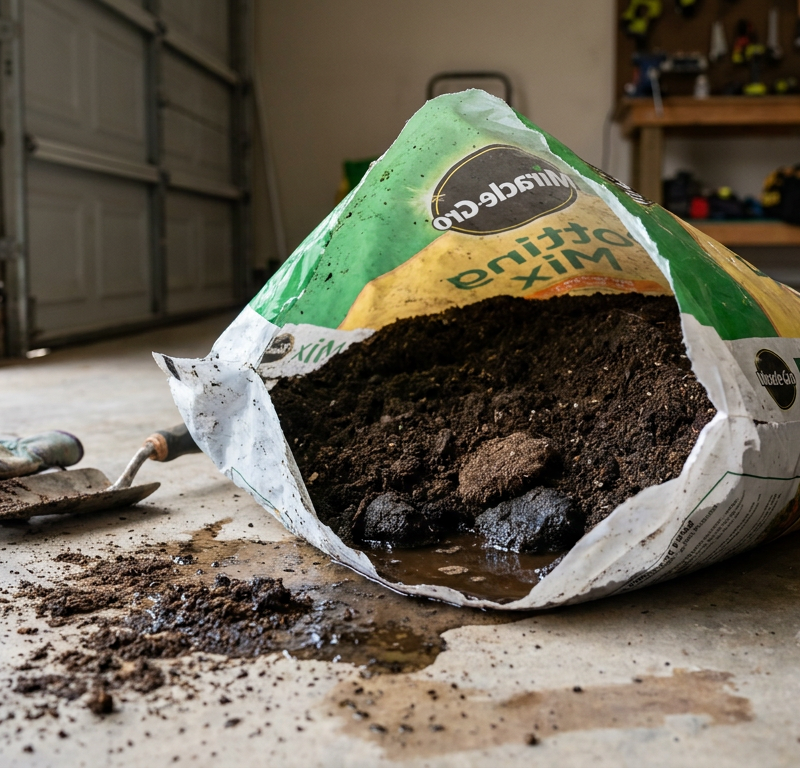
How do I tell if my raised bed potting mix has turned hydrophobic?+
Place a small sample of your garden bed soil in a glass of water. If the soil sits dry on top of the water without sinking or absorbing moisture for over a minute, it is hydrophobic and requires peat moss rehydration and compost blending.
Discussion
Loading comments…