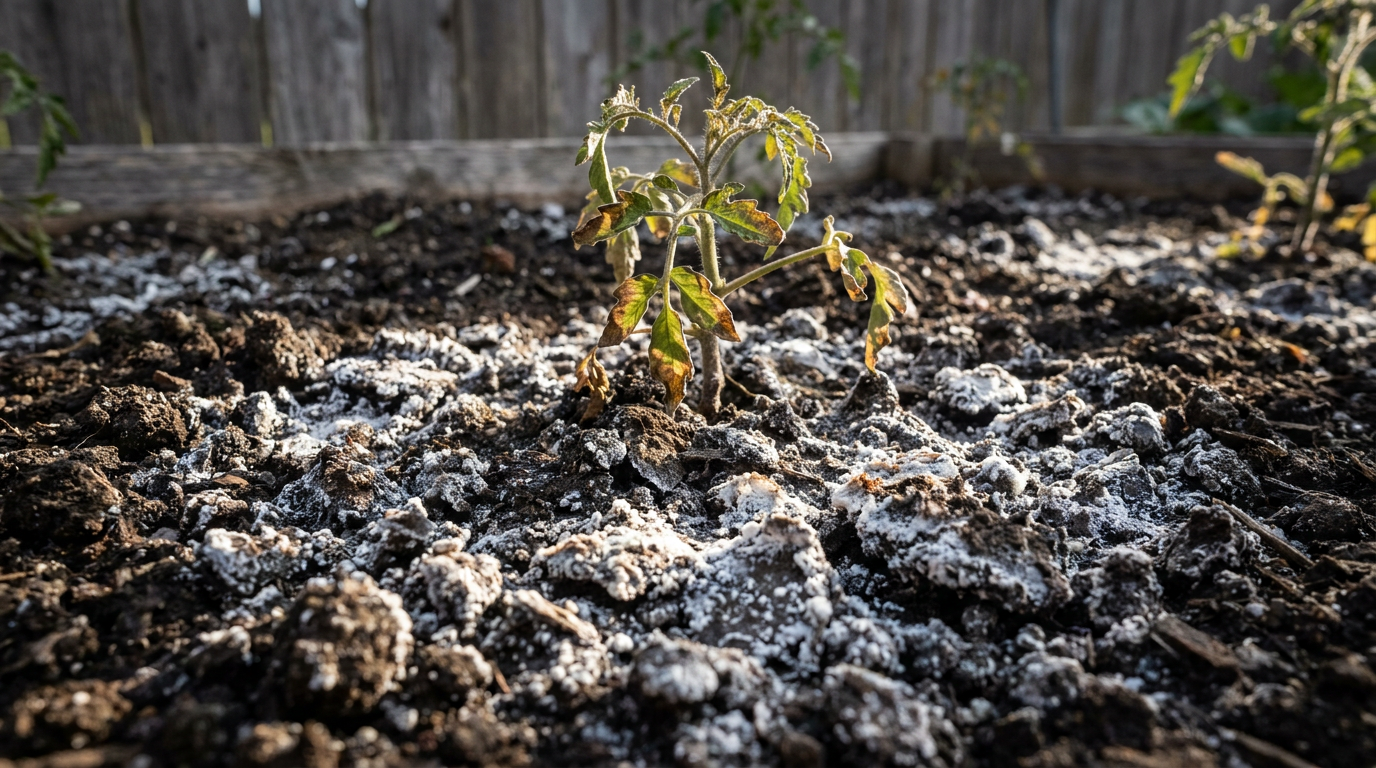
- Tilling the white crust straight into the garden. Folks think a rotary tiller will blend the crust away. It won’t. You’re just mixing a high concentration of surface salts right into the root zone. Scrape and discard the thick stuff first.
- Watering heavily without checking drainage. If your soil sits on an impervious clay layer, pouring 6 inches of water on it just drowns the roots in salty soup. Make sure the water drains before you start a leaching cycle.
- Assuming all white coatings are harmful salts. Sometimes gardeners scrape off white, web-like saprophytic fungi that are actually breaking down wood mulch. If it’s fibrous, clings to organic matter, and smells earthy, leave it alone.
Landscaping · Deck or fence project
| Project category | Landscaping |
|---|---|
| Problem type | Deck or fence project |
| Trade required | Landscaping |
| Urgency | Planned project |
| Safety risk | Moderate safety risk |
| DIY suitability | DIY for experienced homeowners |
| Cost category | High cost |
| Typical timeline | Most builds 3–10 days depending on size |
| Contractor type | Landscaping contractor |
Repair option
Replace failed boards, posts, and hardware; reseal the surface.
Replacement option
Rebuild when framing or the ledger connection is unsafe.
Common causes
- Rot at posts and ledger
- Storm damage
- Adding outdoor living space
Relevant tools:home improvement material pricesproject cost estimator
Published October 28, 2026Last updated October 28, 2026
Tools & materials you'll need
Affiliate linksAs an Amazon Associate FixlyGuide earns from qualifying purchases — at no extra cost to you. Prices and availability are accurate as of publication and subject to change.
Quick Answer
A white, crusty film on your garden soil or lawn is usually just soluble mineral salts building up. I see it after heavy synthetic fertilizer use, hard tap water, or long hot stretches where evaporation drags dissolved salts right up to the surface and leaves the junk behind. Flush the top 6 inches of soil with deep, slow irrigations using low-salt or captured rainwater, rake off stubborn surface crusts, and stop feeding with high-salt chemical fertilizers until a soil test tells you what you’re really dealing with.
The Problem
You step out to your raised beds, potted plants, or a sad patch of lawn and there it is — an ashy, chalky crust spread across the dirt. Looks like somebody dumped flour or table salt right on top of the soil. Scrape it with a fingernail and it flakes off in brittle little sheets.
The plants usually look rough, too. Lower leaves get brown, crispy edges like they’ve been scorched, even though you’ve been keeping the soil damp. Seedlings wilt right after they pop up, or the seeds just sit there and do nothing.
A lot of homeowners think this white crust is powdery mildew or some harmless mycorrhizal fungus. It’s almost never mold. What you’re looking at is secondary soil salinization: a pileup of chemical salts — mostly calcium, magnesium, sodium, chloride, and sulfates — sitting in the root zone. Left alone, those minerals act like a sponge in reverse. They pull water out of plant roots and starve the whole bed of micronutrients.
How It Works
Every synthetic fertilizer, city water supply, and commercial soil amendment carries mineral salts. In the right amount, plants use those ions as food — nitrogen, phosphorus, potassium, the whole deal. Trouble starts when more salts go in than plant roots can use up and rainfall can push below the root zone.
Water moves through soil on an osmotic gradient. Inside a healthy root hair, the concentration of dissolved minerals is higher than in the surrounding damp dirt, so water naturally moves into the plant through the cell walls. Once chemical salts build up in the soil, that balance flips. The soil water gets saltier than the plant sap. So instead of the roots drinking from the ground, the ground starts pulling moisture out of the plant cells. Agronomists call that physiological drought. I call it a dead plant standing in wet dirt.
Hot weather makes the whole mess worse. In dry regions or during those brutal North Texas summer runs, evaporation outraces rainfall. Water climbs upward through tiny soil pores by capillary action — same idea as an oil lamp wick. When it hits the hot surface and burns off into the air, every dissolved mineral gets left behind. Day after day, that microscopic residue stacks up until you’ve got a white crust choking the life out of the soil.
I pulled a water heater in Frisco last month and the homeowner had the exact same “white crust” problem in a couple of raised beds out back — same salty film, same crispy leaf edges, same bad watering routine. No mystery once you know what you’re looking at.
Step-by-Step Fix
Fixing a mineral crust means breaking up the hard layer, getting the worst of the deposits out of there, and flushing the soluble salts below the active root zone. Do it in order. Don’t shortcut it.
-
Test the Crust with Plain White Vinegar — Scoop a teaspoon of the white residue into a cup and splash it with household white vinegar. If it fizzes and bubbles, you’re dealing with calcium or magnesium carbonates; if it just sits there and dissolves, you’ve got concentrated sulfates, nitrates, or chlorides. If it turns spongy, threads into fuzzy fibers, and smells like damp woodland, that’s fungal mycelium, not salt.
- Tool: Plastic spoon and 5% white distilled vinegar.
- If it doesn’t fizz or dissolve: Check it under bright light — fine white webbing that stays soft when wet is beneficial fungal growth, and that needs no remediation.
-
Scrape Off the Thickest Surface Deposits — Use a flat-edged hand trowel or flat metal shovel to skim off the top 1/4 inch to 1/2 inch of crust where the mineral concentration is highest. Don’t till or cultivate this layer into the ground, or you’ll spread those concentrated salts right through the root zone. Toss the scrapings in municipal trash, not your backyard compost bin.
- Safety: Wear basic work gloves; concentrated chemical salts dry out and irritate bare skin.
-
Aerate and Loosen the Soil Surface — Grab a manual core aerator for turf, or a hand cultivator fork for garden beds, and punch holes 3 to 4 inches deep into the cleared ground. Once you break up that surface compaction, flushing water can move down instead of running off the sides.
- Tool: 4-prong garden cultivator or manual core aerator.
-
Send a Soil Sample to a State Lab for an EC Test — Dig 4 inches down into the problem zone, collect two cups of dirt in a clean plastic container, and ask for an Electrical Conductivity (EC) test along with your standard soil analysis. An EC reading above 2.0 dS/m (decisiemens per meter) confirms high salinity; readings above 4.0 dS/m will kill or stunt common turf varieties and ornamental plants.
- Cost: Usually $15 to $25 through your local county university extension office.
-
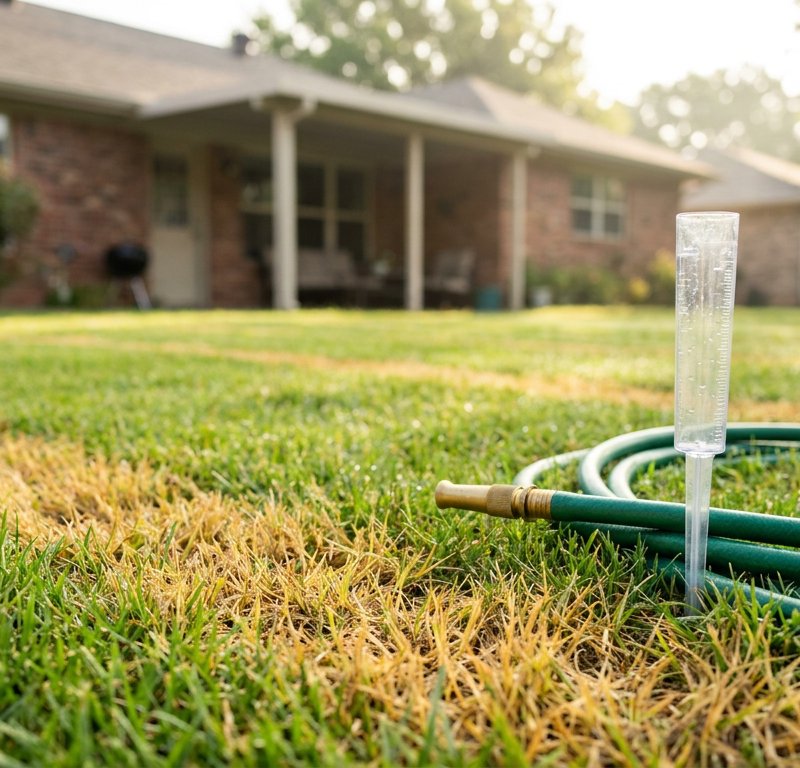
Perform a Heavy Initial Leach Flush — Set up a soaker hose or a gentle sprinkler over the affected area. Apply 6 inches of water slowly over a 6- to 8-hour window so it soaks in without ponding or washing soil away. To measure it, set an empty tuna can or rain gauge inside the perimeter and shut the valve when it fills to 1 inch, let it soak for an hour, and repeat until you hit the 6-inch target.
- Rule of thumb: Six inches of low-salinity water leaches roughly 50% of soluble salts from the top foot of sandy or loamy dirt. Heavy clay needs slower, pulsed applications over two days.
-
Apply Agricultural Gypsum (If Soil Test Shows High Sodium) — If your soil lab report shows high exchangeable sodium — a sodic or saline-sodic condition instead of simple fertilizer buildup — broadcast pelletized agricultural gypsum (calcium sulfate dihydrate) at a rate of 20 to 30 pounds per 1,000 square feet. The calcium ions knock sodium off the soil clay particles, and then watering carries the loose sodium away.
- Pro note: Don’t add gypsum to calcareous soils (dirt with naturally high pH and free calcium carbonates), since it won’t fix salt problems there and it’ll just waste your money.
-
Execute a Second Deep Flush 48 Hours Later — Two days after your first soak, run another 4 to 6 inches of clean water through the bed. This second flush picks up the loosened minerals dissolved during the first wetting cycle and pushes them past the 12- to 18-inch depth mark, well below shallow annual roots and turf grasses.
- If water ponds for more than 45 minutes: Stop right there. Your subsoil has a drainage barrier or dense hardpan that needs to be mechanically cracked before more water will soak down.
-
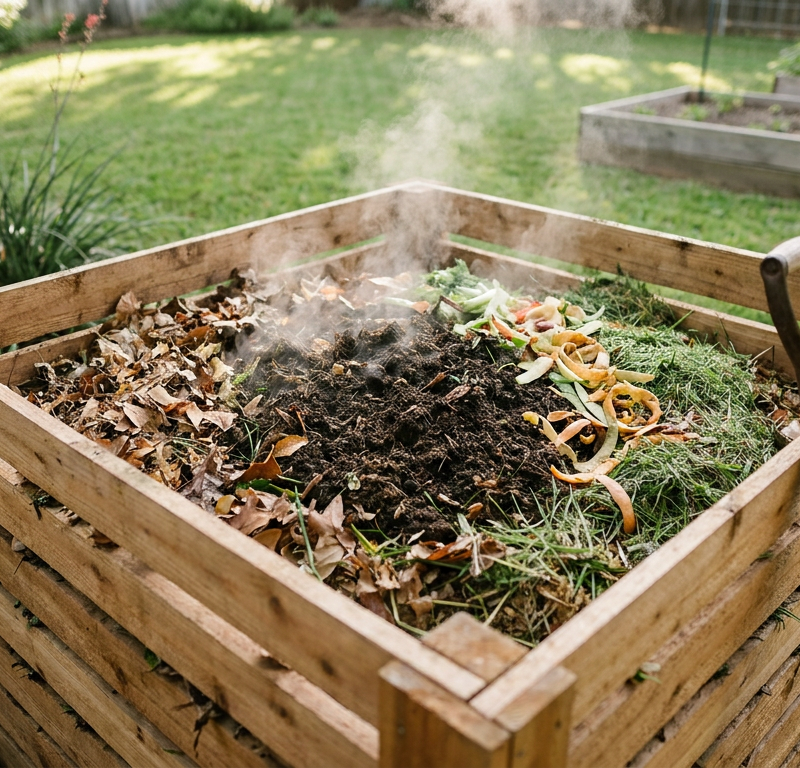
Topdress with 2 Inches of Coarse Organic Compost — Once the soil drains and feels like a wrung-out sponge, spread a 1- to 2-inch layer of cured, plant-based compost over the ground. Decomposed organic matter bumps up the soil’s Cation Exchange Capacity (CEC), which helps buffer plant roots from residual salt spikes and improves soil structure so water moves the way it should.
- Material: Fully finished, plant-derived yard compost (avoid fresh feedlot cow manure, which carries massive amounts of salt).
-
Layer an Organic Wood or Straw Mulch — Spread a 2- to 3-inch layer of shredded hardwood bark, pine straw, or clean arborists’ wood chips right over the compost layer. Mulch blocks direct sunlight from baking the topsoil and can cut evaporation by up to 70%. When moisture can’t keep evaporating into open air, the capillary pull stops, and those salts quit crawling back to the surface.
- I like bark in beds and wood chips around shrubs — simple, cheap, and it does the job.
-
Switch to Low-Salt, Slow-Release Plant Nutrition — Put the brakes on quick-release synthetic fertilizers like ammonium nitrate, urea, or 10-10-10 granular blends for at least 8 to 12 weeks. When you start feeding again, move over to organic feather meal, bone meal, or coated polymer-encapsulated slow-release products with a salt index value below 30.
Common Causes
Mineral buildup doesn’t usually happen overnight. It’s the result of bad watering habits, heavy chemical inputs, and plain old weather working against you.
- Overusing High-Salt Synthetic Fertilizers: Fast-acting chemical fertilizers are concentrated mineral salts. Products featuring potassium chloride (muriate of potash) carry a sky-high salt index of 116, while sodium nitrate sits at 100. Dumping those on thirsty soil pretty much guarantees salt buildup.
- Shallow, Frequent Sprinkler Cycles: Watering your lawn or garden for 8 minutes every morning wets only the top inch of dirt. The hot afternoon sun burns that skim of water off in a hurry, pulling minerals upward while never pushing old salts downward where they belong.
- Hard Tap Water and Well Water: City water in limestone-heavy regions and shallow private wells often carry dissolved total dissolved solids (TDS) exceeding 400 to 600 ppm. If you irrigate with that week after week, you’re adding pounds of minerals to your yard every season.
- Poor Internal Subsoil Drainage: A dense clay layer, caliche shelf, or hard compaction zone 8 to 12 inches below the surface traps water like a bowl underground. When irrigation water can’t percolate down, it sits there, goes stagnant, then slowly wicks back up, evaporates, and leaves its salt load behind.
- Manure-Heavy Soil Amendments: Bagged or bulk feedlot cattle manure often has extreme salt concentrations because livestock feed is salted to encourage water intake. Shoveling uncomposted feedlot manure into a raised bed is one of the fastest ways I know to create a blinding white crust.
Common Mistakes
- Tilling the white crust straight into the garden. Folks think a rotary tiller will blend the crust away. It won’t. You’re just mixing a high concentration of surface salts right into the root zone. Scrape and discard the thick stuff first.
- Applying Epsom salts (magnesium sulfate) as a "cure-all." Garden advice online loves to hand out Epsom salts for every yellow leaf on the property. Bad idea. Epsom salt is a soluble mineral salt; adding it to salty soil drives your electrical conductivity through the roof and makes root burn worse.
- Using softened water on outdoor plants. Home water softeners swap calcium and magnesium ions for sodium ions. If you irrigate container pots or flower beds with softened water, you’re flooding the soil with sodium and wrecking the structure.
- Watering heavily without checking drainage. If your soil sits on an impervious clay layer, pouring 6 inches of water on it just drowns the roots in salty soup. Make sure the water drains before you start a leaching cycle.
- Assuming all white coatings are harmful salts. Sometimes gardeners scrape off white, web-like saprophytic fungi that are actually breaking down wood mulch. If it’s fibrous, clings to organic matter, and smells earthy, leave it alone.
Cost & Time Breakdown
| Task | DIY Cost | Pro Cost | Time |
|---|---|---|---|
| Lab Soil & Salinity (EC) Test | $15–$25 | $75–$120 | 30 minutes |
| Surface Crust Scraping & Removal | $0 (existing tools) | $100–$175 | 45–60 minutes |
| Two-Stage Deep Leaching Flush | $5–$15 (water utility) | $150–$250 | 2–4 hours (active) |
| Agricultural Gypsum Application | $12–$25 (50 lb bag) | $80–$140 | 30 minutes |
| Compost & Mulch Application | $40–$90 (bulk bags) | $200–$350 | 1–2 hours |
Tips & Prevention
- Audit your fertilizer salt index before buying. Look up the salt index on your inputs; choose materials like sulfur-coated urea (salt index ~25) or organic fish hydrolysate instead of raw potassium chloride (salt index 116).
- Install a rain barrel diverter. Rainwater has an EC near zero and carries almost no dissolved minerals. Giving your raised beds a deep drink of pure rainwater every few weeks helps dissolve and reset lingering tap-water minerals naturally.
- Water deeply and less frequently. Swap daily 10-minute sprinkler cycles for deep, weekly soakings that apply 1 to 1.5 inches of water in a single push. That keeps moisture moving downward past the roots where it belongs.
- Check the drainage holes on outdoor planters. White crust rings along terra cotta pots usually mean mineral salts have saturated the container mix. Leach pots once every spring by pouring twice the container’s volume of distilled or rainwater through the potting mix until it runs clear from the base.
- Maintain a continuous 2-inch organic mulch layer. Bare soil invites fast evaporation and mineral wicking. Keeping the ground shaded stops the capillary lift that draws underground salts to the surface.
When to Call a Professional
If you do two heavy leaching flushes and water still pools for hours without soaking in, your property probably has an impermeable subsurface hardpan, shallow caliche layer, or a grading problem that’s not giving you any help. At that point you’ll need an excavation or landscape drainage contractor to run a mechanical soil ripper, cut through the hardpan, or install a sub-surface French drain system to move dissolved minerals away from your foundations and yard.
Same deal if your private irrigation well is pumping brackish water with an electrical conductivity above 3.0 dS/m or sodium adsorption ratio (SAR) over 10. No amount of standard soil leaching is going to fix that for good. You’ll need an agricultural water-treatment specialist to look at whole-system reverse osmosis, industrial injection units, or alternative deep-well drilling options.
Frequently Asked Questions
Is the white crust on my garden soil mold or fertilizer salts?
Run the vinegar test. Scoop up a teaspoon of the crust and pour a few drops of white vinegar over it. Mineral crusts made of calcium carbonates will fizz, while soluble fertilizer salts will dissolve into liquid. Mold and beneficial fungal mycelium won’t fizz or dissolve; they feel soft, spongy, and fibrous between your fingers, and they’ve got a distinct damp woodland odor instead of being odorless and chalky.
Can I just scrape the white stuff off and ignore the rest?
Scraping helps because it physically removes a high concentration of minerals from your property, but it only fixes part of the job. If you’ve got a crust on top, high levels of dissolved salts are still hanging out through the first 6 to 8 inches of your root zone. If you don’t follow that with a deep leaching flush, those leftover salts keep pulling moisture out of your plant roots.
Will heavy rain fix a salty soil crust naturally?
Yes — sustained, slow natural rainfall is the best cure for mineral buildup. Rainwater carries virtually zero dissolved salts, so it can dissolve accumulated minerals and wash them deep into the subsoil. Short, hard summer downpours usually run off the baked surface instead of soaking in, so you may still need to aerate the ground and give it a slow hose soak.
Does adding gypsum work for all white soil crusts?
No. Gypsum (calcium sulfate) only corrects sodic soils — soils with too much sodium stuck to clay particles. The calcium in gypsum knocks the sodium loose so water can wash it away. If your white crust comes from ordinary fertilizer salts like calcium nitrate or potassium sulfate, adding gypsum just piles more salts onto an already overloaded soil profile. Test your soil first.
Why does the white crust appear more often on raised beds and containers?
Raised beds and outdoor pots dry out a whole lot faster than native ground because their sides are exposed to warm air and wind. That faster evaporation speeds up capillary wicking of moisture to the surface. On top of that, folks tend to feed potted plants with water-soluble synthetic fertilizers more often, which makes salts concentrate fast in a small volume of potting mix.
Can hard city tap water cause this mineral crust by itself?
Yes. Municipal water in limestone-heavy areas often carries 300 to 500 parts per million of dissolved minerals, mostly calcium and magnesium carbonates. If you keep running garden hoses through a dry summer without enough rain to flush the soil, you can add several pounds of rock minerals to a small backyard bed in a single growing season.
Will adding vinegar to my garden soil dissolve the crust away?
Don’t pour vinegar straight onto your garden soil. Sure, acid will dissolve mineral carbonates, but soaking beds with household vinegar drops the local soil pH to levels that kill beneficial bacteria, burn tender root hairs, and strip the soil of biological health. Scrape off the heavy deposits, aerate the ground, and leach the minerals downward with fresh water instead.
What plants can survive in salty, mineral-crusted soil?
If you can’t flush the soil easily because drainage is lousy, move toward salt-tolerant landscape plants. Bermudagrass and St. Augustine turf handle moderate salinity better than cool-season grasses like fescue or bluegrass. For landscaping and edible beds, plants like rosemary, figs, asparagus, daylilies, and yarrow tolerate elevated salt indexes far better than sensitive crops like beans, strawberries, and maples, which scorch up quick.
Related Articles
Keep troubleshooting with these hand-picked guides from FixlyGuide:
- Water Pooling in Landscape Beds? 10 Steps to Stop Foundation Flooding — Fix standing water and poor drainage in landscape beds around your foundation with pro-tested regrading, downspout extensions, and sub-surf…
- The #1 Mowing Mistake That Leaves Your Lawn Brown and Patchy — Discover the most common mowing mistake homeowners make that leads to unhealthy, patchy grass and how to fix it for a vibrant lawn.
- Nutsedge Taking Over Your Lawn? 10 Steps to Kill It at the Root — Stop pulling nutsedge by hand. Learn how to identify yellow and purple sedge, select the right selective herbicide, and destroy tubers with…
- The Eternal Weed Battle: Why They Always Come Back (And How to Actually Win) — Stop the cycle of endless weeding by understanding why weeds persist and how to implement long-term control strategies.
- The 3 Hidden Water Sources Breeding Mosquitoes in Your Yard (And How to Eliminate Them) — Naturally control mosquitoes in your backyard by targeting and eliminating hidden standing water sources where they breed, using simple, ec…
- The Secret to Lush Raised Beds? It's Not Just About How You Water — Smart irrigation for raised garden beds isn't just about automation; it's about delivering the right amount of water precisely when your pl…
Should you do this yourself?
Answer five quick questions before you start. Safety outranks savings every time.
Your experience with work like this
How high do you have to work?
Does the job involve any of these?
Will it need a permit?
Specialty tools
Free and instant. Educational guidance only — not a quote, inspection, or professional diagnosis.
What should this project cost?
Enter your project details for a realistic cost range before you call anyone.
Cost depends heavily on which system turns out to be the source.
- Regional adjustment
- National average
- Labor share (typical)
- ~$1,620
- Quotes to collect
- 3 written estimates
Educational estimate based on national averages — not a binding quote. Always confirm with written local estimates.
Before you start
Check the difficulty, permits, and safety risk — then decide whether to call a pro.
- Estimate this projectGet a cost range for your scope and ZIP before you call anyone.Open
- Get local estimatesSend one request and compare written estimates from vetted pros.Open
Free, no signup required. Estimates are educational guidance, not a quote or an inspection.
Get the print-ready PDF of this guide
A clean, ad-free, printable version you can keep on your phone or pin to the workshop wall. Free with a FixlyGuide account.
- Print-optimized layout
- Tools, materials & every step included
- Saved to your account
Frequently asked questions
Is the white crust on my garden soil mold or fertilizer salts?+
Run the vinegar test. Scoop up a teaspoon of the crust and pour a few drops of white vinegar over it. Mineral crusts made of calcium carbonates will fizz, while soluble fertilizer salts will dissolve into liquid. Mold and beneficial fungal mycelium will not fizz or dissolve; they feel soft, spongy, and fibrous between your fingers, and have a distinct, damp woodland odor rather than being odorless and chalky.
Can I just scrape the white stuff off and ignore the rest?+
Scraping helps by physically taking high concentrations of minerals off your property, but it solves only part of the problem. If a crust has formed on top, high levels of dissolved salts are still suspended throughout the first 6 to 8 inches of your root zone. If you do not follow up with a deep leaching flush, those lingering salts will continue to pull moisture from your plant roots.
Will heavy rain fix a salty soil crust naturally?+
Yes, sustained, slow-moving natural rainfall is the best cure for mineral buildup. Rainwater contains virtually zero dissolved salts, giving it maximum capacity to dissolve accumulated minerals and wash them deep into the subsoil. However, brief, violent summer downpours usually run off the baked surface instead of penetrating, meaning you may still need to aerate the ground and apply a slow garden hose soak.
Does adding gypsum work for all white soil crusts?+
No. Gypsum (calcium sulfate) only corrects sodic soils—soils with excessive concentrations of sodium ions stuck to clay particles. The calcium in gypsum knocks sodium loose so water can wash it away. If your white crust comes from ordinary fertilizer salts (like calcium nitrate or potassium sulfate), adding gypsum just dumps more mineral salts into an already overloaded soil profile. Test your soil first.
Why does the white crust appear more often on raised beds and containers?+
Raised beds and outdoor pots dry out significantly faster than native ground because their sides are exposed to warm air and wind. That high evaporation rate accelerates the capillary wicking of moisture to the surface. Additionally, homeowners tend to feed potted plants with water-soluble synthetic fertilizers at much higher frequencies, causing salts to concentrate rapidly in a confined volume of potting mix.
Can hard city tap water cause this mineral crust by itself?+
Yes. Municipal water throughout limestone-heavy areas often carries 300 to 500 parts per million of dissolved minerals, primarily calcium and magnesium carbonates. If you run your garden hoses heavily through a dry summer without adequate rainfall to flush the soil, you can easily deposit several pounds of rock minerals into a small backyard plot over a single growing season.
Will adding vinegar to my garden soil dissolve the crust away?+
Do not pour vinegar straight onto your garden soil. While an acid will chemically dissolve mineral carbonates, soaking your garden beds with household vinegar lowers the local soil pH to levels that kill beneficial bacteria, burn tender root hairs, and strip your soil of its biological health. Physically scrape off heavy deposits, aerate the ground, and leach the minerals downward with fresh water instead.
What plants can survive in salty, mineral-crusted soil?+
If you cannot flush your soil easily due to poor drainage, pivot toward salt-tolerant landscape plants. Bermudagrass and St. Augustine turf handle moderate salinity better than cool-season grasses like fescue or bluegrass. For landscaping and edible beds, options like rosemary, figs, asparagus, daylilies, and yarrow tolerate elevated salt indexes far better than sensitive crops like beans, strawberries, and maples, which scorch easily.
Discussion
Loading comments…