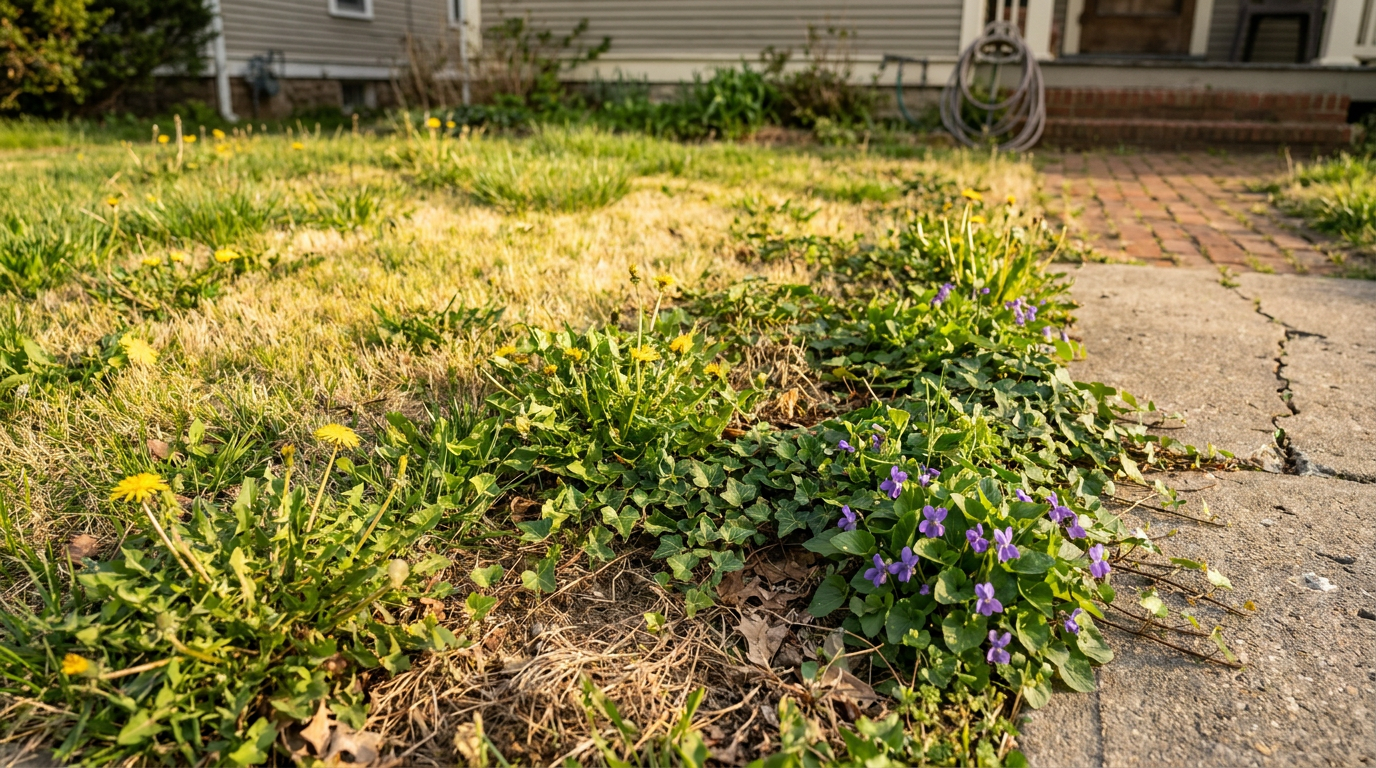
- Positively identify your dominant weed species — Pull three mature specimens, and make sure you get the root crown with them. Use your state extension weed gallery or a solid botanical index online to pin down the genus and species.
- If the main troublemakers are simple winter annuals like henbit and chickweed, or standard taproot perennials like dandelion and plantain, DIY selective control makes sense.
- If the lawn’s packed with stubborn perennial rhizomes like wild violet, creeping Charlie, torpedo grass, dallisgrass, or yellow nutsedge, set the basic retail sprayers aside; those need pro-level chemistry.
Landscaping · Deck or fence project
| Project category | Landscaping |
|---|---|
| Problem type | Deck or fence project |
| Trade required | Landscaping |
| Urgency | Planned project |
| Safety risk | Moderate safety risk |
| DIY suitability | DIY for experienced homeowners |
| Cost category | High cost |
| Typical timeline | Most builds 3–10 days depending on size |
| Contractor type | Landscaping contractor |
Repair option
Replace failed boards, posts, and hardware; reseal the surface.
Replacement option
Rebuild when framing or the ledger connection is unsafe.
Common causes
- Rot at posts and ledger
- Storm damage
- Adding outdoor living space
Relevant tools:home improvement material pricesproject cost estimator
Published November 26, 2026Last updated November 26, 2026
Tools & materials you'll need
Affiliate links- AmazonSteel measuring tape (100 ft)1 · Used to measure 10x10 diagnostic grids
- AmazonHand-pump garden sprayer (2-gallon)1 · With adjustable brass fan nozzle for calibration
- AmazonStainless steel soil thermometer1 · To check soil temp at 2-inch depth
- AmazonChemical-resistant nitrile gloves1 pair · For handling test weed samples safely
- Amazon6-inch steel shank screwdriver1 · To test soil compaction profile
- AmazonSurvey marking flags or tape1 pack · To track weed recovery zones
As an Amazon Associate FixlyGuide earns from qualifying purchases — at no extra cost to you. Prices and availability are accurate as of publication and subject to change.
Quick Answer
If more than 40% to 50% of your yard is made up of invasive weeds, if you’re fighting underground spreaders like field bindweed, torpedo grass, or wild violet, or if your own herbicide work left big scorched patches all through the turf, it’s time to bring in a pro. A licensed lawn care technician’s got commercial-grade selective chemistry, calibrated spray rigs, and the kind of soil diagnostics that can pull a bad lawn back without tearing the whole thing out and starting over.
The Problem
Every homeowner hits that wall sooner or later. You start the spring with a bag of weed-and-feed, tug a few dandelions out by hand on Sunday morning, and pick up a cheap pump sprayer with some broadleaf killer from the store. Three months later, the weeds aren’t just hanging on—they’ve moved in and taken the place over. The grass looks thin, patchy, and washed out, while the tough stuff crowds out everything you actually want growing there.
Maybe you got impatient and mixed the chemical extra strong, then wound up with giant yellow dead spots that looked worse than the weeds ever did. Or maybe you’re going after stubborn offenders like creeping Charlie, wild violets, or torpedo grass, and retail glyphosate and 2,4-D just don’t faze them. That’s the point where weed control stops being a weekend project. If you’re spending money and putting in the sweat, and the only thing you’re getting back is dead turf or no visible change at all, you’re already past the DIY sweet spot. Knowing where that line is saves you a pile of wasted chemicals and a whole lot of aggravation.
I pulled a water heater in Frisco last month that had exactly this kind of “one more try” problem in the front yard—customer had burned half the lawn trying to knock out wild violet with hardware-store spray. Ugly mess.
How It Works
Selective weed control comes down to plant biology and hitting the right target the right way. Herbicides work through different Modes of Action (MOA) as laid out by the Weed Science Society of America (WSSA). Most retail products lean on synthetic auxins (Group 4 herbicides like 2,4-D, dicamba, and mecoprop). Those chemicals throw the plant’s hormone balance off, which pushes broadleaf weeds into runaway cell growth until their vascular system gives up.
       [Chemical Droplet on Leaf]
                   │
                   ▼ (Cuticle Penetration via Surfactant)
          [Phloem Translocation]
                   │
                   ▼ (Systemic Circulation to Crown & Root)
     ┌─────────────────────────────┐
     │  Herbicidal Mode of Action  │
     │  - Auxin Overload (Group 4) │
     │  - ALS Inhibition (Group 2) │
     │  - ACCase Blocker (Group 1) │
     └─────────────┬───────────────┘
                   │
                   ▼
       [Vascular System Collapse]
                   │
                   ▼
      [Root Necrosis & Plant Death]
Turfgrass survives because grass physiology can break down or shrug off synthetic auxins a lot faster than dicot broadleaf weeds can. But that safety margin is thin. Real thin. Once air temps climb above 85°F, turfgrass starts acting like it’s in a heat hangover and loses some of its ability to metabolize the chemical quickly. Fire off retail weed killer on a blazing July afternoon and you can scorch your good grass just as easy as the target weed.
And there’s another wrinkle. Aggressive weeds like wild violet have a thick waxy cuticle that water-based droplets don’t want to stick to, while torpedo grass and field bindweed spread underground through rhizomes and deep taproots that can run up to 10 feet deep. Commercial applicators don’t roll up with big-box bottles. They use commercial-grade active ingredients like triclopyr ester, quinclorac, sulfentrazone, and florasulam, usually with methylated seed oil (MSO) or organosilicone surfactants to break through that waxy leaf layer. Then they put it down with calibrated high-pressure spray rigs that keep droplet size even—less drift, better coverage, and a lethal dose where it belongs.
Step-by-Step Fix
Before you drop $500 or more on a service call, work through this diagnostic and triage sequence. It’ll tell you whether there’s still a real DIY path or if you’re squarely in pro territory.
-
Calculate the weed-to-turf ratio using a grid assessment — Mark out a 10-foot by 10-foot test square (100 square feet) in your worst-affected turf area using landscape stakes and string. Then eyeball how much of that square is healthy grass versus broadleaf or grassy weeds.
- If weeds cover less than 30% to 40% of the grid, selective DIY treatments are still in play.
- If weeds cover 50% or more, turf density is shot; you’re looking at either a professional whole-yard rehab or a scrape-and-resod.
-
Positively identify your dominant weed species — Pull three mature specimens, and make sure you get the root crown with them. Use your state extension weed gallery or a solid botanical index online to pin down the genus and species.
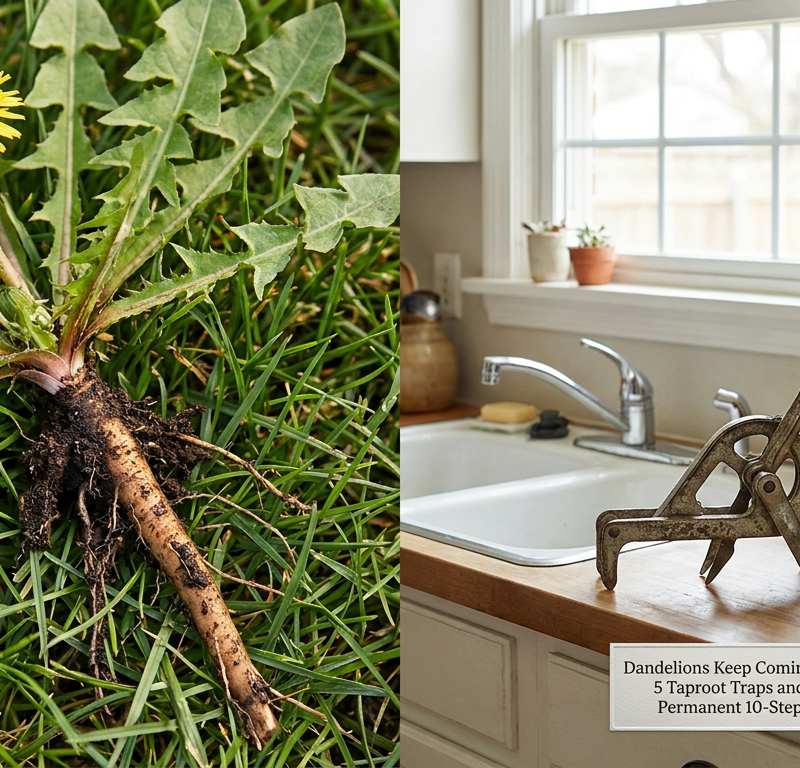
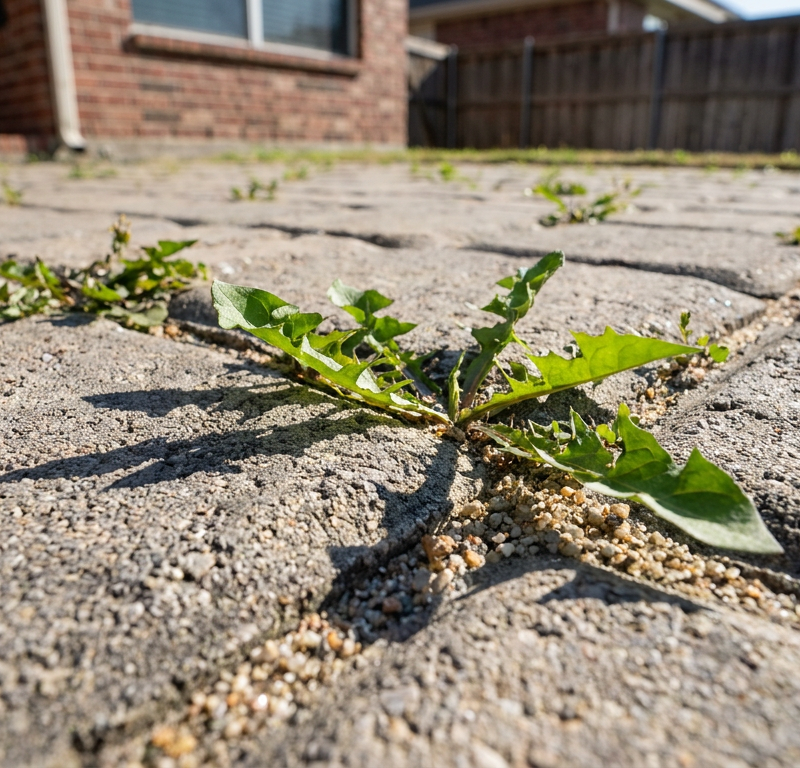
- If the main troublemakers are simple winter annuals like henbit and chickweed, or standard taproot perennials like dandelion and plantain, DIY selective control makes sense.
- If the lawn’s packed with stubborn perennial rhizomes like wild violet, creeping Charlie, torpedo grass, dallisgrass, or yellow nutsedge, set the basic retail sprayers aside; those need pro-level chemistry.
-
Check the soil profile and compaction level — Push a standard 6-inch steel screwdriver straight into the turf in five random spots when the soil’s moderately moist.
- If the shaft won’t go past 2 inches without a mallet, the soil is packed tight and strangling the root system while inviting taproot weeds right on in.
- Core aeration is mandatory before any weed program’s gonna work.
-
Calibrate your spray equipment for exact output — If you’re doing one last DIY run on a moderate infestation, mark off a 1,000-square-foot test zone on your driveway or lawn (e.g., 20 feet by 50 feet). Fill your hand-pump sprayer with exactly 1 gallon of plain water. Spray that 1,000-square-foot zone at your normal walking pace.
- If the tank empties before you finish, you’re moving too slow or the nozzle opening’s too wide, which means you’ve been overdosing and burning the lawn.
- If water’s left in the tank after you cover the zone, you’re under-dosing, and that’s how you help chemical resistance along.
-
Spot-treat rather than broadcast-spraying retail chemicals — Quit blanket-spraying the whole yard with concentrated weed killer. Put an adjustable brass or fan-tip nozzle on your hand-pump wand and set it for a coarse droplet pattern (250–400 microns) so you don’t atomize drift onto shrubs and flower beds. Keep the tip 12 inches above the weed canopy and spray just until the foliage is damp, not dripping.
-
Log temperature and atmospheric conditions before pulling the trigger — Check the outdoor temp before you mix anything. If daytime temperatures are forecast to go above 85°F, or if relative humidity is below 30%, leave the chemical bottle closed. High heat can volatilize synthetic auxins into airborne vapor clouds that wander into your good beds, and it’ll burn grass blades too.
-
Implement a strict two-week post-treatment evaluation — Flag three treated weed clusters with bright survey tape. Check them at day 3, day 7, and day 14.
- What you want to see: Leaf cupping, twisted stems (epinasty), and progressive yellowing (chlorosis).
- The failure sign: If the leaves brown a little at the edges but push fresh green center shoots by day 14, the root survived the retail dose. Don’t spray again right away—stacking retail herbicide applications will poison the soil and kill the surrounding grass without killing the weed.
-
Establish your line in the sand for calling a pro — If step 7 shows active regrowth after three separate treatment attempts, or if your lawn is more than 50% weeds, stop buying DIY chemicals. You’ve run into chemical tolerance thresholds, and more store-bought applications are just burning cash while beating up the topsoil.
Common Causes
Why do DIY weed control jobs fall apart? It’s usually not bad luck. It’s biology, timing, or equipment messing you up.
- Herbicide resistance from chronic under-dosing: When you keep applying weak store-bought formulas at sloppy rates, you only knock out the easiest plants and leave the tougher biotypes behind to spread.
- Extreme soil compaction and poor drainage: Heavy clay soils—common in places like North Texas and the Midwest—starve turfgrass roots of oxygen. Weeds with strong taproots love compacted ground where turf can’t get established.
- Mowing too short (scalping the turf): Dropping mower decks below 2.5 to 3 inches for cool-season grasses (or below 1.5 inches for Bermuda) strips away the canopy that shades the soil surface and wakes up weed seeds.
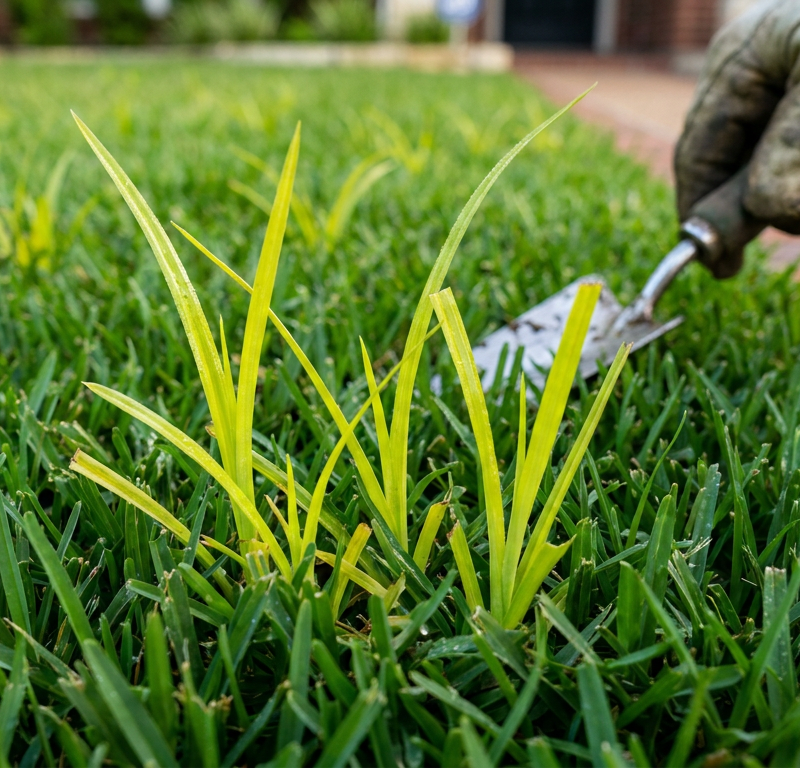
- Incorrect product selection for specific weed biology: Trying to treat sedges with broadleaf weed killer (sedges aren't broadleaf plants; they are sedges) or trying to kill grassy weeds with standard 2,4-D formulations.
- Missing the pre-emergent soil temperature window: Putting down pre-emergent after soil temps at a 2-inch depth have already gone past 55°F in spring (for crabgrass) or dropped below 70°F in fall (for poa annua).
Common Mistakes
- Blanket-spraying liquid weed-and-feed in mid-summer. Granular or liquid weed-and-feed products dumped on during hot summer weather usually don’t carry enough active herbicide to kill mature weeds, but they do leave behind a heavy nitrogen load that burns drought-stressed turfgrass. I’d rather see you use a dedicated spot spray than beat the whole yard up with a combo product.
- Pulling rhizomatous weeds by hand without digging out the root network. Yank creeping Charlie, nutsedge, or field bindweed out by the top and you’ll rip off the green growth but leave the root crown in the ground. That just wakes up dormant underground nodes and you get three new shoots where one was.
- Ignoring tank mixing orders and water pH. If you dump herbicide concentrate into water without checking the water quality first, you can wreck the active ingredients. Hard, alkaline tap water (pH over 7.5) can make a lot of common herbicides like glyphosate and triclopyr hydrolyze, which cuts effectiveness by up to 50% before you even pump the handle.
- Relying on kitchen-cabinet home remedies (vinegar and salt). Household 5% white vinegar will burn the foliage off young annuals with contact acid, sure, but it won’t touch perennial taproots. And dumping rock salt or Epsom salt into turf poisons the soil structure and leaves you with a salty dead zone where nothing—weed or grass—wants to grow for years.
- Mowing immediately before or after chemical applications. Cut the grass right before spraying and you remove leaf surface area the weed needs to absorb the chemical. Mow within 24 to 48 hours afterward and you clip off the leaves before the systemic chemical can move down into the root system.
Cost & Time Breakdown
| Task / Approach | DIY Cost | Professional Cost | Hands-on Time |
|---|---|---|---|
| Spot-treating minor weeds (<15% lawn) | $35–$65 (Sprayer + Selective Concentrate) | $75–$120 (Single technician visit) | 45–60 minutes |
| Comprehensive seasonal weed program | $150–$250 (Chemicals, spreaders, PPE) | $350–$700 (5 to 7 seasonal rounds) | 8–12 hours across season |
| Severe weed takeover remediation (50%+ lawn) | $300–$600 (Multiple chemicals, aerator rental) | $600–$1,400 (Commercial renovation program) | 16–24 hours of labor |
| Complete lawn renovation (Scrape & Resod) | $1,200–$2,500 (Rental sod cutter, pallets of sod) | $3,500–$7,500 (Turnkey pro crew installation) | 2–3 full weekends |
Tips & Prevention
- Track soil temperatures with an accurate digital probe: Buy a simple $10 stainless meat or compost thermometer. Push it 2 inches into your turf every morning at 8:00 AM. When the soil hits 50°F to 53°F in late winter, lay down your spring pre-emergent barrier before the target seeds wake up.
- Raise your mower blade to maximum heights: Keeping cool-season grasses (fescue, Kentucky bluegrass) mowed at 3.5 to 4 inches builds a thick, light-blocking canopy over the topsoil. For warm-season turf like St. Augustine or Zoysia, stick to 3 inches. Bermuda does best at 1.5 to 2 inches with frequent cuts.
- Water deeply and infrequently instead of daily spritzing: Those shallow 10-minute daily watering cycles keep the top half-inch of soil wet all the time—the exact setup weed seeds are waiting for. Water once or twice a week instead, and put down roughly 1 inch of water each time so moisture gets 6 to 8 inches deep.
- Aerate heavy soils every autumn: Core aeration pulls 2- to 3-inch plugs out of the turf, breaks up compaction, and gives the root system room to spread. Thick, well-rooted grass naturally crowds out weed seedlings.
When to Call a Professional
If you’ve spent two full seasons on retail treatments and the lawn still looks like a patchwork of wild violet, dallisgrass, or nutsedge, put the sprayer down.
Call a licensed commercial applicator if you spot any of these hard triggers:
- Weeds cover more than 40% to 50% of your total square footage.
- You’re dealing with grassy weed invaders like dallisgrass or rough bluegrass mixed into a desirable grass lawn—killing a grassy weed inside a grassy lawn without wiping out the surrounding turf takes highly specific commercial chemistry you won’t find at the hardware store.
- Chemical damage has already happened: big dead, yellow patches where high concentrations of retail herbicide have sterilized the topsoil.
- You’ve got a large property, half an acre or more, where hand-pumping retail tanks is just plain impractical and leads to inconsistent, striped applications.
A licensed pro has state certifications like a commercial pesticide applicator license, carries liability insurance, and runs commercial sprayers that can put the right chemical ratio across the whole lawn in twenty minutes. That can save you from damage that’d cost thousands in new sod.
Related Articles
Keep troubleshooting with these hand-picked guides from FixlyGuide:
- Lawn Full of Tunnels? How to Tell Moles from Voles and Stop the Damage — Stop lawn tunnels for good. Learn how to tell moles from voles, locate active runs, set effective traps, and protect your yard from destruc…
- The #1 Mistake Killing Your Lawn's Thickness (and How to Fix It in a Weekend) — Overseeding a thin lawn revitalizes its density and health, but many homeowners make a crucial mistake that hinders success. Learn the righ…
- The Hard Truth About Thatch: Why Your Lawn Is Struggling (And How to Fix It) — Learn why a thick layer of thatch is silently choking your lawn and discover the hands-on steps you need to take to restore its health and…
- Lawn Turning Brown in Summer? 6 Causes and the Exact Fix for Each — Lawn turning brown in the summer heat? Use this pro diagnostic checklist to tell dormancy from grub damage and revive your turf without was…
- How Often Should You Water Your Lawn? The Schedule for Deep, Resilient Roots — Learn how often to water your lawn with our pro guide. Discover target depths, catch-cup audits, soil testing, and cycle-and-soak timing fo…
- Why Your Hardwood Floors Have Gaps in Winter (And When to Worry) — Seeing gaps in your hardwood floors this winter? It's likely caused by low indoor humidity making the wood shrink. Learn what's normal, how…
What should this project cost?
Enter your project details for a realistic cost range before you call anyone.
Cost depends heavily on which system turns out to be the source.
- Regional adjustment
- National average
- Labor share (typical)
- ~$1,620
- Quotes to collect
- 3 written estimates
Educational estimate based on national averages — not a binding quote. Always confirm with written local estimates.
Get the print-ready PDF of this guide
A clean, ad-free, printable version you can keep on your phone or pin to the workshop wall. Free with a FixlyGuide account.
- Print-optimized layout
- Tools, materials & every step included
- Saved to your account
Frequently asked questions
What percentage of weed cover means my lawn is too far gone for DIY?+
If your yard is more than 50% weeds, the root systems of your desirable turf are often too sparse to bounce back on their own. At that threshold, a professional can determine whether a commercial chemical remediation program or a total scrape-and-resod project is the most cost-effective path forward.
Why didn't my store-bought weed killer work on creeping Charlie or wild violet?+
Retail weed killers use lower active ingredient concentrations and standard synthetic auxins (like basic 2,4-D) that struggle against weeds with deep rhizomes, bulbs, or waxy leaf cuticles. Pros use commercial-grade active ingredients like triclopyr ester, sulfentrazone, or quinclorac, combined with specialized surfactants that penetrate tough plant defenses.
Why did my lawn turn yellow and die after I sprayed weed killer?+
If you applied standard broadleaf herbicides during temperatures above 85°F, your turfgrass entered heat stress and lost its ability to metabolize the chemical, resulting in severe foliage burn. A pro lawn technician can evaluate whether the grass crowns survived or if those sections require spot-seeding and soil remediation.
Can I just pull aggressive perennial weeds by hand instead of spraying?+
No. Hand-pulling works for taproot weeds like young dandelions, but it actively worsens weeds that spread by underground rhizomes or nutlets, such as nutsedge, wild violet, and creeping Charlie. Snapping the stem leaves the root intact, triggering dormant underground buds to sprout multiple new plants.
What should I look for when hiring a professional weed control company?+
Look for a company whose technicians hold active commercial pesticide applicator licenses from your state department of agriculture. Ensure they offer customized programs tailored to your specific turf variety, carry comprehensive general liability insurance, and use calibrated commercial spray rigs rather than generic granular-only blowers.
Is professional weed control safe for dogs and children?+
Most selective weed control products are completely safe for children and pets once the spray has dried completely, which typically takes 2 to 4 hours depending on temperature and humidity. Always verify the specific re-entry interval listed on the service invoice or product label.
How long does it take a pro to completely eliminate a bad weed infestation?+
With a professional commercial treatment program, noticeable wilting and curling (epinasty) occurs within 3 to 7 days, with full plant death across 14 to 21 days. Fully eradicating tough underground rhizomatous weed populations across an entire yard generally requires two to three consecutive treatment rounds over a single growing season.
Why do weeds keep growing even after applying a pre-emergent?+
Pre-emergent herbicides only prevent seeds from germinating; they have zero effect on weeds that have already sprouted or weeds that return from deep perennial root systems. If you apply pre-emergent to an actively growing weed patch, those plants will continue to grow and spread completely uninhibited.
Discussion
Loading comments…